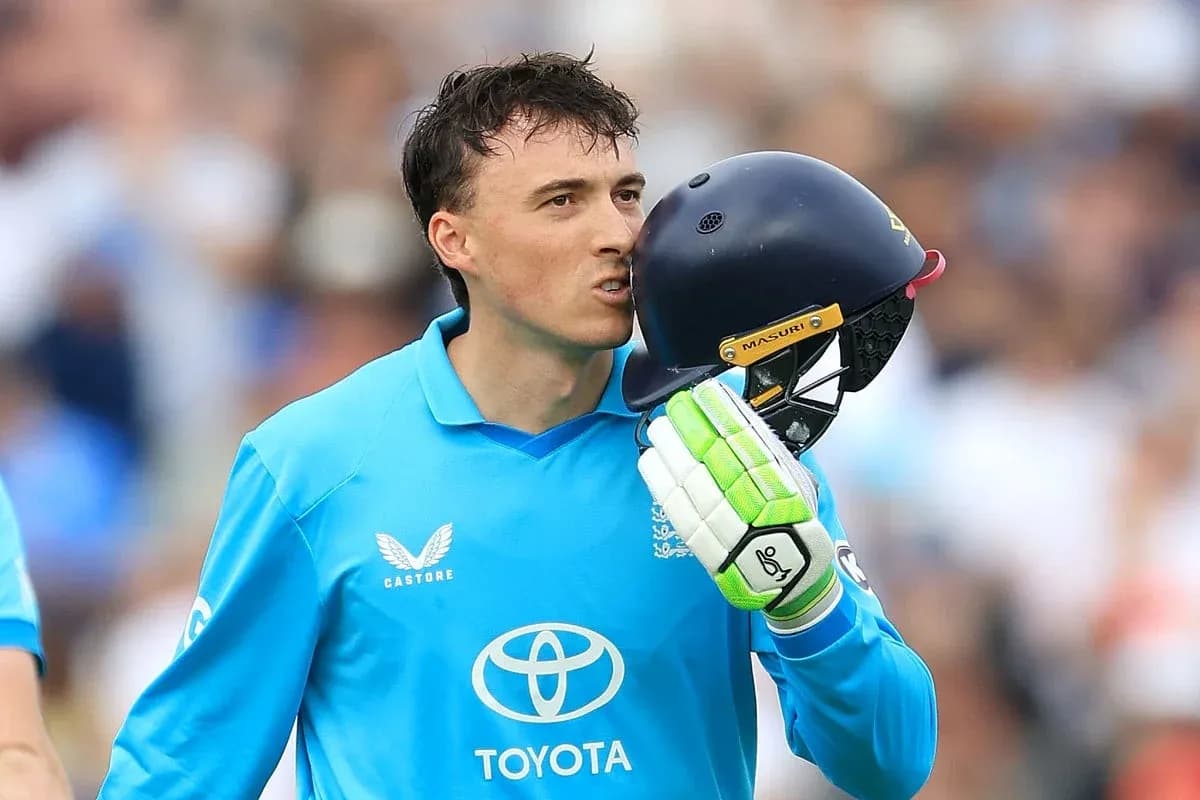
Tom Banton: From Struggles to England Captaincy
Tom Banton stood in an airport, bags on the carousel, mind on the next flight, when his career quietly changed direction.
Brendon McCullum pulled him aside. A few words. A simple message. Tom, you’re captaining England.
“I was pretty emotional when I got told a few days ago in the airport. Baz just pulled me aside and told me,” Banton said. “I didn’t know how to react if I’m honest, to be told you will captain your country is a huge privilege.”
For a player who once admitted he “hated cricket” during his darkest spell, the scene felt almost surreal. This is not the story of a prodigy gliding smoothly to the top. This is the story of a career that stalled, drifted, and then roared back into life.
From wilderness to the armband
Banton’s first England call-up came just before his 21st birthday. It should have been the start of a permanent stay in international cricket. Instead, he slipped out of the frame and stayed out. Nearly three and a half years passed without a cap. Form wavered, confidence drained, and the game he had loved since childhood turned on him.
“It was a weird time in my career, those few years,” he reflected. “I learned a lot about myself and it put me in the position I’m in today.”
The position he’s in today is very different. Recalled to the national side in the summer of 2025, Banton has forced his way not just back into the squad, but into the core of England’s white-ball plans. He has built a compelling case to open the batting at next year’s ODI World Cup and nailed down a role in the T20 middle order.
Now, with Harry Brook flying home before the final T20 against Australia next Wednesday and vice-captain Will Jacks out with a broken hand, England have turned to him to lead.
The elevation is temporary on paper. Symbolically, it is anything but.
Choosing Banton
Phil Salt, who captained England against Australia in 2024, offered an obvious alternative. At that point, Banton was nowhere near the squad. His international career looked like a brief, early burst that had fizzled out.
That is what makes this call so striking. McCullum has not simply filled a gap. He has rewarded a resurgence.
“It was a strange feeling when I first got told, and something I’ve been thinking a lot about over the last few days,” Banton said. “But I don’t want things to change a lot, I’m just going to try and follow what Brooky and the guys have been doing so well in the last year or two.”
There is no talk of ripping anything up. No grand captaincy manifesto. England’s white-ball reset has been led by Brook and McCullum; Banton’s task is to keep that tempo, not rewrite the script.
The Gabba, old scars and new memories
Before he officially takes charge, two games stand in the way, starting in Brisbane on Friday. The Gabba is not just another venue for English cricket. It is a scar.
Just under a year ago, England walked off there battered in the Ashes, Ben Stokes visibly broken as he warned, “Australia is not a place for weak men,” with the urn slipping away again. The ground has long been a graveyard for English touring hopes.
Only Brook from this current white-ball squad was part of that Ashes tour. Banton arrives with a very different emotional imprint of the place.
He knows the Gabba not as a house of pain, but as a launchpad.
“I was lucky enough to play here a few times for the Heat, so it does have a bit of a special place in my heart,” he said of his two seasons with Brisbane Heat in the Big Bash League. “They gave me my first opportunity to play franchise cricket so I’ll be forever thankful to them and to everyone here.”
He wandered past the overseas players’ board this week and saw his name under 2019. A reminder of when the wider cricket world first really took notice of him.
“It was a great time in my life and I look back on it with fond memories,” he said.
A different kind of test
Two more matches, then the armband. A player who once felt lost in the system will walk out as England captain in Australia, at a ground that has broken some of his country’s biggest names.
He doesn’t want to change too much. He doesn’t need to. The real change has already happened — inside the player who once hated the game, and now finds it placing its trust squarely back in his hands.