Manchester United's Struggles: A Modern Football Discourse
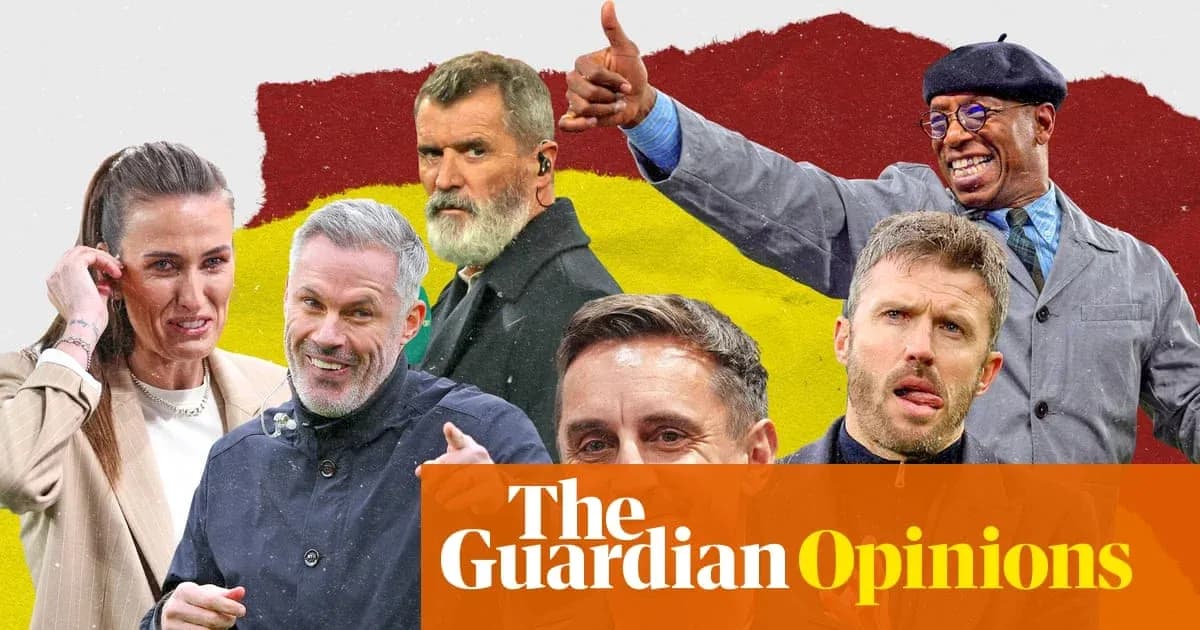
The cameras are already rolling in a Manchester studio when Gary Neville walks in with Michael Carrick. A runner fusses over water jugs, cables snake across the floor, and the low hum of a production line at full tilt hangs in the air. This is modern football discourse: mic’d up, monetised and meticulously staged.
Neville doesn’t pretend otherwise. The “intro bit” – the walk-ons, the small talk, the forced chaos – is there to make it all feel like a casual chat between mates. The reality is something closer to an industrial content plant, churning out opinion on demand.
The labels on the Huel bottles are turned to camera. The set is ready. The performance begins.
Laughter, branding and a ‘tragedy’
Jamie Carragher strides in first, needling Neville about Salford’s weekend stumble. The exchange is loud, quick, and instantly clipped for social media in your mind’s eye: the barbs, the cackling laughter, the familiar double act.
Ian Wright drifts in humming Mary J Blige. Jill Scott follows. Within seconds Neville is into the sponsor read, the faux-intimate language of modern finance – “bank with your mates, in a room, together” – wrapped around what is, in essence, another branded football show.
The title says it all: Stick To Man United on The Overkill, with ManBank. The packaging is knowing, almost self-parodic. The content is anything but.
Neville’s tone hardens when he turns to Manchester United’s current plight. He calls it a “real tragedy”, a word he insists he doesn’t use lightly, and then reaches back through the club’s history for comparison: the 1974 relegation, the disgrace-laden exit of Tommy Docherty, Old Trafford bombed in the second world war, the looming bankruptcy of the early 1900s.
All of it, he suggests, feels less bleak than this.
The hyperbole is deliberate. That’s the currency now. United’s struggles are no longer just a football problem; they are a narrative engine.
The ghosts of United past
Carragher takes the cue and leans into nostalgia. He reels off a roll call of Sir Alex Ferguson’s great sides: Nemanja Vidic, Rio Ferdinand, Jaap Stam, Wes Brown, Patrice Evra, Denis Irwin, Steve Bruce, Gary Pallister. Peter Schmeichel in goal. Paul Ince and Bryan Robson in midfield. Mark Hughes. Eric Cantona.
He looks at the current squad and asks the question that powers a thousand phone-ins: “Do I see a Mark Hughes in there? Do I see a Cantona?” His answer is nuanced only in the most backhanded way – “only to an extent”.
The implication is clear. The modern United are judged against a version of the club that barely exists outside memory and montage. Every misplaced pass is measured against a treble-winning standard.
Roy Keane, as ever, cuts straight to the point. United have Brentford at the weekend, and in his world the equation is simple: “A team like Manchester United should always be beating a team like Brentford.” He repeats it, louder each time, as Neville tries to drag him towards tactics, structures, systems.
Keane isn’t interested in the whiteboard. He wants accountability. Players looking at themselves in the mirror. A dressing room that doesn’t hide.
Defenders compared to inanimate objects
Jill Scott attempts to bring a different perspective, reaching for an anecdote about Sarina Wiegman and the Euros. She barely gets going before Neville swerves back to United’s defence, and the tone lurches from analytical to absurd.
Leny Yoro, Noussair Mazraoui, Diogo Dalot, Matthijs de Ligt. On paper, a back line built from some of Europe’s most coveted defenders. On Neville’s tongue, the “worst defence in the history of professional football”.
He pushes the image further. Put those four in a park game, he says, and it would be “carnage”. Replace them with four inanimate objects – a Kleenex, a butternut squash, a roof tile and a Belkin USB-C to Lightning charging cable – and they would, in his telling, do a better job.
It is ridiculous, knowingly so, but it lands because it captures the mood. United’s defensive frailty has become a running joke, a meme, a metaphor. The exaggeration is the point.
Carragher jabs back that the only way it could be worse is if Neville and his brother Phil were in that defence. More laughter. More clips. More content.
Heart, soul and permanent outrage
Wright tries to bring the conversation back to something more elemental. Watching this United side, he says, he can’t feel the heart or the soul that once defined the club. Until they find it again, he’s “not feeling it”.
Keane bristles. Talk of heart and soul irritates him more than tactical diagrams. “These are international footballers,” he snaps. It’s their job. His anger spikes, oddly specific and yet totally on brand: furious, he admits, “about this point in particular”.
Around them, the noise builds. Carragher folds Liverpool names into the mix – Daniel Agger, Martin Skrtel, Steven Gerrard, Xabi Alonso, Dirk Kuyt – to underline that scrutiny is part of life at any major club. Scott again tries to reference Wiegman, the constant background chatter, the pressure that never truly switches off.
Neville seizes on that phrase. He recalls Sir Alex Ferguson warning that at United, a single defeat is a disaster because of that “constant background chatter”, the way every setback is magnified, spun and replayed.
The line between analysis and amplification blurs. The men who once lived inside the pressure cooker now help keep the heat on.
The doom loop
Then Neville goes where the whole scene has been heading. He turns to Carrick, the former United manager sitting quietly among the noise, and asks the question that hangs over every big-club rebuild.
Did the judgment – from media, from fans, from ex-players now earning their living talking about the club – create extra problems? Did it feel, he wonders, as if some of those former players almost preferred United’s failure because it gave them something to say, because it burnished their own era, because “it did better numbers”?
He pushes the thought to its logical end. Has the need to manufacture crisis, to paint every setback as the “worst disgrace in human history” rather than the normal turbulence of a transitional side in a strong league under absentee ownership, created an “inevitable doom spiral”? An inescapable feedback loop that has swallowed even elite managers over the last 13 years?
Carrick barely gets a word out. Carragher pounces, arch as ever: “Sounds like you could be talking about yourself there, Gary!”
Neville erupts into laughter again. The room joins in. The cameras capture it all.
And somewhere between the jokes, the branding and the outrage, Manchester United remain stuck in the same cycle: a club trying to find a way forward while its past – and the industry built on replaying it – keeps dragging it back into the studio lights.