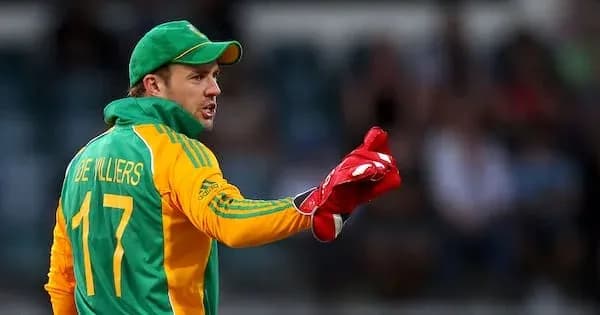
AB de Villiers: Australia’s Ball-Tampering Scandal Started in Durban
AB de Villiers says he is certain Australia’s ball-tampering plot in South Africa in 2018 began even earlier than many suspected – as far back as the first Test in Durban.
The former Proteas star, who stood at the crease while the scandal exploded around Cameron Bancroft at Newlands, has broken his long-held silence with a blunt verdict: this was no one-off, and it was no secret.
‘It started in Durban’
Speaking on his YouTube channel, the 42-year-old was unequivocal.
"It started in Durban, by the way, not in [Port Elizabeth]," de Villiers said, referring to the series opener at Kingsmead, which Australia won.
"We lost that first Test match in Durban with the ball reversing at a very, very interesting time. Way too early for anyone to reverse a ball at Kingsmead. Trust me, I've played a lot of cricket there."
That was the red flag for him. The ball was moving in ways he simply did not trust.
"So whatever they did there, whether it was sandpaper or nails ... I don't care. The fact of the matter is they were caught and everyone knew."
By the second Test in Gqeberha, South Africa hit back. De Villiers carved out an unbeaten century in the first innings, setting up a six-wicket victory that levelled the series at 1-1. But even that match, he believes, carried the same stain.
Cameron Bancroft, Usman Khawaja and Chadd Sayers have all alleged sandpaper was used in that Port Elizabeth Test. De Villiers has now gone further, insisting the premeditated plan was already in motion a week earlier.
‘Every single person knew’
The official scandal erupted in the third Test at Newlands, when TV cameras caught Bancroft using sandpaper on the ball. The fallout was seismic: Bancroft, David Warner and captain Steve Smith were banned; Australian cricket was thrown into crisis.
In his memoir, Sabr, Khawaja claimed all players were aware of what was happening in Cape Town, a version backed publicly by Bancroft, Sayers and Warner. Current captain Pat Cummins dismissed that as "nonsense", with fellow fast bowler Josh Hazlewood supporting his stance.
De Villiers does not buy that.
He questioned the idea that Australia’s bowlers, the direct beneficiaries of reverse swing, could have been in the dark.
"Why are we all so worried about the object that was used?" he said.
"The fact of the matter is there was a premeditated decision made to do something illegal on the ground. And every single person knew about it. I have zero per cent doubt about it."
The sharpness of his language left little room for interpretation. For de Villiers, this was not a rogue act by one or two players. It was a collective line crossed.
Fury at Cricket Australia
His harshest words, though, were aimed not at the individuals but at Cricket Australia and the way the governing body handled the crisis.
De Villiers called it "absolutely ridiculous" that Warner, Bancroft and Smith were left to absorb the full force of the blame and argued their suspensions went too far.
"Cricket Australia needs to take the blame and not so much the players because [CA] didn't deal with it in the right manner," he said.
"It became a political thing. The prime minister [Malcolm Turnbull] got involved. The players obviously panicked. They were emotional ... I just feel they should have stuck together as a unit.
"They threw the guys under the bus and forced a situation like this to pop up again eight years later."
For de Villiers, this is the inevitable consequence of what he sees as a botched response: unanswered questions, reopened wounds, and a scandal that refuses to stay in the past.
Not a ‘beautiful angel’
De Villiers did not present himself as a saint. He admitted he, too, pushed the limits in pursuit of reverse swing, but insisted he stayed on the right side of the law.
De Villiers pointed to previous ball-tampering cases as examples of more measured responses. Michael Atherton and Hansie Cronje were both embroiled in controversies in the 1990s, while former South Africa captain Faf du Plessis was found guilty of ball tampering in 2013 and 2016. Du Plessis was fined on those occasions, not suspended.
Against that backdrop, the bans handed to the Australian trio looked, in de Villiers’ eyes, like an overreaction shaped by politics and public outrage.
He acknowledged that players routinely look for legal ways to help the ball reverse – including tactics like bouncing it into the pitch on return throws.
"We try and push the boundaries as much as possible," he said. "We all have tried over the years to get the ball to do something to get an edge, but obviously not being as stupid as to take an object on to the field and blatantly cheating."
Years on from Cape Town, the images of Bancroft and the sandpaper still define that series. Now de Villiers has added his voice, and his certainty, to a debate that shows no sign of fading: how early did it start, who truly knew, and will Australian cricket ever fully escape the shadow of 2018?