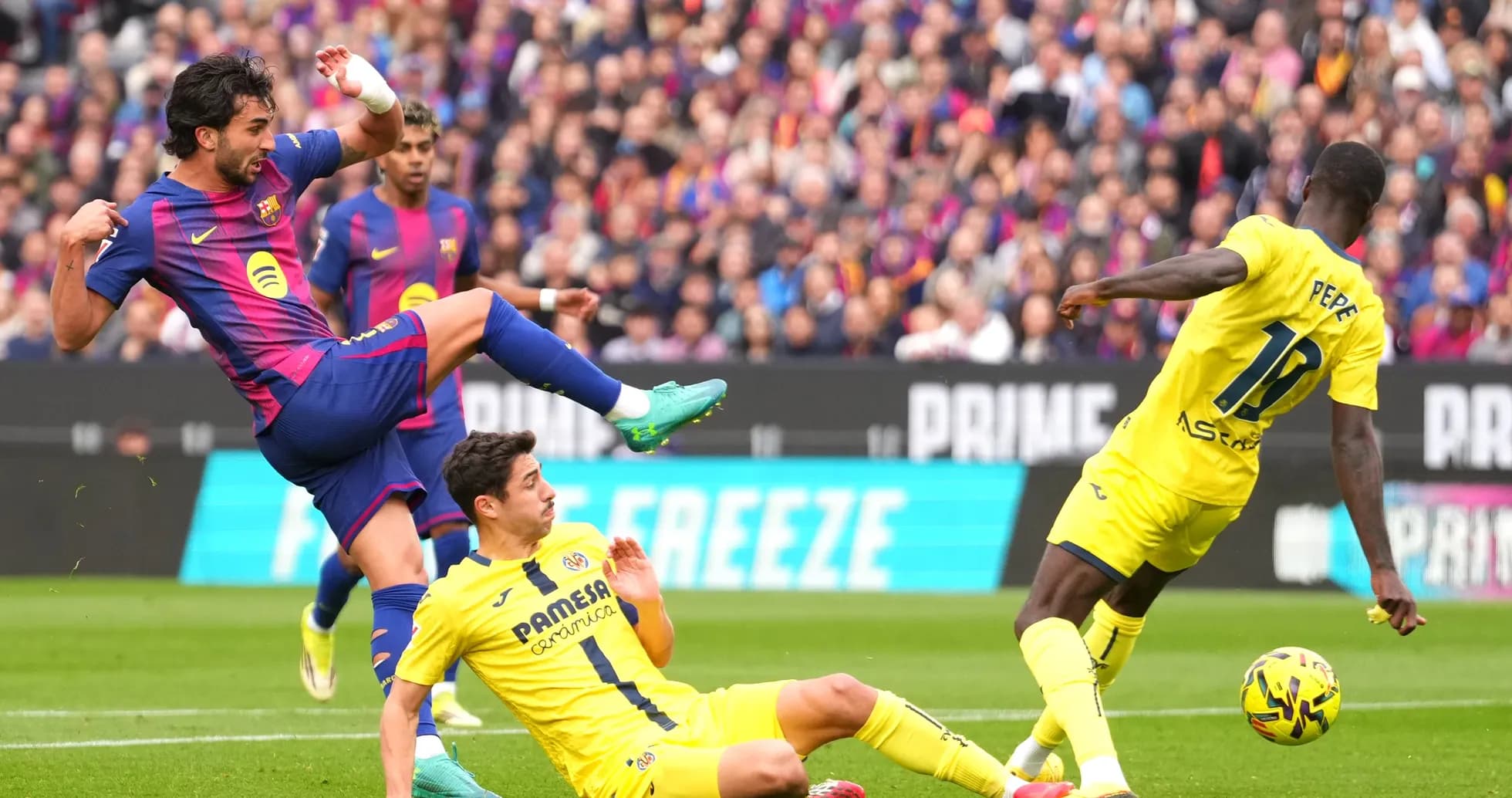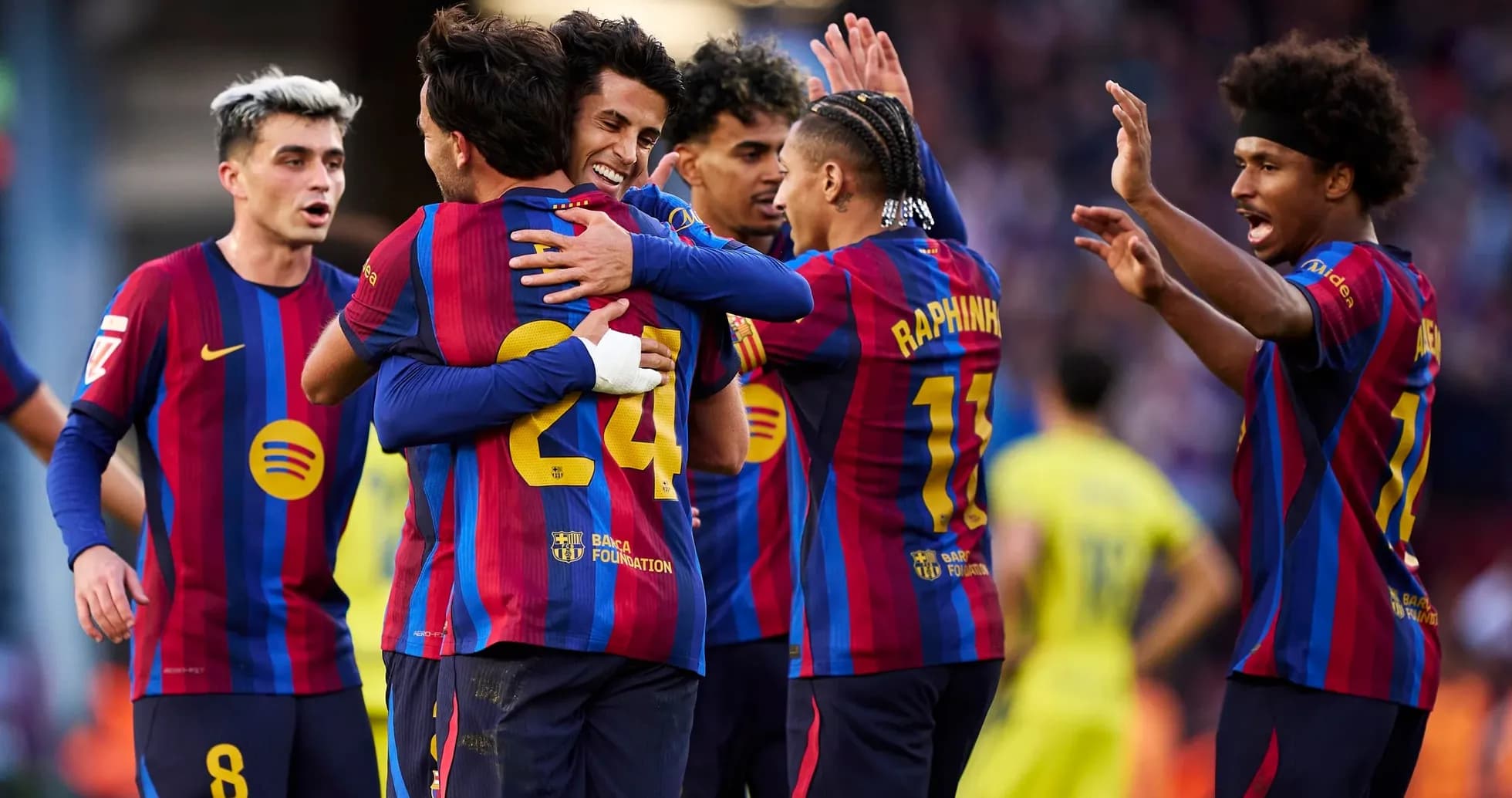
Barcelona's Comeback Against Villarreal in La Liga
The late autumn light over Spotify Camp Nou had barely settled when this La Liga fixture flipped its own script. Barcelona, leaders of the league and ruthless front‑runners all season, walked into Round 13 as a machine: 12 wins from 13 overall, 51 goals scored and 15 conceded, with a towering overall goal difference of 36. Villarreal arrived as the league’s shape‑shifters, 10th in the table, dangerous but inconsistent, their overall goal difference a slender 1 after 19 goals for and 18 against.
By full time, the scoreboard read 3–2 to Barcelona, but the journey there was jagged. The hosts trailed 0–2 at half‑time and had to claw their way back, an inversion of their usual dominance. Yet the comeback also felt pre‑written in the numbers: heading into this game, Barcelona were averaging 3.9 goals per match overall, and they had failed to score in none of their 13 league outings. So even at 0–2, the league leaders still had statistical gravity on their side.
Tactically, Hansi Flick’s 4‑3‑3 was familiar, but the personnel underscored both evolution and necessity. Joan García started in goal behind a back four of Joã o Cancelo, Gerard Martín, Frenkie de Jong and Eric García. De Jong as a nominal defender hinted at Barcelona’s desire to build with three plus a deep pivot, allowing Cancelo to step into midfield and Pedri to drift between the lines. In front, Fermín and Marc Bernal joined Pedri in a fluid trio, with Lamine Yamal and Raphinha flanking K. Adeyemi.
The absentees mattered. Rodri, A. Christensen, R. Bardghji and X. Espart were all ruled out, stripping Flick of an elite holding midfielder and a first‑choice centre‑back. That forced a more improvisational defensive structure, one that Villarreal’s 4‑4‑2, coached by Iñigo Pérez, was primed to probe. With P. Gulácsi in goal, a back line of Carlos Romero, Renato Veiga, Pau Navarro and A. Freeman, and a midfield box of T. Oluwaseyi, P. Gueye, Santi Comesaña and T. Buchanan behind G. Mikautadze and Alberto Moleiro, Villarreal had enough legs and vertical passing to exploit any hesitation in Barcelona’s rest defence.
The first half exposed that vulnerability. Barcelona’s season numbers show an overall concession rate of 1.2 goals per match, but at home it climbs to 1.3. With de Jong stepping out and Cancelo roaming, the half‑spaces behind them became invitation zones. Villarreal, who on their travels had been scoring 1.6 goals per game and conceding 1.6, were used to chaotic, open contests away from home. They found joy early, and a 0–2 half‑time scoreline felt like the logical extension of Barcelona’s aggressive structure meeting Villarreal’s counter‑punch.
The disciplinary undercurrent framed the risk. Barcelona’s yellow card pattern spikes between 46–60 minutes at 38.10% of their total bookings, then again late, with 14.29% from 76–90 and another 14.29% in added time. Their single league red card had come between 61–75 minutes. That profile belongs to a side that ramps up intensity after the break and lives on the edge when chasing games. Villarreal, by contrast, are late‑game agitators: 31.03% of their yellows arrive from 76–90 minutes, and their two reds this season have been split between 76–90 and 91–105. This is a team that keeps fouling when legs are heavy and space opens.
In that context, the second‑half narrative wrote itself. Flick could turn to a bench loaded with technical and transition threats: Gavi, Dani Olmo, Anthony Gordon and Gabriel Jesus all waited in reserve, alongside defensive stabilisers like J. Koundé and Alejandro Balde. Every substitution vector – [IN] replaced [OUT] – was a chance to tilt the pitch further, to pin Villarreal’s back four and stretch their already fragile away defensive record.
The “Hunter vs Shield” duel was always going to be defined by Barcelona’s front line against Villarreal’s defensive unit rather than a single striker. Raphinha came into the fixture as La Liga’s top scorer with 15 goals and 3 assists in 12 appearances, firing 32 shots with 19 on target. On the opposite flank, Lamine Yamal was both finisher and architect: 10 goals and 9 assists, 61 shots, 44 key passes and 94 attempted dribbles, 53 of them successful. Between them, they represented an attacking storm against an away defence that had already conceded 11 goals in 7 matches.
Villarreal’s shield was imperfect but not soft. Pau Navarro, despite a modest rating profile, had shown he could pass accurately under pressure and had already blocked shots in league play. Pape Gueye, a central pillar, combined 13 tackles, 4 blocks and 8 interceptions with a red card on his record, a reminder that his aggression can both break attacks and break his own side’s rhythm. Yet once Barcelona’s wide men began isolating full‑backs and half‑spaces, the weight of numbers was always likely to tell.
In the “Engine Room”, Pedri and Fermín squared off conceptually against Gueye and Comesaña. Pedri’s 877 completed passes at 90% accuracy and 29 key passes defined Barcelona’s control. Fermín, with 8 goals, 5 assists, 23 key passes and 6 successful blocks, brought verticality and edge, but also risk: 3 yellow cards and 1 red this season. Across from them, Gueye’s 632 passes at 84% accuracy and high duel win rate made him Villarreal’s metronome and enforcer in one body. The battle for second balls and counter‑press moments through the centre was where Barcelona’s comeback would either ignite or stall.
Statistically, the prognosis before a ball was kicked leaned heavily toward a Barcelona win with goals at both ends. At home they had scored 27 times in 7 matches, an average of 3.9, and conceded 9. Villarreal’s away profile – 11 scored, 11 conceded – screamed volatility. Add Barcelona’s penalty record, with 6 awarded overall but only 4 converted and 2 missed, and you get a side that manufactures high‑value chances but occasionally leaves the door ajar.
The 3–2 final scoreline, after a 0–2 half‑time deficit, was the season in microcosm: Barcelona’s attacking avalanche ultimately buried Villarreal’s resistance, but not before their defensive imbalances were exposed. For Flick, the lesson is clear. The squad’s attacking ceiling, powered by Raphinha, Lamine Yamal, Fermín and the creative depth of Pedri and Dani Olmo, is high enough to erase deficits. Yet as the campaign stretches on, the same numbers that fuel spectacular comebacks also warn of the margins they are flirting with at the back.