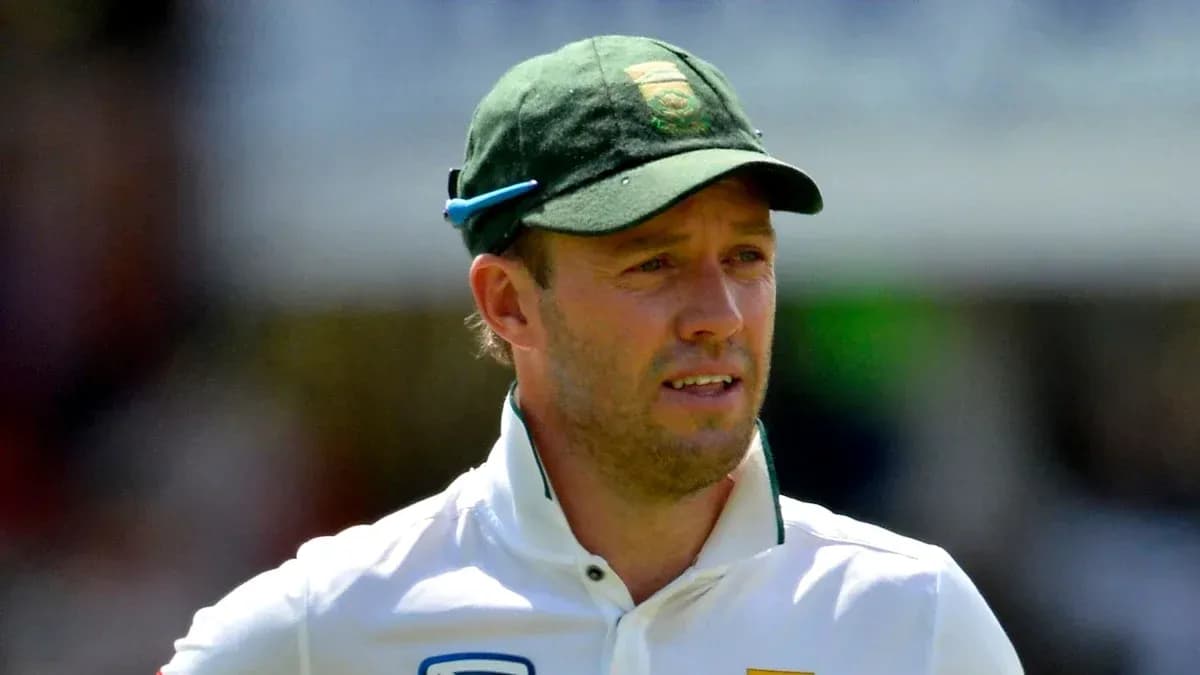
AB de Villiers Claims Ball-Tampering Began in Durban During 2018 Test
AB de Villiers has thrown fresh fuel on Australian cricket’s most toxic fire, claiming the ball-tampering that rocked the 2018 Test series in South Africa began before Cape Town and even before Port Elizabeth – all the way back in Durban.
The former South Africa star, who played in every match of that ill-tempered series, says he has “absolutely no doubt” Australia were illegally altering the ball during the first Test at Kingsmead, where Mitchell Starc’s reverse swing ripped through the Proteas.
“It started in Durban, by the way, not in PE,” De Villiers said on his YouTube channel ABD360. “I’m very happy for people to quote me on that.”
Those words land in the middle of a scandal that simply refuses to die. Cape Town 2018 already cost Steve Smith, David Warner and Cameron Bancroft long bans and scarred Australian cricket’s reputation worldwide. Now, with Usman Khawaja’s autobiography dragging the saga back into the spotlight, old wounds are being reopened and timelines challenged.
From Cape Town to Durban
The accepted version of events has long been clear: the use of sandpaper to rough up the ball was exposed during the third Test in Cape Town. Smith, Warner and Bancroft took the fall. The rest of the dressing room and the coaching staff denied any knowledge.
Khawaja has since claimed sandpaper had been used earlier in the series, at Gqeberha (then Port Elizabeth). Warner and Bancroft have backed that up, saying the second Test was not as clean as the official record suggests.
De Villiers has now gone a step further.
“I see everyone is sort of admitting that in Port Elizabeth it also happened,” he said. “I can very much tell you Durban was no different, in the first Test. Go look at the footage. Absolutely no doubt in my mind.”
For South Africa, that opener still stings. Australia won in Durban with the ball reversing at a stage of the match that De Villiers believes defied logic for Kingsmead conditions.
“We lost that first Test match in Durban with the ball reversing at a very, very interesting time. Way too early for anyone to reverse a ball at Kingsmead. Trust me, I’ve played a lot of cricket there.”
Starc finished with match figures of 9-109, a performance that powered Australia to their only victory of the series. De Villiers does not pretend to know the exact method used, but he is adamant something was done.
“So whatever they did there, whether it was sandpaper or (a) nail, I don’t care. The fact of the matter is they were caught and everyone knew. Just stand up and say ‘we were wrong’. A lot is at stake now because they lied.”
He saved his sharpest accusation for the attack that benefited most.
“The bowlers in particular knew because the ball doesn’t just reverse. It’s not your first Test match for Australia. So just stand up and say, ‘guys, we were wrong’.”
Bancroft pushes back
Bancroft, whose own words have repeatedly dragged him back into the controversy, has rejected any suggestion that sandpaper was used in Durban. In a 4,000-word article last week, he drew a clear line.
“Casting forward to the first Test in Durban, sandpaper was not used,” he wrote.
He did, however, describe a dressing room where pushing the limits on ball maintenance had become routine.
“There were more traditional methods of maintaining the ball, including saliva. I cannot say with certainty whether mints or lollies were involved. Probably quarter-seam picking, this practice became so normal after my first Test.”
The gap between those accounts is stark. On one side, a South African great convinced he saw something deeply wrong. On the other, a central figure from Australia insisting the most notorious tool of the scandal stayed in the kit bag until later.
Denials, again, from Australia’s core
Throughout the years of fallout, one group has remained firm: Australia’s bowlers and their then head coach Darren Lehmann. They have consistently denied any knowledge of ball-tampering beyond what was exposed in Cape Town.
Current Test captain Pat Cummins, who led the attack during that series, has already dismissed Khawaja’s suggestion that sandpaper was used earlier as “100% wrong” and “utter nonsense” at a news conference this month. Cricket Australia has backed him to continue in his role.
The governing body has now set up an independent “forum” where players and staff involved can share their versions of events. It is not a formal investigation. There will be no new penalties. No subpoenas. Just a chance, in theory, for those who want to talk to finally put everything on the record.
Whether that satisfies anyone is another matter.
De Villiers: ‘They threw the guys under the bus’
For De Villiers, the issue has gone beyond swing, seam and sandpaper. It has become about trust – inside that Australian dressing room and across the game.
“It’s become really personal for all the people involved and I do have sympathy for them,” he said. “Obviously not sympathy for what took place on that day and who knows how many games before then.
“I just feel they should have stuck together as a unit. They threw the guys under the bus and forced a situation like this to pop up again eight years later.”
He did not pretend to be a saint himself. Reverse swing is a dark art every international side chases.
“I’m not playing all innocent and saying that I’m the perfect person,” he said. “We all try and get the ball to reverse. We try and bounce it in. We try and do it in a legal manner and we try and push the boundaries as much as possible.
“We all have tried over the years to get the ball to do something, to get an edge, but obviously not being as stupid as to take an object onto the field and blatantly cheating.”
Cricket Australia has been contacted for comment. The governing body, the players and the coaches now face a familiar question, one that has lingered since that grainy Cape Town footage first appeared on a big screen: how long can a sport live with a half-told story?