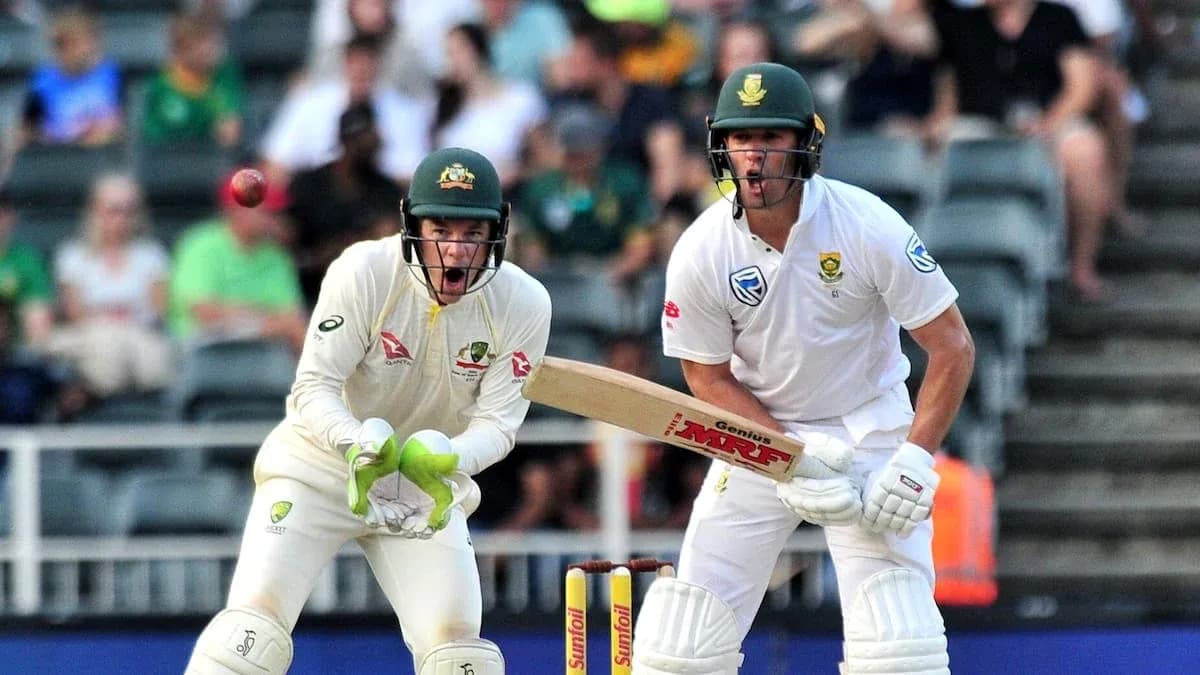
AB de Villiers Revisits Sandpapergate: Ball-Tampering Saga Origin
AB de Villiers has reignited the “sandpapergate” storm, insisting the ball-tampering saga in 2018 did not begin in Port Elizabeth, but in Durban – and that Australia’s bowlers knew exactly what was going on.
“It started in Durban, by the way, not in PE,” de Villiers said, adamant his memory of that first Test at Kingsmead is crystal clear. “I see everyone is sort of admitting that in Port Elizabeth it also happened. I can very much tell you Durban was no different, in the first test. Go look at the footage. Absolutely no doubt in my mind.”
For de Villiers, the timing of the reverse swing in that opening Test remains the smoking gun.
“We lost that first test match in Durban with the ball reversing at a very, very interesting time,” he said. “Way too early for anyone to reverse a ball at Kingsmead. Trust me, I’ve played a lot of cricket there.”
The former South Africa star did not bother to speculate on the exact method. His point was simpler – and far more damning.
“So whatever they did there, whether it was sandpaper or (a) nail, I don’t care. The fact of the matter is they were caught and everyone knew. Just stand up and say ‘we were wrong’. A lot is at stake now because they lied.
The bowlers in particular knew because the ball doesn’t just reverse. It’s not your first test match for Australia. So just stand up and say, ‘guys, we were wrong’.”
Those comments cut straight to the heart of the issue that refuses to die: who knew what, and when?
A Series on the Edge
De Villiers was not a bystander in that series. He was at the centre of it.
He was run out in Durban, and as he lay on the ground, Nathan Lyon appeared to drop the ball on him – a flashpoint moment that summed up the simmering hostility between the sides. It was one of several ugly incidents that turned a high-stakes contest into a running feud.
Inside the South African dressing room, the mood hardened. The then captain, Faf du Plessis, later revealed in his autobiography that he had approached de Villiers before the second Test with a clear message: enough.
“I spoke to AB and said that the only way we were going to win the series was if he was willing to lead the fight against the Aussies with me,” du Plessis wrote. “‘You and I will fight fire with fire. The rest of the team will follow, but only if the two of us lead the charge’.”
Normally calm, almost understated on the field, de Villiers accepted the challenge. The response was both verbal and technical.
Du Plessis describes how his former schoolmate went after Steve Smith with sharp, targeted sledging, while producing one of the defining innings of the series – a superb century in the second Test. That knock swung the match, and with it the momentum of the series. South Africa won in Port Elizabeth and rode that surge all the way to a famous series victory.
The cricket was fierce. The fallout, as it turned out, was even fiercer.
Cummins Backed as Old Wounds Reopen
Years on, the scandal still shapes Australian cricket. Usman Khawaja recently claimed the whole team knew about the ball-tampering plot. Pat Cummins, now Test captain and the face of the current side, has been forced to answer questions about events he did not control but may have witnessed.
Cummins has firmly denied any knowledge of the plan, insisting at a recent press conference that he was unaware of what was happening when Cameron Bancroft was caught using sandpaper on the ball in Cape Town.
The noise around him has grown, but Cricket Australia has closed ranks.
On Saturday, the board offered its “unanimous support” for Cummins to remain Test captain, rejecting any suggestion that his integrity had been compromised by the lingering scandal. The message was blunt: the organisation stands with its captain.
Yet with de Villiers now pointing back to Durban, insisting the story starts earlier and runs deeper, the questions refuse to fade.
The scorecards are written. The series is long over. But as long as former greats keep challenging the official version, can Australian cricket ever truly say it has moved on?