Alex Neil Critiques Millwall After Defeat at Stoke
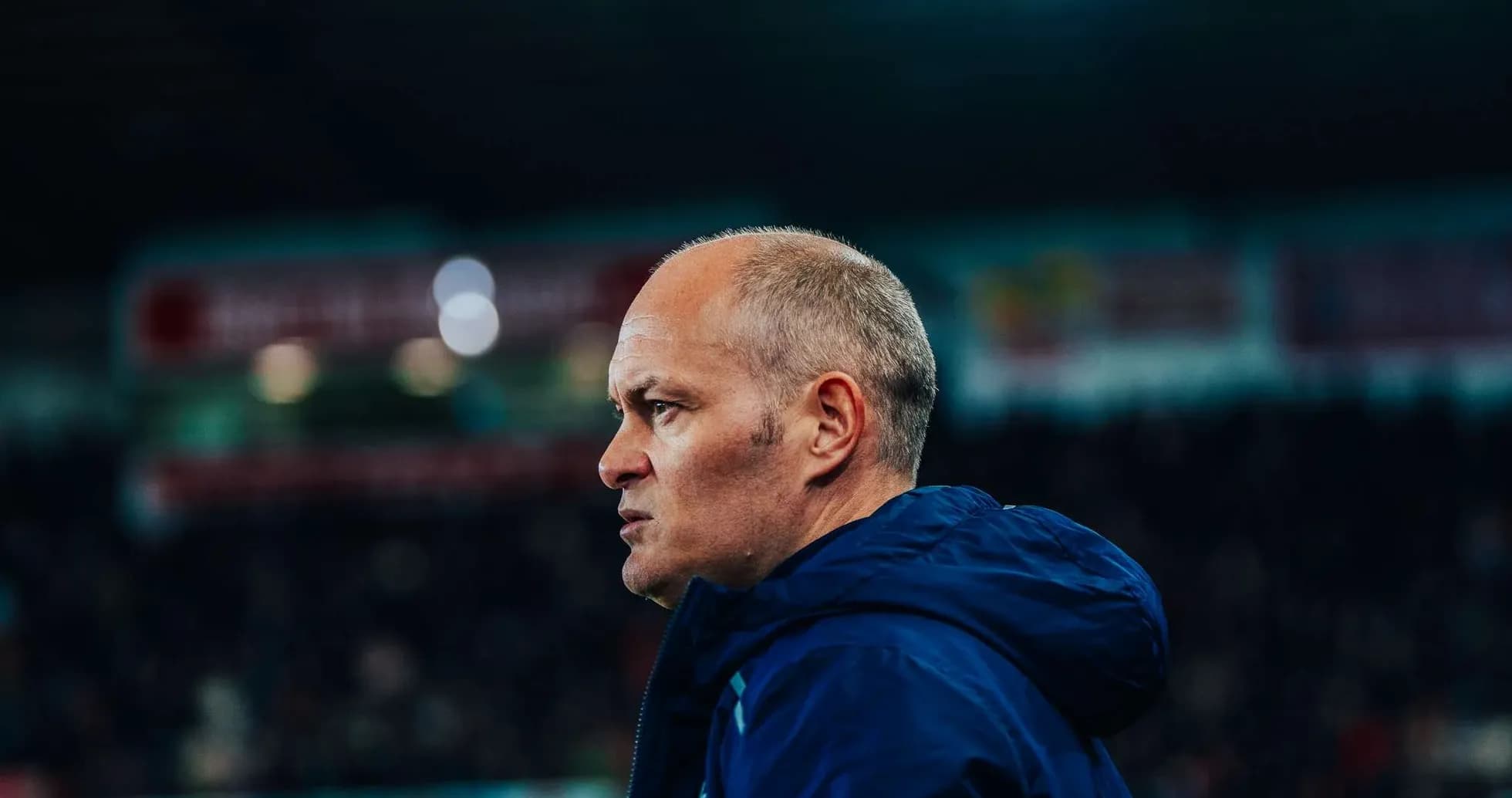
Alex Neil did not bother dressing it up. Millwall’s 2-1 defeat at Stoke City was bad enough on the scoreboard; his assessment of it was even more brutal.
Only “three or four” of his players, he said, showed “a bit of personality on the pitch” at the Bet365 Stadium. For a manager who has built his reputation on organisation, intensity and edge, this was a performance that cut deep.
Hirst punishes a passive Millwall
Millwall never laid a glove on Stoke in a wretched first half. They were second to loose balls, timid in the tackle and ragged at the back, and George Hirst did the damage.
The former Ipswich striker’s first goal exposed the visitors’ defensive frailties in stark detail. He simply ran off the back of Jake Cooper and Caleb Taylor, timing his movement perfectly as Millwall’s line switched off. When the ball was slipped through, Hirst needed no second invitation, tucking his finish away with ease as the keeper stepped out and the cover failed to track the run.
The second was even more galling. Millwall’s back four backed off Million Manhoef, allowing the Dutch winger to advance. Manhoef appeared to control the ball with his hand, but even that slice of controversy could not mask the defensive collapse that followed. With two Millwall players in position to confront him, nobody shut down the danger quickly enough. Manhoef was allowed to square, and Hirst darted across his marker to flick in his brace. One ball across, one sharp movement, 2-0.
“The two goals we conceded were shocking,” Neil said. “We’re two versus one. The keeper steps out, the ball gets slipped down the side, and we don’t match the run. The second one comes across, probably a handball from Manhoef, but even then we’ve got two players to go out and deal with them… Hirst gets across the front of us and manages to score.”
It summed up the half. Passive, hesitant, unrecognisable from what Neil believes a Millwall side should be.
“We pretty much lacked everything a Millwall team would be”
Neil’s anger centred not just on errors, but on what he saw as a surrender of identity.
“In the first half, I didn’t think we played with enough belief. I didn’t think we played with enough quality. I didn’t think we played with enough understanding. We lacked loads of things,” he said.
They reached promising areas, found “good pockets”, but there was no conviction, no sense that anyone truly believed a goal was coming. Stoke’s midfield pair dictated the tempo, unhurried and unharried. At the back, the home centre-halves “ate our forwards up in the first half,” as Neil put it. Every duel seemed to go one way.
“We pretty much lacked everything that a Millwall team would be. We lacked aggression; we lacked intensity. We didn’t get close enough,” he added. It was as damning a verdict as any manager can deliver on his own side.
Changes at the break, but reaction comes too late
Neil responded with three changes at half-time, a clear signal that reputations counted for little after such a showing. The impact was immediate. Millwall finally began to play with purpose, pinning Stoke back for spells and carving out chances.
The visitors’ pressure eventually produced a lifeline. With ten minutes to go, Mark Sykes stepped up and delivered the moment of quality the afternoon had been missing from Millwall’s perspective. His strike was stunning, rifled home to drag the score back to 2-1 and inject late tension into a game that had looked comfortable for the hosts.
That goal sparked a frantic finish. Millwall surged forward, balls flashed across the box, and chaos reigned in the Stoke area. Yet the crucial touch kept eluding them.
“We scored a good goal late on with Sykes; we had three or four other opportunities,” Neil said. “We had three fresh air shots in the box. The cross came across, and we missed the ball three times.”
Stoke, though, never truly lost their composure. They kept Millwall at arm’s length when it mattered most, saw out the final minutes and handed the visitors a fourth straight defeat.
Belief, quality – and a stark warning
Neil was not seduced by the late rally. For him, the improved second half came with an asterisk.
“It was vastly improved in the second half, but in my opinion, it’s easy to play a game when you’re losing 2-0, to go out and show a little bit more than what you showed in the first half,” he said. Chasing a lost cause is one thing; setting the tone from the first whistle is another.
His biggest concern lay in mentality. Too many, he felt, waited for the game to happen around them.
“Three or four players in the game showed a bit of personality on the pitch. There were too many hoping that something was going to happen rather than actually believing that you can go out there and influence the game.”
That lack of belief fed into a technical shortfall that he did not shy away from highlighting.
“You can talk about intensity, you can talk about duels and running, but you also need quality,” Neil said. “If you don’t have quality, then this is a difficult league to win enough games in.”
Four defeats on the spin, questions piling up about character and quality, and a manager publicly demanding more than “three or four” leaders on the pitch. Millwall know exactly where they stand now. The real issue is how many in that dressing room are ready to change it.