Atalanta vs Inter: A Thrilling 4-4 Draw in Serie A
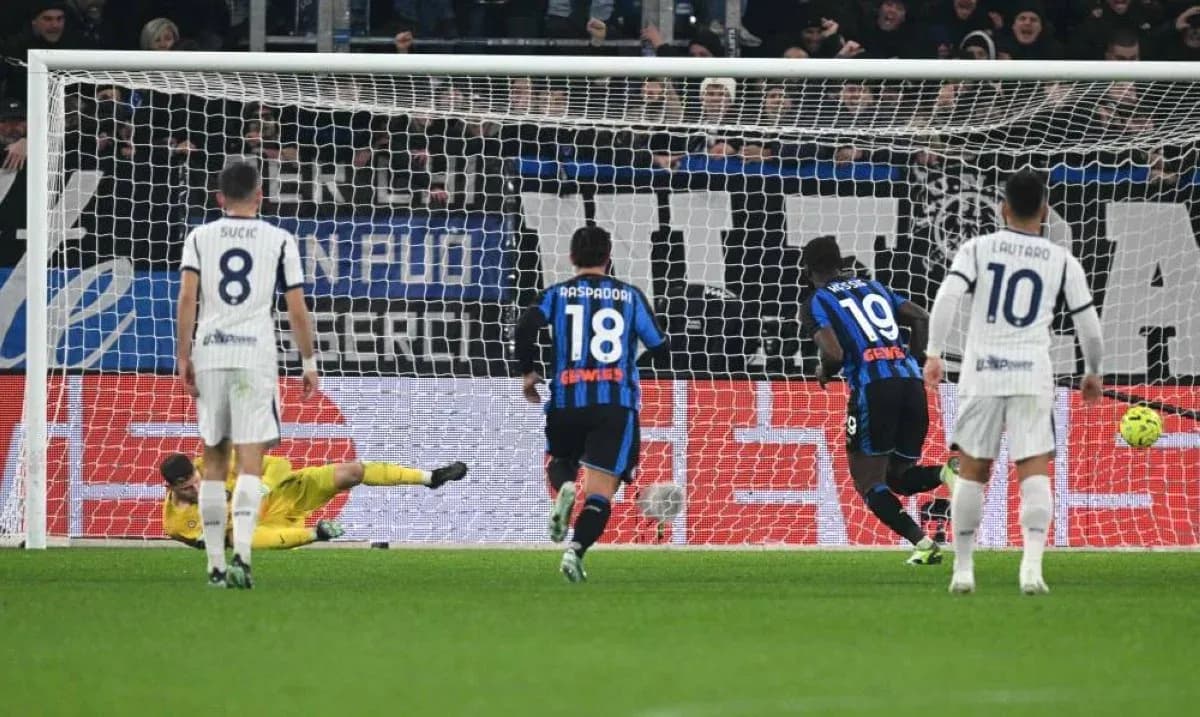
New Balance Arena had barely caught its breath when the final whistle confirmed what everyone in Bergamo already felt: this was less a football match than a 90‑minute storm. Atalanta 4–4 Inter, a Serie A thriller in Round 12 that left both sides with their identities laid bare.
I. The Big Picture – Two Identities Collide
Heading into this game, the table had drawn a sharp line between these teams. Atalanta sat 12th with 15 points, their goal difference at -3 from 21 scored and 24 conceded overall across 12 matches. Inter arrived in Bergamo as title contenders in all but name: 3rd place, 29 points, and a goal difference of 15 after 32 goals for and 17 against overall in the same number of games.
The numbers told us to expect goals. Atalanta at home had been chaos merchants: 15 scored and 15 conceded at New Balance Arena, averaging 2.1 goals for and 2.1 against at home. Inter on their travels were ruthless but not airtight: 13 away goals scored at an average of 2.2, with 10 conceded away at 1.7 per game. A wild, open contest was almost baked into the matchup, and the 4–4 scoreline simply confirmed it.
Maurizio Sarri doubled down on that volatility with a 4‑3‑2‑1 that squeezed creativity between the lines. M. Sportiello started behind a back four of R. Bellanova, G. Scalvini, S. Kolašinac and D. Zappacosta. The midfield trio of E. Elmas, F. Kessié and Éderson was built to both bite and build, while C. De Ketelaere and N. Zalewski floated behind lone striker N. Krstović.
Inter, under C. Chivu, trusted their season’s backbone: a 3‑5‑2. Josep Martínez anchored a back three of B. Pavard, A. Bastoni and Carlos Augusto, with F. Dimarco and D. Spence as wing‑backs. The central lane of N. Barella, H. Çalhanoğlu and H. Mkhitaryan fed a front two that has terrorised Serie A defences all season: F. Esposito and M. Thuram.
II. Tactical Voids – Absences and Discipline
Both sides arrived with notable absentees that subtly reshaped the contest. Atalanta were without I. Hien and O. Kossounou, both missing through muscle and thigh injuries respectively. That stripped Sarri of defensive rotation and physical presence in the back line, forcing him to lean heavily on Scalvini and Kolašinac to hold the central corridor against one of the league’s most potent attacks.
Inter’s bench lacked A. Bonny and P. Zielinski, removing a direct depth option up front and a creative, line‑breaking midfielder. With Chivu sticking to his 3‑5‑2, it meant even more responsibility on Çalhanoğlu and Mkhitaryan to control tempo and progression.
From a disciplinary lens, Atalanta came in as a side that tends to boil late. Their yellow card distribution is heavily weighted toward the final half hour: 30.77% of their yellows arrive between 61–75 minutes and another 30.77% between 76–90. Red cards tell a similar story of emotional overload: one in 76–90 and one between 91–105. Elmas and G. Gaetano personify that edge; both sit among the league’s top red‑card recipients, each having been sent off once this season. Éderson, with 3 yellows in 12 appearances, is another walking warning light in midfield.
Inter, by contrast, are more controlled but not spotless. Their yellows peak in the 46–60 window at 31.25%, suggesting that they often come out of the break aggressively and occasionally overstep. Yet they have avoided a single red card so far, a testament to game management and structural discipline even in high‑intensity phases.
III. Key Matchups – Hunter vs Shield, Engine Room vs Enforcer
The headline duel was always going to be in both penalty areas.
For Atalanta, Nikola Krstović is the purest expression of their attacking threat. With 7 goals and 2 assists in 12 appearances, he has become one of Serie A’s most efficient forwards, firing 33 shots with 17 on target and winning 47 of 96 duels. He is not just a finisher; he presses, battles, and even has 5 blocked shots defensively. Against an Inter side that had conceded 10 times away from home heading into this fixture, Krstović was the “Hunter” aimed at a “Shield” that is strong but not impenetrable.
On the flanks and between the lines, N. Zalewski and C. De Ketelaere formed Atalanta’s creative axis. Zalewski came into this round as one of the league’s top assist providers with 5 assists, 13 key passes and an impressive 87% pass accuracy. De Ketelaere matched him in influence: 3 goals, 3 assists, and 27 key passes, with 41 dribble attempts and 19 successful. Their role was clear—stretch Inter’s back three horizontally, drag Bastoni and Pavard into uncomfortable wide zones, and create isolation pockets for Krstović.
Inter’s response was built around two stars in different roles. Up front, M. Thuram arrived with 6 goals and 3 assists, 34 shots (15 on target), and a dominant 57 duels won from 104. Beside him, F. Esposito mirrored that output with 6 goals and 1 assist, 13 shots on target from 20 attempts, and 35 duels won. Together, they were the spearhead directed at an Atalanta defence that had conceded 24 overall at an average of 2.0 goals per game, and 2.1 at home.
Behind them, the “Engine Room” battle hinged on Éderson versus Inter’s midfield triangle. Éderson’s profile is that of a two‑way enforcer: 2 goals, 516 passes at 89% accuracy, 15 tackles and 9 interceptions. His task was to disrupt Çalhanoğlu’s rhythm and deny Mkhitaryan the half‑spaces where he thrives. Inter, for their part, could rotate the creative load: Barella’s energy, Çalhanoğlu’s distribution and Mkhitaryan’s intelligence collectively tested Atalanta’s ability to maintain compactness between their midfield three and back four.
IV. Statistical Prognosis – Chaos as Destiny
From a season‑long statistical lens, this fixture always leaned towards a high‑event narrative. Atalanta’s overall average of 1.8 goals scored and 2.0 conceded, combined with Inter’s 2.7 scored and 1.4 conceded overall, pointed toward a match where xG for both sides was likely to be substantial. Inter’s clean‑sheet record—4 in 12, split evenly home and away—suggested solidity, but not the kind that strangles games into 1–0s, especially against a home side that had failed to score only once in seven league outings in Bergamo.
Set against that backdrop, a 4–4 draw feels less like an outlier and more like the logical extreme of the underlying trends. Atalanta’s attacking fluidity, powered by Krstović, Zalewski and De Ketelaere, found repeated ways through a three‑man Inter defence that is usually protected by structure rather than sheer numbers. Inter’s own cutting edge, driven by Thuram and Esposito, ruthlessly exposed an Atalanta back line stripped of depth by the absences of Hien and Kossounou.
Following this result, both teams walk away confirmed in their identities. Atalanta remain Serie A’s great volatility engine—capable of scoring four against elite opposition, yet still leaking enough chances to surrender control. Inter, even while dropping points, reinforce their status as an attacking machine whose away games are rarely quiet.
In tactical terms, the story of the night is simple: when a high‑ceiling, high‑variance host meets a clinical contender with a front two in form, defensive solidity and xG models alike are overwhelmed. The numbers hinted at chaos; the pitch delivered it in full.