Darron Gibson's Battle with Addiction: A Journey from Stardom to Struggle
Danielle Gibson thought her husband was dead.
Not injured. Not unconscious. Gone.
"I just thought: 'At least he's not struggling anymore,'" she recalls in the Howler podcast studio, sitting beside Darron, the former Ireland and Manchester United midfielder who once moved through some of the grandest arenas in football – and who was, by then, being slowly destroyed in his own home by a secret addiction to sleeping pills.
Across from them, Ger Gilroy listens as the couple unpick a story that almost ended in a living room in November 2021.
From Old Trafford to oblivion
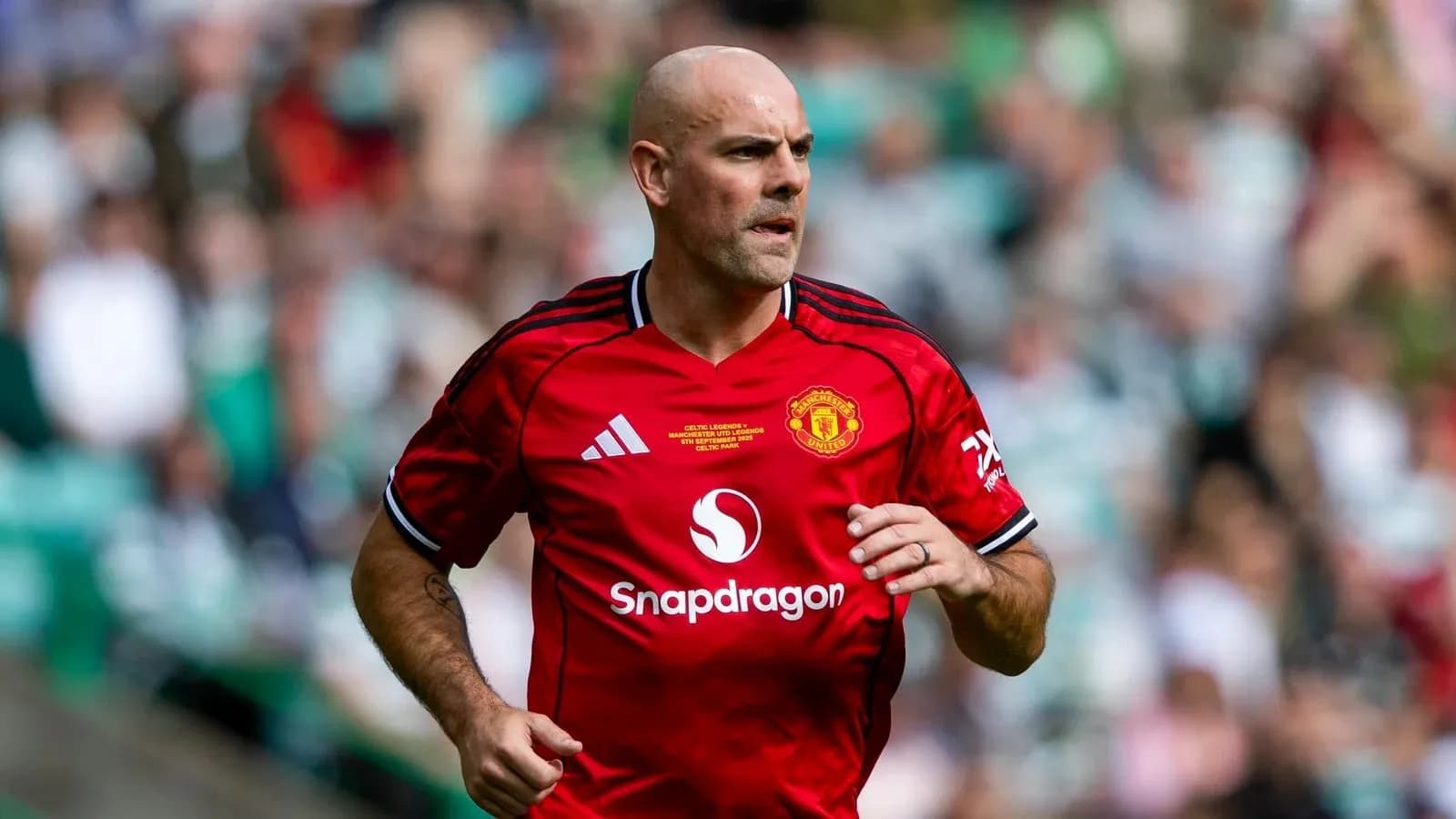
Darron Gibson’s career reads like a dream on paper. A Derryman who broke through at Manchester United, shared midfields with stars, moved on to Everton and Sunderland, and pulled on the green of Ireland 27 times. He lived the life thousands of kids imagine when they lace up their boots.
But when the lights went out at night, the glamour vanished.
"As soon as I got in bed and the lights went off… intrusive thoughts going around in my head and I just couldn't switch it off," he says. The anxiety that gripped him after games, before games, between games, refused to leave. Sleep became a battle he couldn’t win unaided.
The turning point came in 2013, on international duty. A cruciate knee ligament injury against Kazakhstan, months out, a career suddenly paused. The pills arrived then, he says. At first, a crutch. Eventually, a cage.
"I think that's where the sleeping tablets probably started properly," he admits. "It got to the point where I was taking 14 of them a night at the end."
Fourteen at night. Several more during the day. At his lowest, in 2021, he swallowed five sleeping tablets at 10 in the morning and carried on as if it were normal.
"Looking back, who takes five sleeping tablets at 10 in the morning and doesn't go to sleep? It's ridiculous. But it's where I was. It's what I was doing."
Warnings ignored
The first public alarm bell didn’t come with pills. It came with alcohol and a steering wheel.
In 2015, Gibson was charged with drink driving. He received a 20‑month driving ban and a community service sentence. It should have been a jolt, a moment to stop and reassess. It wasn’t.
He stayed at Everton. He stayed playing. Life, on the surface, rolled on.
"Really, I should have learned from that one," he says now. "But I think the reason I didn't is because there was no consequences [at Everton].
"I think Everton thought they were looking after me by not punishing me, which I really appreciated at the time.
"And I don't blame them for any of this, but I think if they'd punished me, maybe I would have changed. But I didn't and kept going."
The pattern hardened. Football carried him forward; the addiction walked alongside.
By the time he moved to Sunderland, Danielle had become a psychotherapist, working in addiction services. She could see professionally what she was living with personally. Even that wasn’t enough to halt him.
In 2018, the story almost took a darker turn again. Gibson smashed his car into several parked vehicles on a street in Sunderland. He narrowly avoided a custodial sentence.
"I had a bottle of vodka that I had for a present from the past October," he says. "Took a few sleeping tablets, thought I was going to go to sleep. Next thing I know, I'm in handcuffs in the back police van."
The spiral was now obvious to everyone. Yet the tablets kept coming.
‘I think you'd be dead’
It all came to a head in November 2021.
At home with Danielle, Gibson suffered a seizure so severe she thought she had lost him. The man who had faced down Champions League nights and international pressure lay helpless on the floor, his body shutting down under the weight of a nine‑year dependency.
"Ultimately, if that hadn’t have happened, I wouldn't be here now," he says in the studio.
"I think you'd be dead," Danielle cuts in.
"Probably," he replies, the word dragging tears with it.
That moment, that seizure, became the line in the sand. The addiction that had hidden behind closed doors, behind matchday routines and training schedules, could no longer be disguised as part of the job or part of the pressure. It had nearly killed him.
Anger at an industry
Gibson is now fully recovered. He talks with clarity and, at times, disbelief at the life he was leading. Danielle talks with something else: anger.
"I think I was angry until about a year after he retired," she says. "I was angry with the industry. I was angry with whoever was supplying the sleeping tablets. I was angry with friends that I thought were enabling the behaviours.
"I understand that football is a business. I just think they should have had a duty of care."
Her work in addiction services showed her the scale of what they were living through. Her experience around professional football showed her they were far from alone.
"He's not the only one that was struggling, there were so many lads, whether it be sleeping tablets or mental health or depression or anxiety or booze, there were so many.
"The more you read about it and the more people are speaking up, you realise that it wasn't just us.
"There were so many that were almost denied access to services that I feel should have been available to all of them."
The couple’s story lands at a time when the issue can no longer be brushed aside. Dele Alli has already spoken publicly about his own use of sleeping tablets and the scale of the problem in the game. Other players, still active, talk in quieter rooms about the same thing.
Speaking up, staying alive
That is why Darron and Danielle are in a podcast studio now, laying bare the details. The 14 pills a night. The vodka and the handcuffs. The seizure on the living room floor. The wife who thought, for a moment, that death might at least mean peace.
They are not chasing sympathy. They are pointing at a blind spot in a billion‑euro industry that still struggles to deal with what happens when the dressing room door closes and the crowd goes home.
Gibson reached the top and almost lost everything in the shadows that came with it. The question now is not how he survived, but how many others are still living on that same edge, one more tablet away from the moment Danielle feared had finally come.