FA Overturns Yoro's Red Card Decision: A Controversial Ruling
The Football Association has laid bare why it tore up Leny Yoro’s red card from Manchester United’s heavy defeat at Liverpool – and in doing so, has landed squarely on the opposite side of Pro Ref and its chief, Howard Webb.
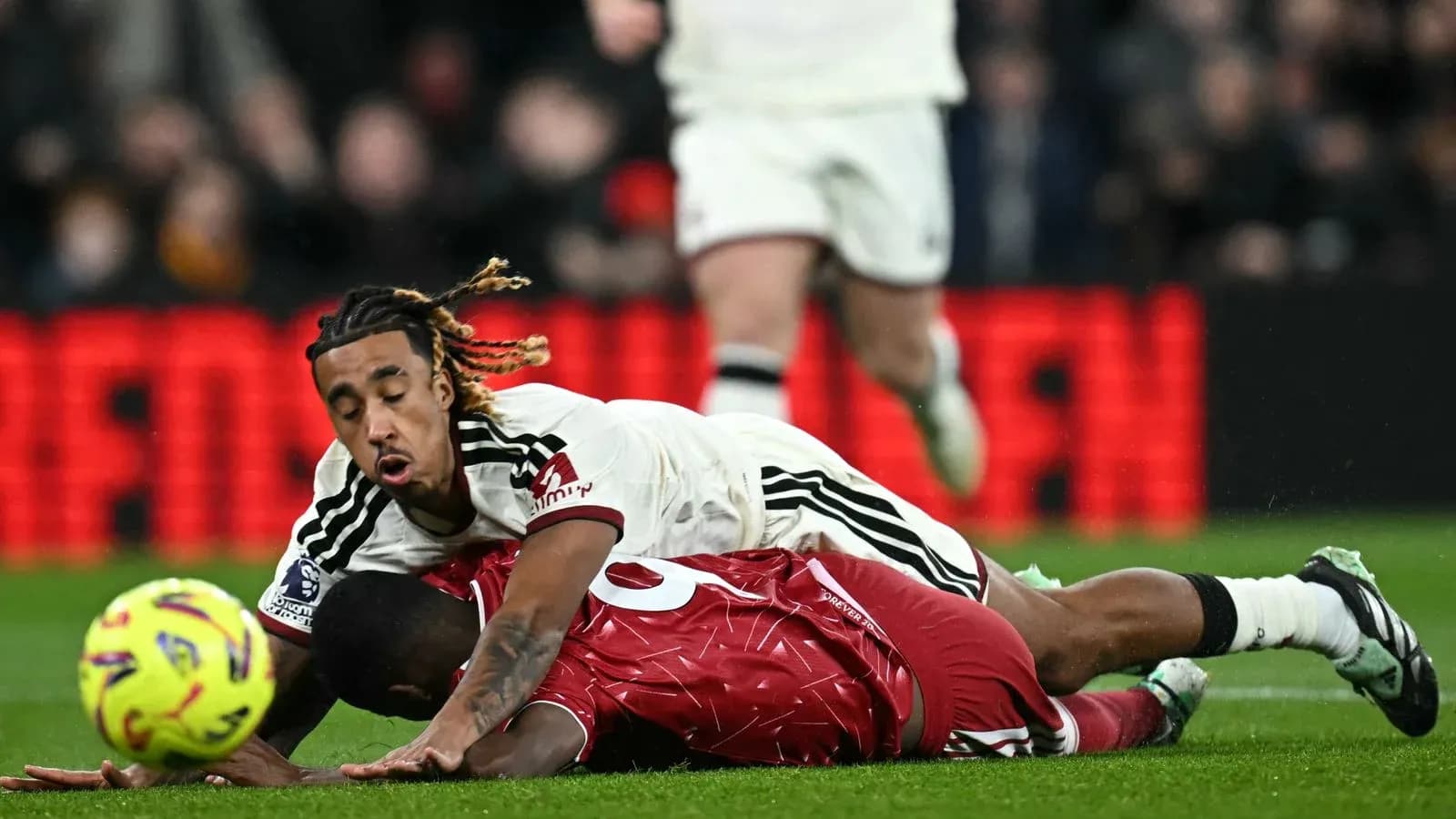
On the day, the incident looked straightforward. Alexander Isak burst through, Yoro tugged him down as the last defender outside the box, and referee Sam Barrott reached straight for red. VAR John Brooks checked it and backed him. Denial of an obvious goalscoring opportunity. DOGSO. Textbook.
United then collapsed, conceding four and sinking to a bruising defeat at Anfield. The dismissal felt like a key moment in the narrative of the afternoon, even if Liverpool were already in the ascendancy.
Yet in the cold light of an FA commission room, the story changed.
Heavy touch, lost control, no DOGSO
The FA’s written reasons reveal a three-person panel – all former professionals, one a goalkeeper – unanimously agreed that the officials on the day had made an “obvious error”.
Their central point was simple and damning: Isak was no longer in control of the ball when Yoro brought him down.
The panel wrote that Isak’s touch was “heavy to the extent he had in fact lost control of the ball”. Under the laws, if the attacker has effectively lost control and no obvious goalscoring chance exists without the foul, the red card cannot stand.
Strip away the foul, the commission argued, and the picture looks very different. They concluded that, had play continued, the advancing United goalkeeper would have “been able to gather or smother the ball before AI [Alexander Isak] could get to it and shoot at goal”.
Their verdict was clear: “The Commission members were unanimous that, taking the foul committed by Yoro out of the scenario, Isak would not have had an obvious goal-scoring opportunity.”
For them, Barrott’s decision to send Yoro off was not just debatable. It was wrong enough to qualify as an “obvious error”.
United’s evidence – and a familiar precedent
United did not leave the outcome to chance. The FA’s reasons note that the club submitted extensive material to back their appeal.
They provided three separate angles of the incident, highlighting the distance between Isak and the ball at the moment of contact. Their analysis claimed the Liverpool striker was “at best 1.8m short of reaching the ball” – a key point intended to underline that the chance had already gone.
The commission treated that precise measurement with caution. It accepted that the FA itself could not independently verify the 1.8m figure and “allocated weight accordingly”. But the broader theme – that Isak had overrun the ball and the goalkeeper was favourite – chimed with what the panel saw in the footage.
United also reached back into this season’s disciplinary history for support, using the Pascal Struijk case as a template.
In October, Brighton successfully overturned Struijk’s DOGSO red card against Sunderland. In that match, referee Thomas Bramall initially played on when Wilson Isidor chased a through ball that ran towards goalkeeper Bart Verbruggen. VAR Neil Davies intervened, Bramall went to the monitor and eventually sent Struijk off.
Brighton appealed. An independent regulatory commission, convened through the FA, sided with the club and rescinded both the red card and the one-match ban.
Crucially, not everyone agreed. The Key Match Incidents (KMI) panel – another independent body which reviews refereeing decisions – later voted 3-2 that the VAR intervention in the Struijk case had been correct, describing the challenge as a “cynical foul clearly impacting the attacker's ability to gain possession of the ball”.
Two cases. Two DOGSO reds. Two FA commissions overturning decisions that another independent panel thought were right. United leaned on that inconsistency to argue that, once again, the on-field and VAR call had gone too far.
Webb backs the process, but the split widens
Into this walked Howard Webb, fronting up on Match Officials Mic’d Up.
The Pro Ref chief refereeing officer did not hammer his colleagues’ decision as flawless, but he did defend the logic.
“By and large most people would see that as a correct decision with Isak moving quickly on towards that ball,” Webb said. The alternative, he acknowledged, was that United goalkeeper Lammens might get there first. “But it's a little bit debatable, I guess. Certainly not clearly wrong.”
The audio from the officials backs that reading. VAR John Brooks supported Barrott’s red because he judged that Isak was “likely” to reach the ball before Lammens. Assistant VAR Paul Howard agreed.
So, on one side: the match referee, the VAR, the assistant VAR and a refereeing chief who sees no “clear and obvious” mistake.
On the other: an FA commission that labels the same call an “obvious error”.
This is not a quiet disagreement. It is a fault line.
A growing pattern of DOGSO division
Yoro’s reprieve is not an isolated quirk. It drops into a pattern that is becoming increasingly hard to ignore.
The Struijk decision at Sunderland showed how far apart the various bodies involved in officiating can be. An FA regulatory commission overturned a red that the KMI panel later said VAR had been right to recommend. Now Yoro’s case follows a similar script: DOGSO red on the field, VAR backs it, Pro Ref supports the process, and yet an FA panel tears it up.
For players and managers, the message is uncomfortable. The same type of incident can be interpreted in dramatically different ways by different groups of experts, all operating under the same Laws of the Game.
For referees, it is something else again. They are being told, publicly, that a decision which their own bosses describe as “certainly not clearly wrong” is, in the FA’s eyes, an “obvious error”.
Yoro walks away with his suspension scrubbed and his record cleaned. The bigger question is what this latest clash does to confidence in how England’s biggest matches are being judged – and who, in the end, gets to say what an “obvious” goal-scoring opportunity really looks like.