Manchester United, Liverpool, and Tottenham Launch Legal Battle Against Manchester City
Manchester United, Liverpool and Tottenham are preparing to drag Manchester City into a new legal battle that could reshape the financial landscape of English football.
The three clubs have instructed the same London law firm, Wiggin – specialists in media, entertainment and technology – to build individual claims for damages against City over the Premier League champions’ breaches of financial rules. Arsenal, moving on a parallel track, are working with their own long-standing lawyers, HFS Kramer, on a separate case.
This is not a joint action, and not a class suit in disguise. It is a cluster of heavyweight clubs, all alleging they were directly harmed by the same conduct, choosing to move in formation.
Big clubs, shared lawyers, separate battles
Sources familiar with the process say there has been a degree of coordination between United, Liverpool and Spurs. They are using the same analysts to quantify the financial damage they say City’s “financial cheating” inflicted on them. But the claims will be filed separately, tailored to each club’s specific losses.
“The cases are similar but different,” one source said. “The ultimate causation may be the same, but the damages will be different so they will be separate claims.”
Tottenham, under Daniel Levy’s chairmanship, were the first to act. They engaged Wiggin soon after City were charged with financial fair play breaches in February 2023, setting the pace for United and Liverpool, who then followed with their own instructions.
By November 2024, those three clubs, along with Arsenal, had formally lodged legal notices reserving their right to seek compensation from City. That move was about timing as much as intent. It ensured their potential claims would not be knocked out on limitation grounds – the same legal route City successfully exploited in 2020 when the Court of Arbitration for Sport overturned Uefa’s two-year Champions League ban after some alleged offences were ruled time-barred.
Under standard English breach of contract rules, clubs have six years from the point a breach becomes public. The first detailed allegations of City’s rule-breaking emerged in November 2018 via the German magazine Der Spiegel. Four members of the Premier League’s “big six” were not prepared to let that clock run out.
Chelsea, notably, did not move. They did not instruct lawyers to begin a claim against City at that time and are not believed to have done so since, despite the legal scope for extending limitation periods in cases involving fraud or concealment.
Fallout from a £900m storm
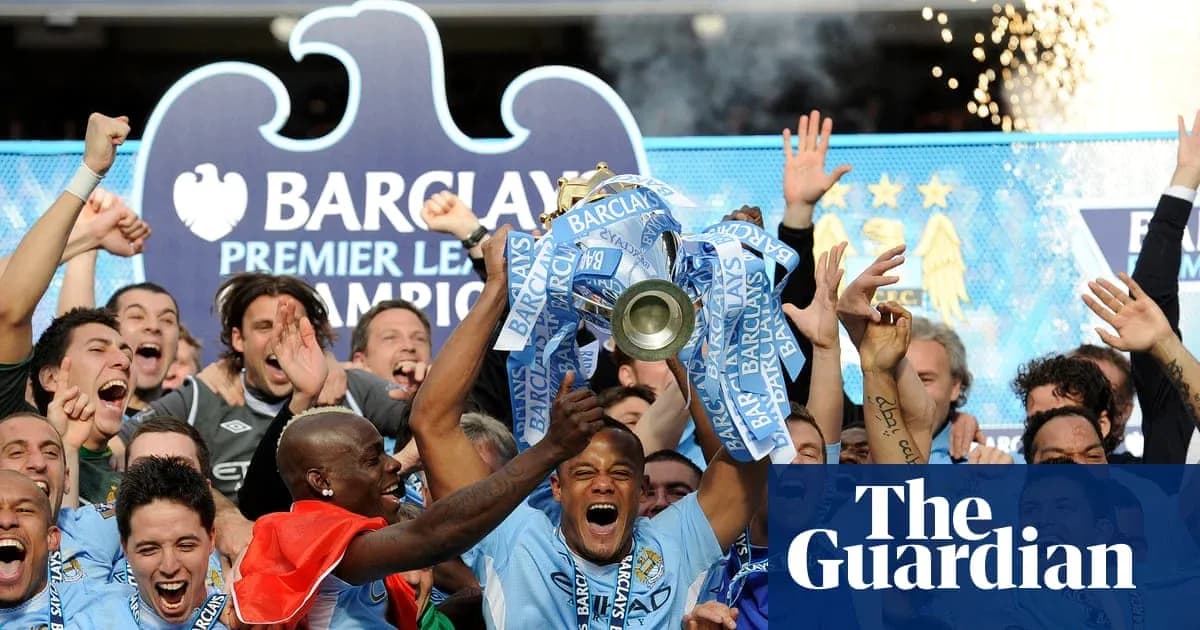
The legal manoeuvring has accelerated since September, when the Premier League announced that City had been found guilty on the vast majority of more than 100 charges. An independent commission ruled that the club artificially inflated its income by more than £900m between 2009 and 2018, using what were described as “sham contracts”.
That ruling did more than stain City’s modern era. It gave rival clubs a foundation on which to build claims that the competitive and financial integrity of a decade of English football was distorted – and that they, specifically, paid the price.
Tottenham are expected to pursue the largest single claim. During the period in question they missed out on Champions League qualification to City on four occasions, dropping instead into the Europa League. The difference in revenue across those seasons is estimated at more than £120m. For a club that has built a new stadium and tried to operate within tight financial parameters, that figure is not just painful; it is transformative.
United and Liverpool will argue their own damage runs deeper than lost pride in a title race. Both finished second to City in seasons now tainted by inflated income – United in 2012, Liverpool in 2014. Each position in the table carries prize money, commercial uplift and performance-related bonuses. Both clubs intend to say that City’s breaches denied them tens of millions of pounds and altered the trajectory of those campaigns.
Arsenal’s case is more complex and potentially more far-reaching. They finished fifth in 2017, with City in third, missing out on Champions League football and beginning a six-season exile from Europe’s elite competition. The cumulative financial hit from that absence runs into hundreds of millions. Arsenal are expected to argue that City’s conduct contributed directly to that slide.
On top of that, Arsenal sold five key players to City during the period covered by the breaches – Kolo Touré, Gaël Clichy, Emmanuel Adebayor, Bacary Sagna and Samir Nasri. The north London club may claim that those deals were underpinned by money City should never have had, and that the prices and competitive impact of those transfers were artificially skewed.
Who else lost out?
The ripple effect stretches beyond the traditional elite. Everton, Newcastle and Chelsea all missed out on Champions League places during the years in question. Hull were relegated in part because of results against City. Stoke lost the 2011 FA Cup final to City, a defeat that cost them a Europa League place. Their then manager, Tony Pulis, said in October that Stoke should be awarded the trophy.
Those clubs have not yet moved with the same legal aggression as United, Liverpool, Spurs and Arsenal, but the precedent is being laid in front of them. If one group of claimants succeeds in proving quantifiable loss linked to City’s rule-breaking, others will be watching closely.
For now, the sharpest legal knives are being wielded by four of the Premier League’s biggest brands, all pointing in the same direction. City, already fighting to defend their reputation and titles in the regulatory arena, now face the prospect of a separate front: years of civil litigation, claims running into hundreds of millions, and a rival-dominated courtroom narrative about what their success really cost English football.
The trophies are in the cabinet. The question now is how much the bill will be.