Paris Fury Clarifies Tyson Fury's Mental Health Diagnosis
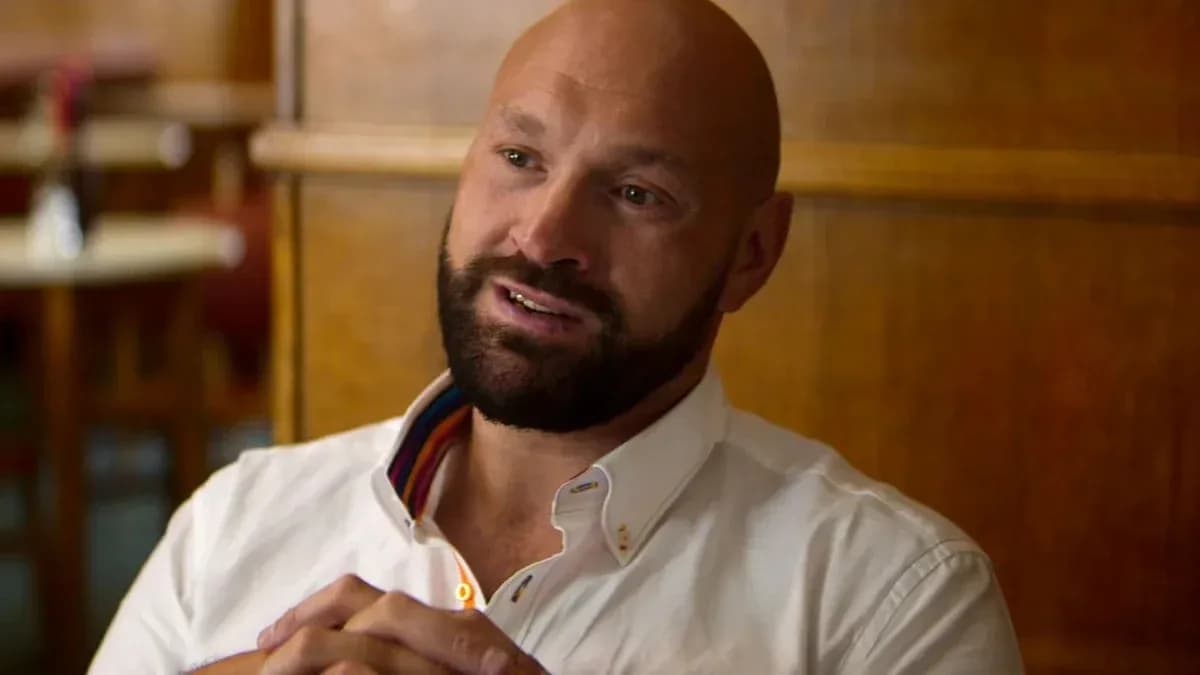
Paris Fury has stepped back from her claim that husband Tyson Fury was diagnosed with schizophrenia, prompting a late edit to Netflix’s new documentary on the heavyweight star.
The series charts Fury’s battles with depression, anxiety and bipolar disorder, struggles that intensified after his seismic victory over Wladimir Klitschko in 2015, when he became unified heavyweight champion. In an earlier cut of the programme, Paris referred to schizophrenia while talking about her husband’s mental health.
That word has now been withdrawn.
“I want to clarify a statement I made in the original version of the Tyson Fury documentary,” she said. “I recalled a conversation from many years ago when discussing Tyson's condition and I used the word 'schizophrenic'. Whilst Tyson did show some symptoms associated with schizophrenia, he doesn't have this condition and has never received a diagnosis.
“Mental health is complex, and it isn't always easy to find the right words, especially when you're living it with someone you love. I'm so proud of Tyson for really opening up in this documentary and want to say thank you for all the support we've received as a family.”
Netflix has moved quickly. The streaming giant confirmed it has reworked the footage ahead of launch after being given “new information” by the Fury family about Tyson’s official diagnosis.
“Following new information shared by the family relating to Tyson's official mental health diagnosis, we have worked alongside them to update the documentary accordingly ahead of launch,” a Netflix spokesperson said.
The timing of the clarification is significant. Earlier on Thursday, the British Boxing Board of Control (BBBoC) indicated it was looking into the original comments and could, in theory, refuse Fury a licence to face Anthony Joshua in Cardiff on December 11 if he were deemed unfit to fight. Sky Sports News has approached the BBBoC to establish whether that investigation still stands in light of Paris Fury’s retraction.
The documentary itself does not soften the reality of Fury’s descent after the Klitschko win. The champion who sat on the throne of the heavyweight division spiralled into drug and alcohol abuse, watched his weight balloon and saw his life veer towards catastrophe.
In June 2016 he was admitted to hospital with what was thought to be a heart attack. While there, he says, he heard voices.
“Words can't explain the darkness I was in,” Fury says in the film. “It was like a living version of the pits of hell.
“I thought I would end up in a padded room with the door locked, and that scared me so much.
“The anxiety was crippling me. I just could not overcome it and that's when I went and saw the psychiatrist down in London. She asked me a gazillion questions, and I ticked all the boxes. Depression, anxiety, bipolar disorder.”
The NHS defines schizophrenia as a long-term mental health condition, a form of psychosis in which a person can, at times, struggle to separate their own thoughts from reality. Hallucinations and delusions are among the possible symptoms. Bipolar disorder, by contrast, is described as a condition marked by extreme shifts in mood, from crushing lows to intense highs.
For Fury, those labels have framed a journey that has taken him from the summit of the sport to the edge of the abyss and back again. With his wife now correcting the record and Netflix reshaping its portrayal, the next question sits with the regulators – and whether any of this will touch his right to climb through the ropes for that blockbuster Cardiff date.