Ferrari Leads F1 Team Valuations as Values Surge
Formula 1 is no longer just catching the big American sports leagues. It is hunting them down.
Forbes’ 2026 F1 team valuations paint a sport in full financial sprint: the average team is now worth $5.2 billion, up 47% in a single year. Strip out new entrant Cadillac, which only joined the grid in 2026, and that jump hits 53%. Seven years ago, F1 teams were valued at just 2.3 times revenue. Now the multiple stands at 10.3 — closing fast on the NFL’s 13.4 and the NBA’s 12.9, and already ahead of the NHL (8.9) and MLB (7).
At the front of the pack, as ever, sits Ferrari.
Ferrari Still the Benchmark
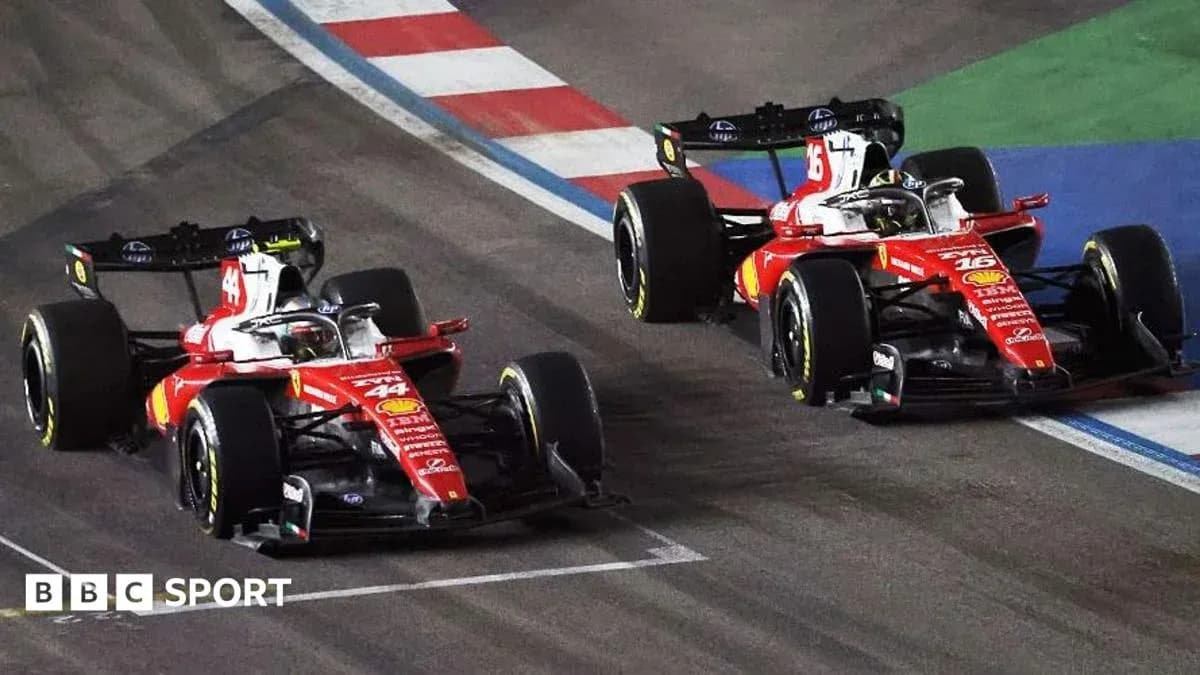
Ferrari tops the list at $9.5 billion, the most valuable F1 team on the planet and the richest operation in the paddock by Forbes’ measure. Its value has surged 46% in a year, underlining just how powerful the Ferrari brand remains, regardless of championship position.
On the financial side, Ferrari generated an estimated $850 million in 2025 revenue and $160 million in operating profit (earnings before interest and taxes). Those numbers still trail its two closest rivals on turnover, but the valuation gap tells the real story: heritage, prestige and global pull carry a premium that no balance sheet can fully explain.
Right behind, Mercedes continues to grow at pace. The Brackley-based giant is valued at $9.2 billion, up 53%, with Forbes estimating 2025 revenue at $855 million and operating profit at $225 million — the highest profit figure in the field. Mercedes and McLaren both expect to break the $1 billion revenue barrier this year, a milestone never before reached by an F1 team.
McLaren’s Loss Today, Billions Tomorrow
McLaren sits third at $7.6 billion, up a striking 73% year-on-year. That leap comes despite an operating loss in 2025 of $58 million on $794 million of revenue, a hit Forbes attributes to a large executive incentive payout. The expectation: McLaren could swing to nearly $200 million in operating profit in 2026.
The valuation shows how investors now view F1 teams — not as fragile race outfits living season to season, but as long-term media and entertainment assets with serious upside. McLaren’s growth curve, on and off track, is being priced as such.
Red Bull, fourth at $6.6 billion (up 52%), sits slightly lower in valuation but remains one of the sport’s commercial powerhouses. Forbes pegs the world champion squad’s 2025 revenue at $706 million with $33 million in operating profit. It also reports that Red Bull turned down an offer of up to $3 billion for its second team, Racing Bulls, earlier this year, a clear signal of how the energy drink giant views the long-term value of both its F1 entries.
Aston Martin’s Paradox and Audi’s Arrival
The most intriguing name in the top half might be Aston Martin. On track, it languishes in 10th in the constructors’ standings. Off it, the team ranks fifth in valuation at $4.75 billion, up 48% on last year.
That number is not theoretical. Billionaire New York Jets owner Woody Johnson bought a minority stake in Aston Martin in August at an enterprise value of $4.75 billion, according to Forbes, citing two people familiar with the deal. The team posted an estimated $464 million in 2025 revenue and a $27 million operating loss, yet its brand alignment with Aston Martin road cars and the sport’s growth trajectory have investors paying top-tier multiples.
Audi, preparing to deepen its F1 footprint, comes in sixth at $3.8 billion, up 58%. The German marque’s 2025 financials show $340 million in revenue and a $20 million operating loss as it builds up its program. Still, the valuation underscores the market’s confidence in a major manufacturer’s long-term impact.
Williams, one of F1’s most storied names, sits seventh at $3.5 billion, up 40%. The team posted $329 million in revenue and $27 million in operating loss in 2025. Alpine follows in eighth at $3.4 billion (up 39%), with $388 million in revenue and $22 million in operating profit, a rare combination of mid-grid performance and positive earnings.
Racing Bulls, Cadillac and Haas: America’s Angle
Racing Bulls, Red Bull’s sister team and on course for fifth in the constructors’ championship, ranks ninth at $3.3 billion, up 43%. Forbes estimates its 2025 revenue at $370 million with $10 million in operating profit. Those figures, coupled with the reported $3 billion offer Red Bull rejected, highlight how secondary teams are no longer seen as expendable.
Cadillac, in its first F1 season, lands 10th at $3 billion. With no 2025 comparison figures — the brand only joined the grid in 2026 — Forbes lists no revenue or profit data, but the valuation alone shows how a major American name instantly shifts the sport’s commercial gravity.
Then comes Haas, the other American-owned team, in 11th at $2.8 billion. It is still the least valuable outfit on the list, yet its story might be the most dramatic: an 87% jump from $1.5 billion, the biggest rise of any team. Forbes estimates Haas generated $199 million in revenue and $13 million in operating profit in 2025, turning a solid return from the back of the grid.
Haas’ valuation matches Cadillac’s in the Sportico rankings, but that rival list, published on Nov. 12, reshuffles the order in the midfield. Sportico also has Ferrari on top, for the fourth straight year, but at $8.2 billion — $1.3 billion lower than Forbes’ figure. It places Alpine sixth, Racing Bulls eighth, Audi ninth and Cadillac last, behind Haas. Both outlets agree on Haas at $2.8 billion, though Sportico calculates that as a 67% rise rather than 87%.
F1 as a Global Asset Class
Behind all these numbers lies a clear shift. Forbes values the 10 established teams at an average of 10.3 times last year’s revenue, up from 8.3 just a year ago. That multiple has more than quadrupled in seven seasons. Enterprise values — equity plus net debt, rather than hypothetical sale prices — now define the conversation, and serious investors are treating F1 outfits as scarce, global media assets.
The sport has gone from fragile to feverishly sought-after. Ferrari at $9.5 billion is the headline, but the real story is the collective surge: from Haas’ 87% jump at the bottom to McLaren’s 73% rise near the top.
If this is where F1 stands in 2026, with valuations already nudging against the NFL and NBA, the question is no longer whether teams can keep up. It is how long until one of them breaks through the $10 billion barrier — and who gets there first.