Franz Wagner Transforms Orlando Magic Offense
The Orlando Magic still can’t score. Franz Wagner suddenly does everything.
For the 15th straight season, Orlando sits in the bottom six of the league on offense, mired once again below the NBA’s scoring average. That part of the story is depressingly familiar.
What’s new is who’s holding the ball.
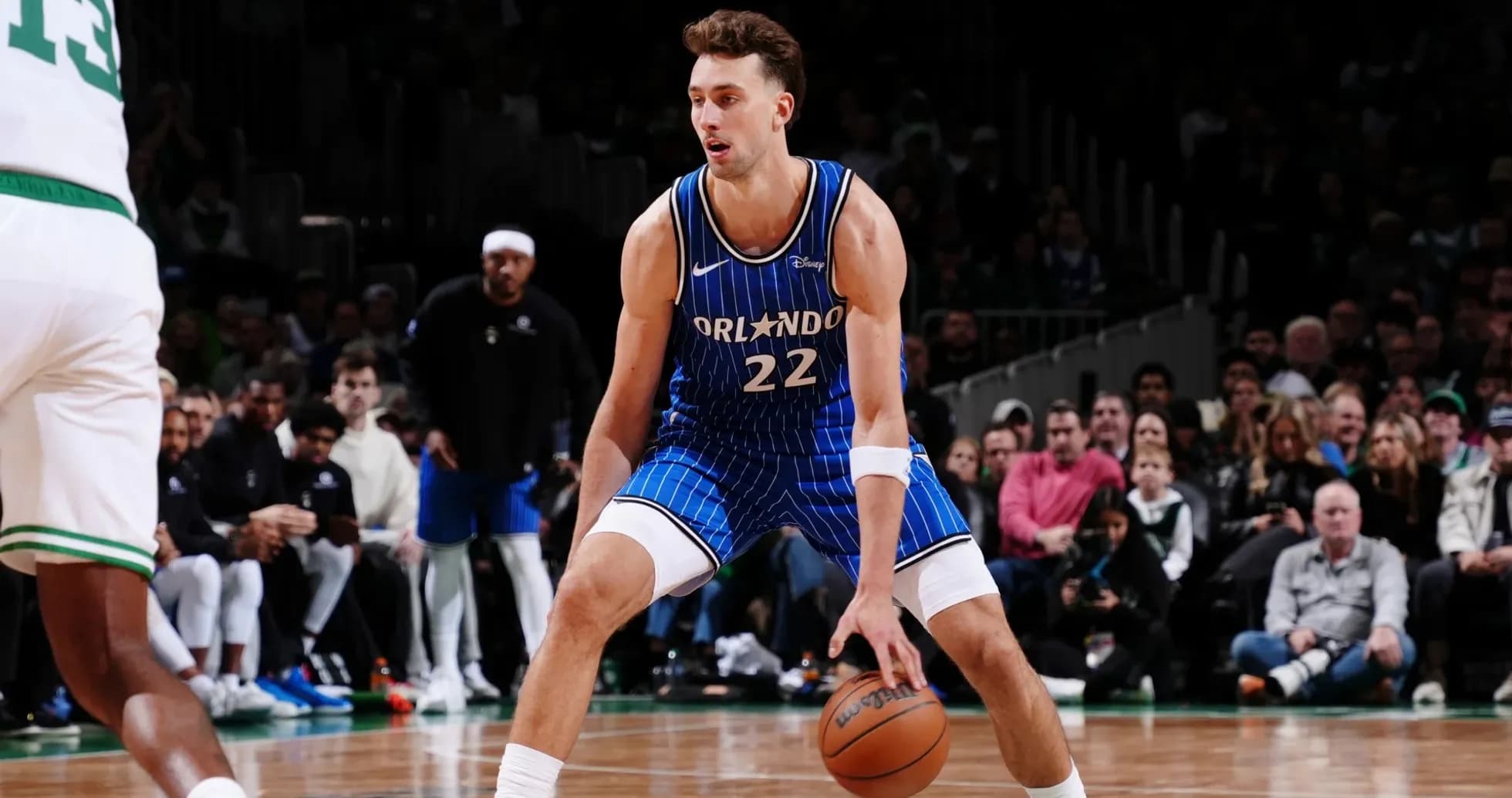
Wagner, in his sixth year, has been turned into a full-fledged offensive engine. He’s one of only three players in the league averaging at least 24 points and eight assists per game, a statistical neighborhood usually reserved for the game’s primary creators, not a forward who, until recently, worked mostly off the ball.
The scoring isn’t shocking. Wagner has been at this level before. The playmaking is something else entirely.
Last season, he averaged 3.3 assists. This year, he’s more than doubled that, flirting with a career-high by a “huge margin” and doing it in a role that barely resembled his old one. Under a new coach and with Paolo Banchero limited to just two games, Orlando has simply handed Wagner the keys.
The numbers show just how dramatic the shift has been. Wagner now has the ball in his hands for 5.9 minutes per game. That’s seventh-most in the entire league. A year ago, he sat at 2.2 minutes, fifth on his own team. From secondary option to primary handler, almost overnight.
The experiment hasn’t fixed Orlando’s offense. Not yet.
The Magic have suffered the league’s eighth-largest drop in points per 100 possessions, down 4.0 from last season’s mark. The system is creaking, the spacing still tight, the scoring still labored.
But when Wagner plays, the picture changes.
With him on the floor, Orlando scores 111.6 points per 100 possessions — not elite, but functional, competitive, a platform you can build on. When he sits, the attack collapses to 98.1 points per 100. That’s not just bad; that’s unplayable in a modern NBA game tilted toward offense.
The contrast underlines what this season has become for the Magic: a team-wide struggle wrapped around one player’s rapid transformation.
Wagner’s time-of-possession spike is one of the biggest in the league. Only a handful of players have seen their percentage of floor time with the ball jump as dramatically as his. He’s gone from touching the offense to steering it.
He’s not alone in that shift. Across the league, roles are being rewritten.
Kasparas Jakučionis and Tyler Herro, both now in Milwaukee, are prime examples. Surrounded by many of the same teammates they had in Miami, they’ve moved on the ball far more often, with Jakučionis’ time of possession and usage both climbing sharply. Herro has held his efficiency, even stretching out to 39.1% on pull-up threes while taking on more responsibility.
In Charlotte, the board has been flipped over. LaMelo Ball’s departure and Kon Knueppel’s absence have forced the Hornets to spread creation duties across the roster. Coby White, Dennis Schröder, Naz Reid, Brandon Miller — multiple names show up on the lists of biggest jumps in time of possession and usage. The ball is in different hands now.
The result? Chaos. Charlotte owns the league’s largest drop in offensive efficiency by a wide margin. The usage has gone up for several players; the quality of those possessions has not followed.
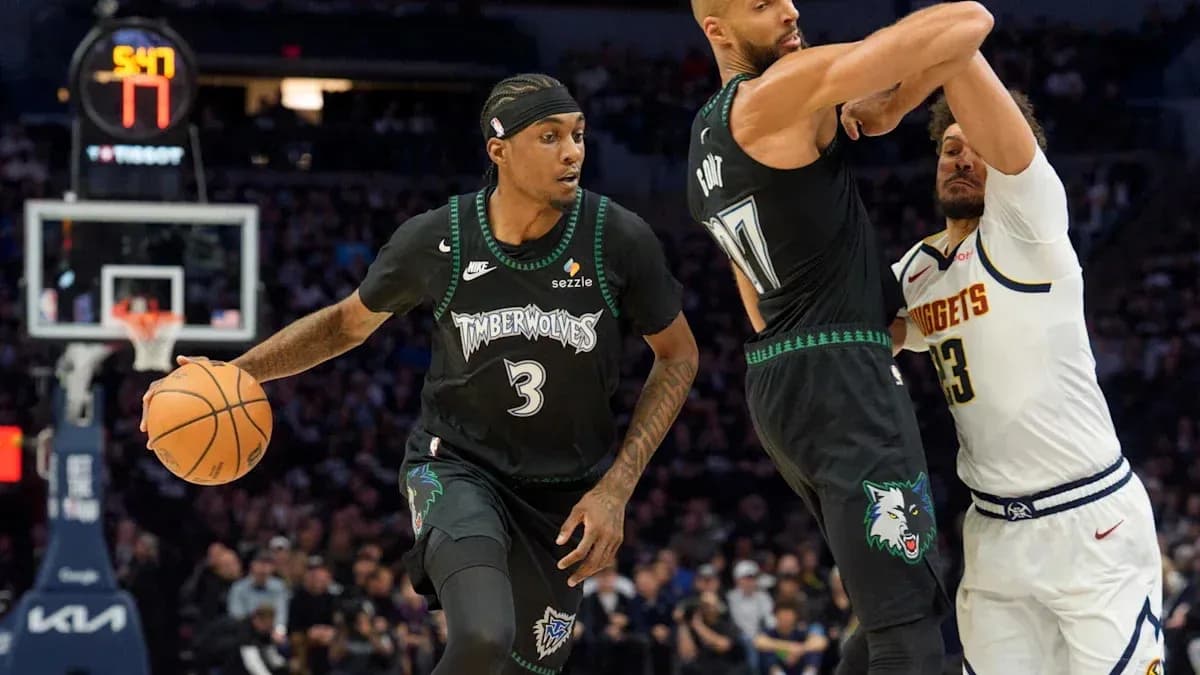
Minnesota tells a different story. With Anthony Edwards out and LaMelo Ball playing only 28.4 minutes per night in his new home, the reserves have stepped into the void. Bones Hyland and Terrence Shannon Jr. have both seen their roles swell, their time on the ball and usage rates rising as the Wolves lean on depth rather than a single star.
On the other end of the spectrum sit the players learning to live with less.
Dejounte Murray’s time of possession has cratered in New Orleans. His percentage of minutes with the ball has taken one of the sharpest dives in the league, a shift that ties directly into reports that he has asked the Pelicans for a trade. Jeremiah Fears, now in the starting lineup, leads the team in time of possession, and Murray is suddenly a guard without his usual level of control.
Giannis Antetokounmpo’s box scores in Miami still look monstrous, but they’re being built differently. His time of possession is down, Davion Mitchell leads the Heat by a wide margin in that category, and 56% of Giannis’ buckets are now assisted — his highest assisted rate since his rookie season. He’s finishing more and initiating less, a superstar reconfigured within a new hierarchy.
Some players have benefited from surrendering touches. Deni Avdija, now in Portland, has seen his usage and time of possession fall, yet his efficiency has surged. He’s posting career-best marks from two (56.5%) and three (43.3%), and the Blazers have ridden that cleaner shot profile and rebalanced offense to the league’s third-biggest jump in points per 100 possessions, vaulting from 21st to sixth.
Usage trends tell the same story of reshaped roles.
Scottie Barnes has stepped into a heavier burden in Toronto. With Brandon Ingram gone and Kawhi Leonard appearing in only two games, Barnes’ usage rate has exploded from 22.6% to 30.8%. The efficiency has dipped slightly, but the Raptors’ overall offense remains roughly where it was: a tick better than league average, now powered by their young forward’s all-court workload.
Brook Lopez, in his 19th season, has gone the other way: more involved, more efficient. His usage has climbed nearly five percentage points, and he’s delivering the most efficient scoring year of his career. A higher share of his shots now come in the paint, his free throw rate is up, and he’s converting 69.0% in the lane — the best mark he’s ever posted.
Mitchell’s rise in Miami has been just as stark. Playing next to Antetokounmpo, he’s having a career year: 17.2 points and 8.7 assists per game, fourth in the league in dimes. His minutes, usage and efficiency are all up, even if his usage still trails what he posted as a rookie in Sacramento. The ball is in his hands; the Heat’s structure reflects it.
Then there are the stars asked to scale back.
Alex Sarr in Washington has seen one of the largest usage drops in the league, tumbling from 25.2% to 15.7%. Trae Young and Anthony Davis have arrived and, as expected, swallowed possessions. Yet Sarr’s efficiency has soared, his true shooting jumping more than eight percentage points. Bilal Coulibaly’s usage has also fallen, and his scoring efficiency has climbed. Deandre Ayton and Bub Carrington sit just outside the top 10 in usage decline.
Washington’s offense has improved — from 29th to 22nd — though it still lags behind the league’s best. The redistribution of touches has made them more competent, if not yet dangerous.
Philadelphia and Brooklyn show the same pattern in different ways. The Sixers have Jaylen Brown and Kentavious Caldwell-Pope both taking on smaller roles with notable efficiency bumps, while Anfernee Simons’ usage has slipped as well. In Brooklyn, Noah Clowney and Michael Porter Jr. have scaled back as Julius Randle and Egor Dëmin step forward, Dëmin’s usage climbing significantly.
Dillon Brooks, meanwhile, has swung from one extreme to another. After leading the league in usage jump from 2024-25 to 2025-26, he’s now tied for the 11th-biggest drop. His efficiency has barely moved through all of it, a constant amid changing roles and expectations.
Strip away the spreadsheets and the theme is simple: who gets the ball, and when, is reshaping seasons.
For Orlando, that question has produced a clear, if complicated, answer. Franz Wagner has become the hub. The Magic still can’t score at a league-average rate, but when he’s on the court, they at least look like a functioning offense.
The next step is obvious and unforgiving: can this version of Wagner, with this level of responsibility, drag an anemic attack into relevance once Banchero returns and the lineup settles — or is this just a bright light inside another dim Magic season?