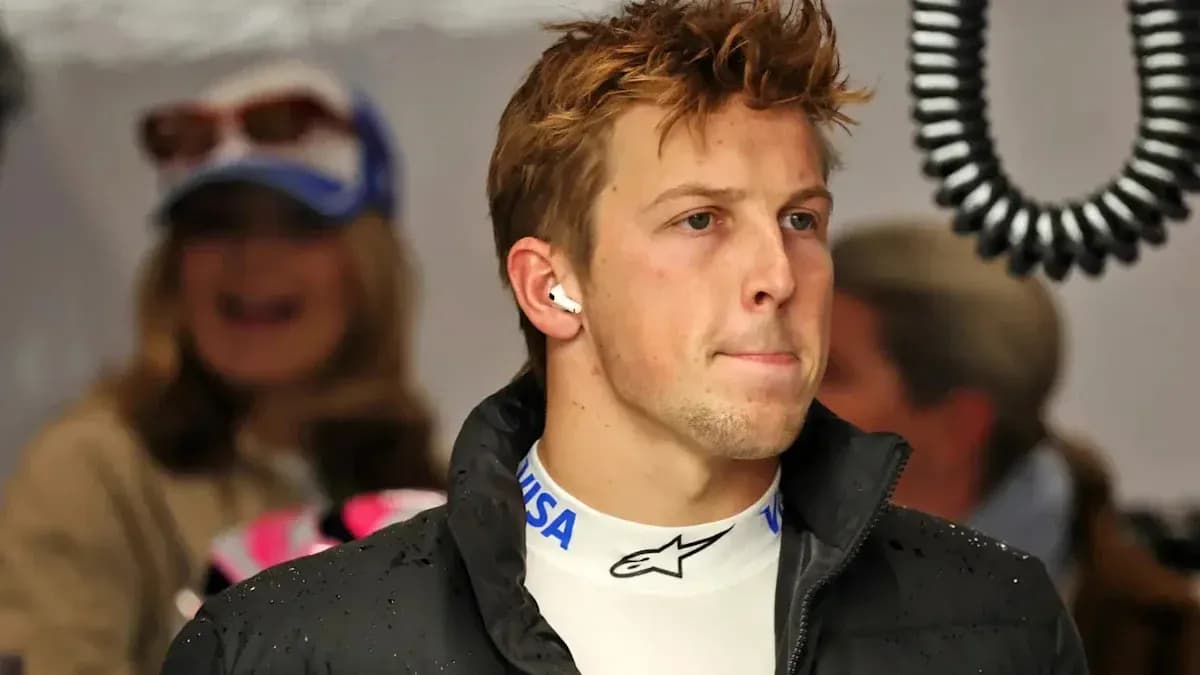
Liam Lawson's Frustrating Las Vegas Grand Prix Experience
Liam Lawson left Las Vegas with the fastest lap on the board and a lingering sense that the race had been taken away from him by circumstance and procedure.
The Racing Bulls driver had every right to feel that way.
A Lap Down Before It Even Began
Lawson was meant to start seventh on the grid for the Las Vegas Grand Prix. Instead, a fuel leak on his car forced a frantic repair job in the garage while the rest of the field formed up.
By the time he emerged from the pit lane, the race was already underway. He joined from a lap down, his evening instantly transformed from a promising top-10 shot into a damage-limitation exercise on one of the longest laps in Formula 1.
He responded the only way a driver can: with speed. Lawson showed strong pace around the neon sweep of the Strip, quick enough that by the end of the night he would own the fastest lap of the race. But the numbers on the timing screen told only half the story.
The real frustration arrived on Lap 19.
Safety Car Chance Slips Away
A collision between Sergio Perez and Rafa Camara triggered the Safety Car. For Lawson, it looked like a lifeline. On most weekends, lapped drivers are given the chance to unlap themselves, sprint around, and rejoin at the back of the pack, effectively back in the game.
At a circuit as vast as Las Vegas, that chance becomes more complicated.
Lawson was released to unlap himself, but agonisingly late in the sequence. On the second-longest track on the calendar, every hesitation counts. By the time he was told that race leader Max Verstappen was about to restart the race, Lawson was still 20 seconds adrift of the pack. The field bunched up. He was marooned.
“I don't know why they took four laps to release me. I get that when there's marshals on track and there's safety around it. I can understand that, but it's still a double yellow,” he said later, speaking to media in Qatar.
He had been watching the race unfold on the big screens as he circulated in no-man’s land, knowing he had the pace to be part of the fight, knowing he would not be.
“So frustrating, man. I was watching the screens the whole race and I could see how close it was bunched up. At the end of the race, we were very, very quick today. It's really frustrating to not have the chance to fight there.”
Safety vs Sporting Fairness
Days later, at the Qatar Grand Prix, the irritation had not fully faded. Lawson was still turning the Las Vegas scenario over in his mind, weighing the balance between safety and sporting integrity, and questioning whether the system had really done its job.
Asked whether Racing Bulls had taken the matter up with the FIA, and if he would raise it in the drivers’ briefing, Lawson was careful not to target the core principle of safety, but clear about where he felt the procedure fell short.
“I understand the safety aspect of it. I don't want to compromise that at all,” he said. “But I just think when we have these double yellow zones anyway, I'm going to follow the delta in there and slow down regardless, so that zone won't be any different. So as if I was following a Safety Car, and the rest of the lap, I could be catching back up.”
That is the heart of his argument: if drivers are already bound by strict speed limits in danger zones, why can’t the rest of the lap be used to close the gap and restore a genuine racing opportunity?
He also recognised the competing pressure race control faces, particularly on a cold street circuit where tyre temperatures plummet behind the Safety Car.
“I also understand that they need to get the race going when everybody's struggling with tyre temps and stuff like that. So I think it was just bad timing. But it kind of defeats the purpose a little bit when you get your lap back, but you don't actually get your lap back.”
Lawson left Las Vegas with a purple lap time and no reward, a case study in how a rule designed to tidy up races can, on nights like that, leave one of the quickest drivers completely out of the picture.