Harbhajan Urges ICC and BCCI to Address Indo-Pak Cricket Tensions
The cricket has been riveting. The behaviour, less so.
Across the last fortnight, India-Pakistan clashes at age-group and A-team level have crackled with tension and spilled into confrontation, leaving former off-spin great Harbhajan Singh urging the game’s authorities to step in before the line is crossed again.
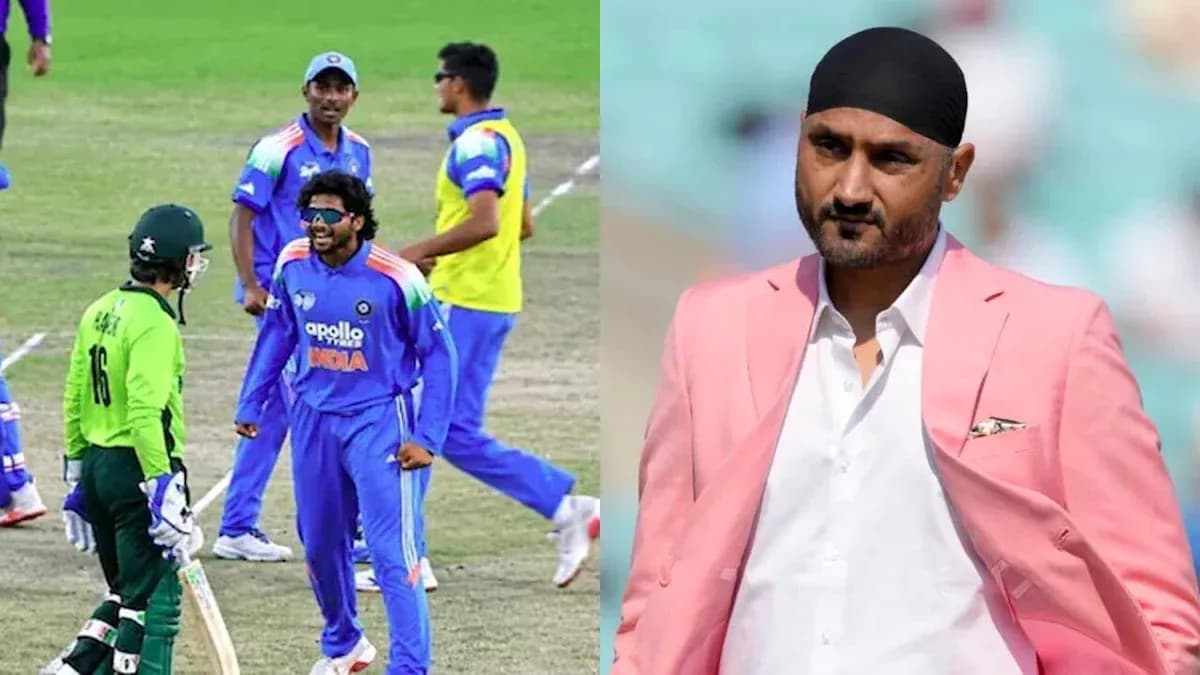
At Al Amerat on November 14, India’s Under-19s edged Pakistan by one wicket in a dramatic Asia Cup final. The contest was outstanding; the aftermath, ugly. Indian youngsters celebrated in the faces of their opponents, tempers flared, and what should have been a defining cricketing memory descended into a shouting match.
Eight days later in Doha, the pattern repeated. During the Asia Cup Rising Stars match between India A and Pakistan A (Pakistan Shaheens), India A pacer Harshit Rana became embroiled in heated verbal exchanges with several Pakistan players as emotions boiled over. Pakistan A won by 48 runs, but the cricket again shared the stage with confrontation.
From Mumbai on Tuesday, Harbhajan made it clear he has seen enough.
“Somewhere down the line, the ICC needs to step in. I think it is just getting a bit too much with the reactions,” he said at an event at the BPGC Golf Course. He pointed to the escalating tit-for-tat: Pakistan’s Under-19s over-celebrating in the league stage, India’s Under-19s responding in the final, and then the scenes in Doha.
Sport, he stressed, needs edge. But not excess.
“See, some amount of chit chat happens, and has been happening for a long time. That should happen also. The game needs a bit of masala like that. However, it should not reach a point where you feel it is shameful,” he said, calling on the ICC and national boards to “put their foot forward” and draw a clear line on post-match conduct from both sides.
Pressed specifically on Rana’s altercations with Pakistan players, Harbhajan did not sugar-coat his view. “I don’t think that should happen. I think it is not setting the right example for the generation coming up.”
‘We should have bowled those 15 overs’
If Harbhajan wanted tougher action off the ball, he also wanted more fight with it.
India’s failure to close out the first Test against New Zealand in Wellington, where the hosts batted out the final day to secure a draw, has triggered familiar questions about the team’s ability to finish games on the fifth day. India shook hands with 15 overs still left in the final session, a call that divided opinion.
Harbhajan, who took 417 wickets in 103 Tests, did not join the chorus blaming the attack, describing the surface as “really flat” and typical of conditions in Australia and New Zealand at times. But he did question the early handshake.
“There were 15 overs left and they declared the game (a draw) before. Yes, you could have tried. You never know. Things move very fast in cricket,” he said. “If I was part of the management, I would have liked to bowl another 15 overs and give it a try. And let’s see. You never know.”
To underline his point, he went back to one of the most painful finishes of his own career: the 2008 Sydney Test. With time almost gone and India clinging on, part-time left-arm spinner Michael Clarke was thrown the ball and ripped through the tail, taking three wickets for five runs in 1.5 overs to seal a controversial Australian win.
“After everyone else had bowled, Australia introduced Clarke just two overs before (the close of the Test). And nothing was happening. Suddenly he came and he took those two important wickets and they ended up winning that match. So, cricket is a very funny game. Anything can happen.”
For Harbhajan, that unpredictability demands a mindset he associates with his old partner Anil Kumble.
“I have always been a fan of Anil Bhai. And I still say that his attitude was that you have to fight till the last ball. Whether you are bowling or batting or in the field, you have to fight till the last ball. So 90 balls is a lot. I think we should have tried in those 90 balls (to get the remaining five Kiwi wickets). You never know. Maybe the result will come in your favour.”
Backing Washington, asking for patience
One man who has worn some of the criticism from Wellington is Washington Sundar. The off-spinner bowled 35 overs for figures of one for 65 as New Zealand batted out the final day, prompting questions about whether India missed the control and penetration of Ravindra Jadeja and Mohammed Siraj.
Harbhajan refused to let the blame settle on the 24-year-old.
“It’s very easy for all of us to pinpoint an individual and say he could have done this or he could have done that,” he said. “He tried his best. He is young. He is learning. And of course, the more he plays, the more he will learn about these situations. Next time, if he is in such a situation, I am sure he will be able to perform better.”
His message was blunt: “You win with 11, you lose with 11 and you draw with 11. So, give him some time. I am sure he will learn and he will get better.”
The broader trend is harder to ignore. India have now failed to close out Test wins in the final session in consecutive matches, having also let Sri Lanka escape in Colombo in August. Harbhajan, though, urged restraint.
“That will happen (closing out Test wins). This is the same team that won in England. Have some patience with the team,” he said, pointing to a familiar pattern of overreaction. “If you don’t get a result that we want from the Indian team, then we go after it. Give them a break. They need to ‘breathe out’ as well. They are on the road continuously. So, give them some break. I’m sure that they’ll get the right results for Team India.”
As for whether Jadeja or Siraj would have changed the Wellington script, he refused to indulge in hindsight.
“Time will tell. You say, what would have happened if Kapil paaji had played? I can’t say much about what would have happened. But if he would have played, we would have talked about it. I can’t really predict what would have happened if he would have played. If I would have known, I would have called Gautam and asked him to play,” he said with a smile.
‘They should not be given so much respect’
The conversation eventually turned away from India and back to an old fault line in world cricket: ball tampering, and specifically the ‘Sandpaper-gate’ scandal that has once again resurfaced in Australian cricket.
For Harbhajan, there was nothing shocking about it.
“I don’t think this is a new thing. This is a very old thing,” he said, pointing out that Pakistan and India had long talked about how reverse swing was being achieved. “Wherever there is reverse swing, there must be something with the ball. People are doing it.”
He drew a distinction between natural wear and deliberate manipulation, but did not pretend the latter was rare.
“Naturally, if you go to make the ball reverse, it takes some time to get the ball going. But if you make the ball reverse in the 10th over, then it is understood that there can be nothing but teasing,” he said, referring to the use of foreign substances such as sandpaper.
Harbhajan’s sharpest words were reserved for the aura that still surrounds Australian cricket.
“Australia is not as simple as they used to be. Their players are not as simple as they used to be,” he said. “I have said this from day one, they should not be given so much respect. They should be given a lot of respect. They have also played the game. They have also done all these things.”
For him, the idea that only a few players knew about ball tampering within that dressing room simply does not hold.
“Now they have been caught or things have come out, they are saying that they did not know. It is not possible that you are living in one house, you are living in another house, you do not know who is living there. Everybody was part of it. I believe. If it is in the team, then it is a collective thing.”
From Doha to Wellington to the long shadow of Sandpaper-gate, Harbhajan’s message threaded through every subject: standards matter. How you celebrate, how long you fight, how honestly you play the game — they all tell you what a team really is.
The question now is whether the boards, the ICC, and the players themselves are ready to listen.