Josh Hazlewood's Stance on Test Cricket and Cummins' Captaincy
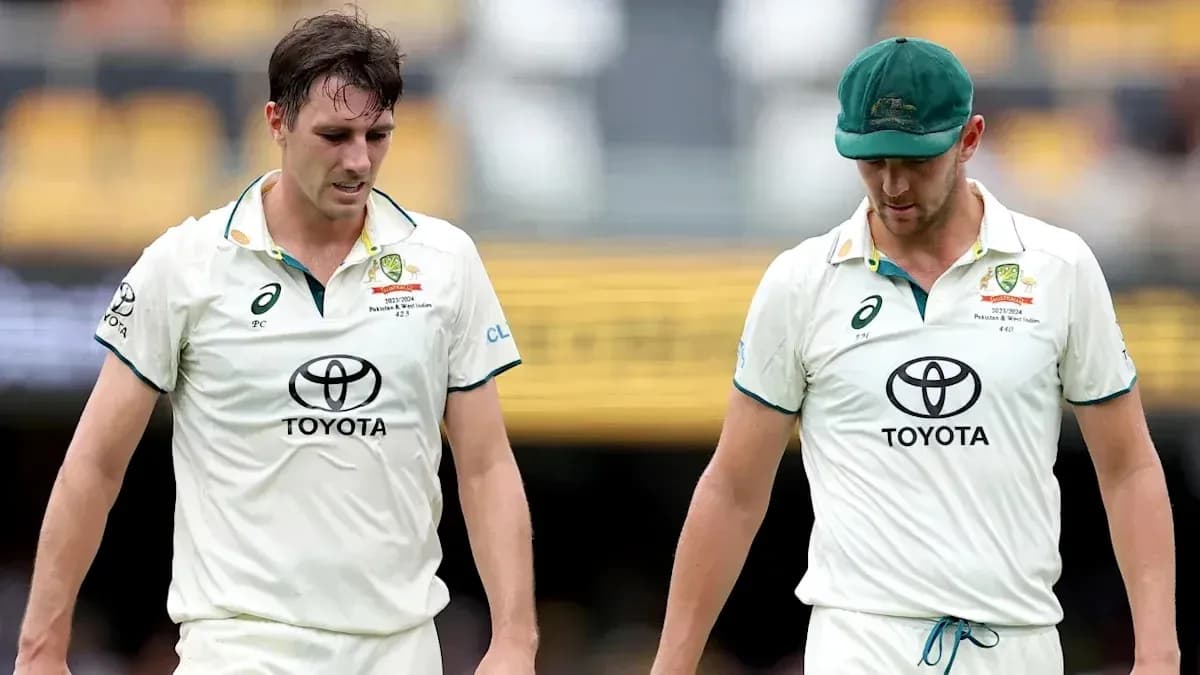
Josh Hazlewood has never been a headline-chaser. Metronomic, understated, relentlessly reliable – that’s his brand. So when he hints he might walk away from Test cricket if Pat Cummins is forced out as captain over Sandpapergate, people listen.
Not because it’s dramatic. Because it’s Josh Hazlewood saying it.
Hazlewood draws a line in the sand
Cummins has been dragged back into the wreckage of 2018 after Usman Khawaja claimed the entire team knew about the ball-tampering plan in Cape Town. David Warner has long suggested the dressing room was aware. Cameron Bancroft, in a 4,000-word column this week, has gone further, insisting everyone knew sandpaper had entered the field.
The captain, then a frontline quick and not part of the leadership group, has always denied any role in the plot or knowledge of sandpaper being used. Hazlewood has now stepped forward to reinforce that stance – and to put his own reputation behind it.
He called Cummins a “great leader” and went well beyond the usual dressing-room platitudes, warning that a forced change of captaincy could shake his own commitment to the Test side.
“I think if we turned up for the first Test and he wasn’t the captain and it was someone else, honestly, I don’t know how that would go,” he told Code Sports.
Asked directly whether he would consider his Test future if Cummins was removed over Bancroft’s claims, Hazlewood didn’t duck the question.
“I think I’d have to be put in that position to make a decision, but you’d have to think about it, yeah.”
For a 35-year-old with 313 Test wickets and a central role in Australia’s attack, that is as close as it gets to a shot across Cricket Australia’s bow.
‘Pile on’, pressure and a captain under fire
Bancroft’s column has reopened wounds the sport has tried, and largely failed, to heal for six years. Cummins, who took over as captain with a mandate to reset the team’s image, now finds his integrity under siege from within his own generation of teammates.
Hazlewood sees something else: a storm gathering around a captain he believes has rebuilt the culture from the ruins of Cape Town.
He called the criticism of Cummins since Bancroft’s piece “a bit of a pile on” and argued that the work done under his leadership has pushed the team into a very different space.
“To get the group where it is now and in a position where something like that (sandpaper) is never going to happen again – I think is just a remarkable job,” he said.
Inside the dressing room, Hazlewood insists, the backing for Cummins is strong.
“He’s a great leader. If you went around and asked everyone in the team, you’d hear the same response.”
Coming from one of the senior bowlers who co-signed the 2021 statement denying any prior knowledge of sandpaper being taken onto the field – alongside Cummins, Mitchell Starc and Nathan Lyon – those words carry weight.
‘Was I an architect? Was I aware? The answer is no’
Hazlewood’s defence of Cummins is also, inevitably, a defence of himself.
He again rejected any suggestion he knew of a plan to tamper with the ball during that South Africa tour, leaning on the immediacy of his original interview with investigators in 2018.
“We were interviewed straight after (Cape Town) and I trust what I said in that two-three hour interrogation more than anything because it was in the day or two after,” he explained.
“It was fresh in my mind at that point. Two things stand out for me from what’s been said. Was I an architect in the plan to tamper with the ball with sandpaper? And was I aware (of) sandpaper or foreign substances being used on the field? The answer is no. When it boils down to it I think those two points are crucial.”
It is a simple, binary defence. No nuance, no attempt to soften the edges. Either he helped plan it, or he knew about sandpaper on the field. He says he did neither.
Inside the dressing room: a divided past
Bancroft’s column painted a picture of a dressing room where the idea of using sandpaper was floated at tea on day two of the Port Elizabeth Test, with Australia behind in the game. He alleged then coach Darren Lehmann and bowling coach David Saker were present when Warner first raised the plan.
Hazlewood says he wasn’t part of those conversations and offers a different snapshot of that era – one that might explain why memories and accounts now diverge.
“It wasn’t the closest team. It’s been thrown around now about bowlers versus batters, but at that point in time, it might have been true to a degree,” he said.
He then described the reality of a tea break for a fast bowler: 20 frantic minutes, not a strategy summit.
“As bowlers in a tea break. You’ve only got 20 minutes so I’m probably changing all my gear and I’m getting out on the field earlier to bowl to whoever wants to catch, probably the fielding coach.
“It’s a lot different to lunch where you sit down and touch on things about how the game is going. Tea breaks are a very busy time.”
The subtext is clear: this was not a tight, unified dressing room where every player shared every discussion. If the team was fractured, it becomes easier to see how some could claim universal knowledge, while others insist they were never in the room.
Did the bowlers really not notice?
One of the most persistent arguments in the Sandpapergate fallout has been simple: how could the fast bowlers, who handle the ball more than anyone, not know it had been tampered with?
Hazlewood pushed back hard on that assumption, breaking down his own match-day routine.
“When you’re not bowling you’re at fine leg. When I’m bowling I am profusely sweating,” he said.
“I get thrown the ball right at the end (to avoid his sweat), put it in my hand, look at what’s the rough side, what’s the shiny side and bowl the ball. That’s literally what happens.”
No lingering examination. No forensic inspection. Just a quick check of which side to shine and which to scuff through natural wear.
He added that nothing about the ball struck him as unusual at the time – and, crucially, nothing caught the eye of the umpires either.
“I never remember looking at the ball and going ‘wow, this is not natural deterioration’. And obviously the umpires didn’t either.”
Hazlewood then pointed to one last piece of irony: Cummins, the man now being accused of benefiting from the plot, is hardly a reverse-swing specialist.
“Patty’s not a big reverse swing bowler, ironically. I don’t think I’ve ever seen him really reverse the ball. Starcy and myself are a bit more slingers, and reverse swinging,” he said.
The stakes for Cricket Australia
Strip away the emotion and one hard fact remains: Hazlewood is not just another voice in this saga. He is one of the senior quicks who signed the 2021 document denying prior knowledge, a pillar of the current side, and a player whose words carry weight in any boardroom.
When someone of his standing says he would have to consider his future if Cummins is pushed out, Cricket Australia cannot ignore it. He has not issued an ultimatum, but he has made the consequences clear enough.
His account of sweating hands, short tea breaks and limited contact with the ball does not end the argument; it is one man’s version of events in a story now crowded with conflicting memories. His admission that the team “wasn’t the closest” in 2018 cuts both ways as well. A fractured group is fertile ground for both miscommunication and resentment.
What his intervention does do is sharpen the choice facing administrators.
A first Test in Perth against New Zealand is only days away. Cummins should be plotting fields and workloads, not revisiting Cape Town. Instead, the captain’s future, the dressing-room hierarchy and the governing body’s appetite for reopening old wounds all hang in the balance.
Hazlewood has nailed his colours to the mast. If Cricket Australia pulls at that thread, how much of the current fabric are they willing to risk unravelling before a ball is even bowled this summer?