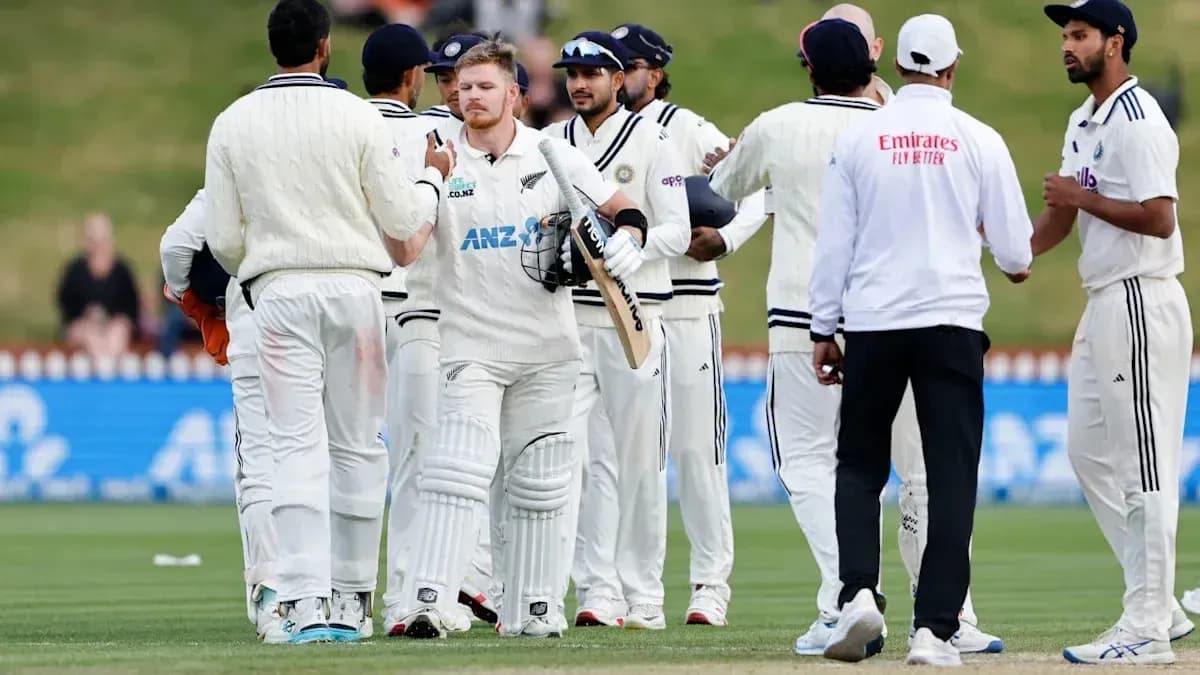
India's Defensive Strategy Criticized After Wellington Draw
India walked out of the Basin Reserve with 720 runs on the board, a 352-run first-innings lead, five sessions to take 20 wickets – and a draw that felt like a defeat. For Venkatesh Prasad, it was more than just a missed chance. It was a warning.
The former India fast bowler launched a stinging critique of India’s strategy after New Zealand escaped in Wellington, tying the result to another game that slipped away from a position of dominance: the drawn second Test against Sri Lanka in Colombo in August.
“Disappointed with India not being able to win the second test match in Sri Lanka and again today,” he posted on X, before turning his fire on the thinking behind the XI. According to him, the issue is not the quality of players but the way they are being deployed – a “very defensive” and “inappropriate” approach that, he argued, has “possibly cost India a chance of qualifying for the WTC finals again.”
This is not an isolated murmur. It is now a chorus.
Runs in excess, wickets in short supply
On paper, India did everything a captain dreams of. Shubman Gill oversaw a monumental 720 for 9 declared – the highest total ever made in New Zealand – and handed his bowlers time and scoreboard pressure. Five full sessions to win a Test. Five full sessions to stamp authority on a World Test Championship campaign.
They took five wickets in 120 overs.
The pitch at the Basin Reserve went to sleep. Data from the ground showed it produced less seam movement than any of the 23 Tests played there before. On such a surface, India turned up with only one specialist spinner: Washington Sundar.
He worked hard, sent down 29 overs, and finished with 1 for 62. Devdutt Padikkal’s single over of part-time offspin was the only other slow-bowling option available. Once the early shine faded and the ball softened, the attack looked one-dimensional, and New Zealand knew it.
Jasprit Bumrah did what he always seems to do. He struck in the very first over, removing stand-in captain Tom Latham and briefly cracking open the contest. That should have been the moment India surged. Instead, it was the last time they truly dictated terms with the ball.
From there, New Zealand dug in. Daryl Mitchell faced 186 balls for an unbeaten 49, Glenn Phillips soaked up 126 deliveries of his own. Together they batted 43 overs, stonewalling India’s push and draining the sting from the contest. With 15 overs still scheduled, India accepted the draw. The declaration that had once looked bold now felt hollow.
Selection under the microscope
The inability to take 20 wickets from such a dominant position has dragged selection into the dock.
Prasad made it clear he blames the plan, not the personnel. In his view, India simply did not pick a side built to bowl a team out twice on a flattening surface. His words arrived on the same day Sourav Ganguly posed his own pointed question to the BCCI: where were Kuldeep Yadav and Manav Suthar?
Ganguly’s argument was blunt – when pitches flatten, you need a genuine spinner. Washington Sundar offers control and lower-order runs, but he is not yet the kind of specialist who can rip through sides in the fourth and fifth innings. Leaving out attacking spin options, in that context, looks less like flexibility and more like conservatism.
Two Tests, four months apart. Colombo and Wellington. Two big first-innings platforms. Two matches India controlled for days. Two draws. The pattern is starting to grate on former players who built their reputations on winning from tough situations, not just dominating scorecards.
WTC equation turns brutal
All of this would still sting if it were just about pride. It isn’t. It cuts straight into India’s World Test Championship ambitions.
The numbers now stare them down. India have slipped to fourth with 50.00 percentage points from 12 matches. Ahead of them: South Africa on 75.00, Australia on 69.23, and New Zealand, who climbed to 66.67 after taking four points from a match they spent four days chasing leather.
The margin for error has almost vanished. India have only six Tests left in this cycle: the second Test at Hagley Oval in four days’ time, then the five-match Border-Gavaskar Trophy against Australia.
Win all six, and India climb to 144 points from 18 matches – 66.67 percentage points, the same mark New Zealand currently occupy. Anything less, and they surrender control of their fate, hoping other results fall their way in a race they once seemed well placed to dominate.
That perfect run looks a daunting demand, not least because the last time India faced Australia, they lost the series 3-1.
A crossroads in Hagley and beyond
So the argument around Wellington is not really about one draw. It is about what kind of Test team India want to be in this WTC cycle.
Do they keep backing safety-first selections that protect them from collapse but blunt their ability to take 20 wickets on unresponsive pitches? Or do they gamble on specialist spin and more incisive combinations, accepting risk in the pursuit of wins they now desperately need?
Hagley Oval will not wait for an answer. Nor will Australia.