Kane Williamson’s Retirement Decision: A Turning Point With Virat Kohli
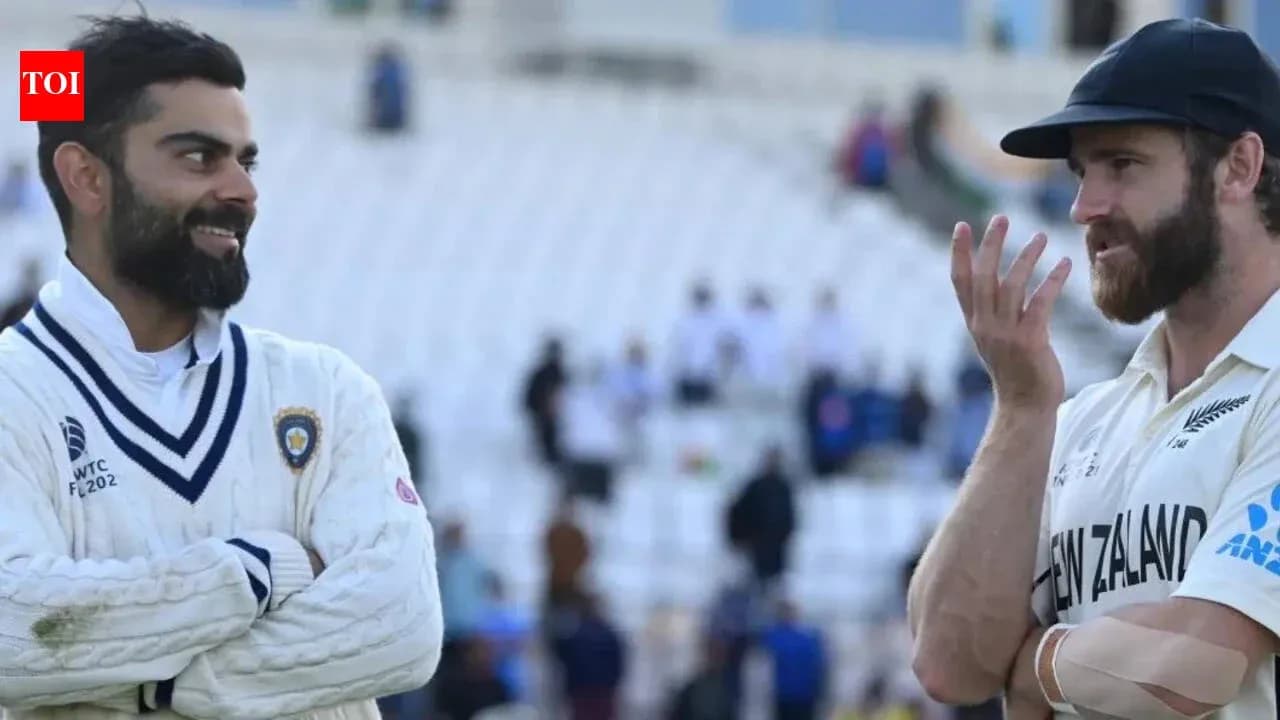
Kane Williamson did not walk away from international cricket on a whim. He walked away after looking, as he put it, “in the mirror.”
That mirror was Virat Kohli.
The former New Zealand captain has revealed that a candid conversation with Kohli played a crucial role in his decision to retire from international cricket in June, ending a 16-year career that reshaped his country’s Test history. Williamson bowed out as New Zealand’s leading Test run-scorer, with 9,515 runs and a national-record 33 centuries – a body of work built on quiet excellence rather than noise.
Yet when the time came to decide whether there was one more push left in him, he turned to a man whose cricketing life has often been the opposite of quiet.
From Under-19 rivals to sounding boards
Their story stretches back to age-group cricket. Williamson and Kohli first crossed paths as teenagers at Under-19 level, long before the “Fab Four” label tied them together with Steve Smith and Joe Root. They grew into captains, into fathers, into the faces of their nations’ batting line-ups. They grew, crucially, under the same relentless spotlight.
“I have a great relationship with Virat, and we’ve chatted many times over the years and obviously played against each other for a long time,” Williamson told Nasser Hussain on The ICC Review.
The connection was never just about runs and rivalries. It was about understanding the grind: the endless travel, the leadership burdens, the constant expectation to deliver, the delicate balance between dressing-room responsibility and life at home.
So when Williamson began to seriously weigh up retirement, Kohli was one of the first people he wanted to call.
Speaking to someone who knew the cost
By the time they spoke, Kohli had already stepped away from international cricket in two formats. He had lived through the same internal tug-of-war: the desire to keep competing at the highest level against the growing pull of family, fatigue, and the realities of age and workload.
“And I suppose off the back of that and our relationship it just felt right to chat to someone that you knew had the very experience of stepping away from the game not all that long ago and fully understood where you’re at,” Williamson said.
This was not a casual check-in. It was a conversation between two men who had carried their countries for more than a decade, who knew what it meant to be the face of a team, a format, sometimes an era.
They talked about the demands. About living on airplanes. About switching formats, series after series. About leading a side while trying to preserve their own games. About trying to be present as husbands and fathers when the calendar barely allowed it.
The more they shared, the clearer the picture became.
‘Like looking in the mirror’
For Williamson, that call did not plant the idea of retirement. It confirmed it.
“It’s been quite unique and our sort of story together, from under-19s to international cricket and even having a family and then leading our country and sort of being quite close throughout that journey along the way whilst competing against each other on numerous occasions,” he said.
“But it was just sort of like looking in the mirror, sharing those thoughts, fully understanding each other, and then getting off that call and knowing that it was time.”
That last line is the pivot. Williamson didn’t talk about doubt, or lingering second thoughts. He talked about knowing.
He had already amassed the numbers. The 9,515 Test runs. The 33 hundreds. The status as New Zealand’s most prolific Test batter. What he needed wasn’t another milestone; it was perspective. Kohli, uniquely placed, provided it.
Two careers, diverging paths
Williamson has stepped away from the international stage. Kohli, by contrast, is still in the fight. The Indian star remains active in ODIs and has his sights set on the 2027 World Cup, another tilt at a trophy that has defined much of his generation’s narrative.
Their paths, so closely aligned for so long, now bend in different directions.
Yet the pressures that shaped their conversation have not gone anywhere. Modern international cricket stretches players across formats, continents, and time zones. National duty bleeds into franchise commitments. Off-seasons barely exist. Captains, especially, live inside a permanent storm of expectation.
For those who have spent years at the centre of that storm, choosing the moment to step out of it can be as testing as any spell from a fast bowler.
Williamson found his moment in the aftermath of a phone call with a rival who understood every layer of that decision. Kohli will eventually face his own version of that crossroads, perhaps after the next World Cup cycle, perhaps sooner, perhaps later.
When that day comes, he may remember the role he played in helping another great walk away on his own terms.