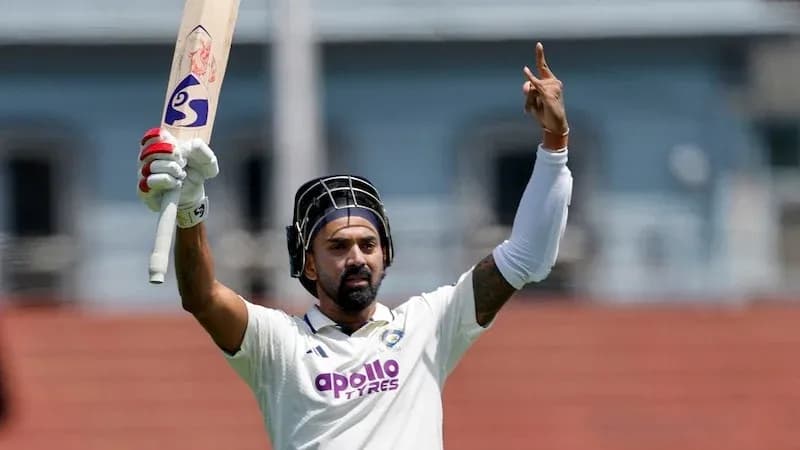
KL Rahul's Gritty Hundred in Wellington: Joining Legends
KL Rahul did not so much light up Wellington as grind it down. By the time he raised his bat at the Basin Reserve, 209 balls into a hard, unflinching stay, he had not only dragged India into control of the first Test against New Zealand, he had also walked into a room usually reserved for giants of the game.
An opener’s hundred in New Zealand is rare air for an Indian batter. Before Rahul, only Virat Kohli, Sachin Tendulkar and Gautam Gambhir had managed it. Now his name sits alongside theirs, etched into a ground where visiting top orders often disappear in the wind.
This was not a century built for the highlight reel. It was built for the dressing room.
A slow burn in seamer country
On a surface that always keeps quicks interested, Rahul chose old‑fashioned Test virtues. He left well, played late, and refused to be lured into stroke-making for its own sake. New Zealand’s seamers kept hammering away, hoping for the loose drive, the impatient pull. It never really came.
India had started well on Day 2, and Rahul’s primary job was to ensure that platform did not vanish in a familiar Basin collapse. Head down. Soft hands. Long spells of near-stillness between scoring shots. The innings grew, not in bursts, but in layers.
His comfort in these conditions did not come by accident. Rahul and Yashasvi Jaiswal had already logged time in New Zealand before this series, working through red-ball overs against New Zealand A. Rahul played one unofficial Test, Jaiswal all three. Those days in quieter venues, away from the spotlight, now looked like the most valuable preparation India could have asked for.
The payoff came quickly.
India’s first opening hundred stand in NZ in 32 years
On Day 2, the pair stitched together 130 for the first wicket, India’s first century opening stand in a Test in New Zealand in 32 years. That statistic alone tells you how unforgiving these conditions have been to Indian openers.
Jaiswal took the bold route. He counter-attacked, raced to 85 off 89 balls, and pushed New Zealand back with strokes that belonged to a different tempo. At the other end, Rahul played anchor, his fifty arriving from 99 balls, the innings already shaped by contrast: one man driving the game, the other securing it.
When Jaiswal nicked off, 15 short of a maiden overseas hundred, the mood changed. The crowd lifted, the fielders closed in, and suddenly the Basin felt like itself again. India needed someone to shut the door.
Rahul did exactly that.
Devdutt Padikkal joined him, young and on debut, and the two eased India’s reply into the close of play. No late drama, no rush of wickets. Just quiet, controlled batting that carried into a pivotal third morning.
Day 3: Rahul and Padikkal turn the screw
When play resumed, Rahul and Padikkal picked up where they had left off. New Zealand searched for movement, for a mistake, for anything. Rahul gave them nothing.
He waited. Left balls on length. Cashed in only when the bowlers missed. The scoring rate rarely spiked, but the pressure on New Zealand did. Every maiden over felt less like a win for the hosts and more like a prelude to another session slipping away.
At the other end, Padikkal grew into the contest. His strokes loosened, his feet moved with more certainty. While Rahul held the innings together, Padikkal’s growing assurance deepened New Zealand’s problems. The bowlers looked short of ideas; the pitch looked flatter with every over India survived.
By the time Rahul reached three figures, India were 247 for 1, only 121 behind New Zealand’s first-innings total, with nine wickets still in hand. The hosts were running out of plans.
An elite SENA landmark
The numbers behind Rahul’s hundred tell an even bigger story than the scoreboard in Wellington.
With this century, he has now scored Test hundreds in all four SENA countries — South Africa, England, New Zealand and Australia. Only four Indians had done that before him: Sachin Tendulkar, Virat Kohli, Rahul Dravid and Mohammad Azharuddin.
Rahul is the fifth Indian to join that club. He is also the first Indian opener to complete the set.
That achievement stretches beyond Indian cricket. Among Asian batters, only a small, glittering group has reached three figures in all four of those countries: Azharuddin, Tendulkar, Saeed Anwar, Dravid, Younis Khan, Kumar Sangakkara, Kohli — and now KL Rahul.
Look closer and the company becomes even more exclusive. Of that list, only Saeed Anwar had managed it while opening the batting. Rahul now stands alongside him, the only two Asian openers with centuries in South Africa, England, New Zealand and Australia.
For a player whose Test career has swung between promise and scrutiny, this is a landmark that changes the tone of the conversation. This is not the record of a bit-part tourist. This is the footprint of a genuine away specialist.
Control wrestled, questions asked
As stumps approached on Day 3, Rahul and Padikkal were still there, still unbroken, and New Zealand were still searching. The ball had grown older, the lines less threatening, the shoulders a touch heavier.
India, 247 for 1 and closing fast on the hosts’ total, had done more than just respond. They had seized control on a ground that usually belongs to the home seamers.
Rahul’s hundred, carved out of patience and resolve, had done its job. The scoreboard said one thing; the larger question now hung over New Zealand: with their plans exhausted and India’s top order settled, where do they find a way back?