Agit Kabayel: From Overlooked Contender to Heavyweight Champion
Agit Kabayel used to be the man the heavyweight elite could ignore. Not anymore.
For years, he chased the names that define this era – Tyson Fury, Oleksandr Usyk – and watched them disappear into their own negotiations, their own trilogies, their own orbit. All the while, Kabayel kept winning. Arslanbek Makhmudov. Frank Sanchez. Zhilei Zhang. All beaten under the Saudi lights, all filed away as proof that he belonged in the conversation, even if the conversation rarely included him.
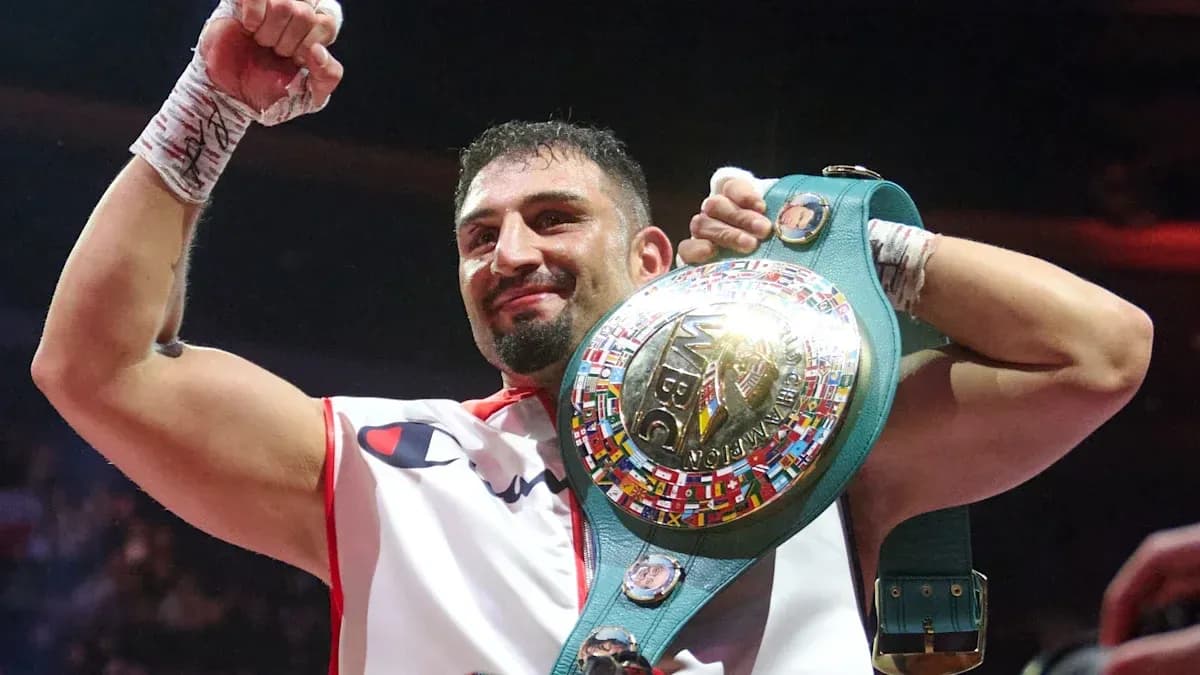
Now it has to. Now he has a belt.
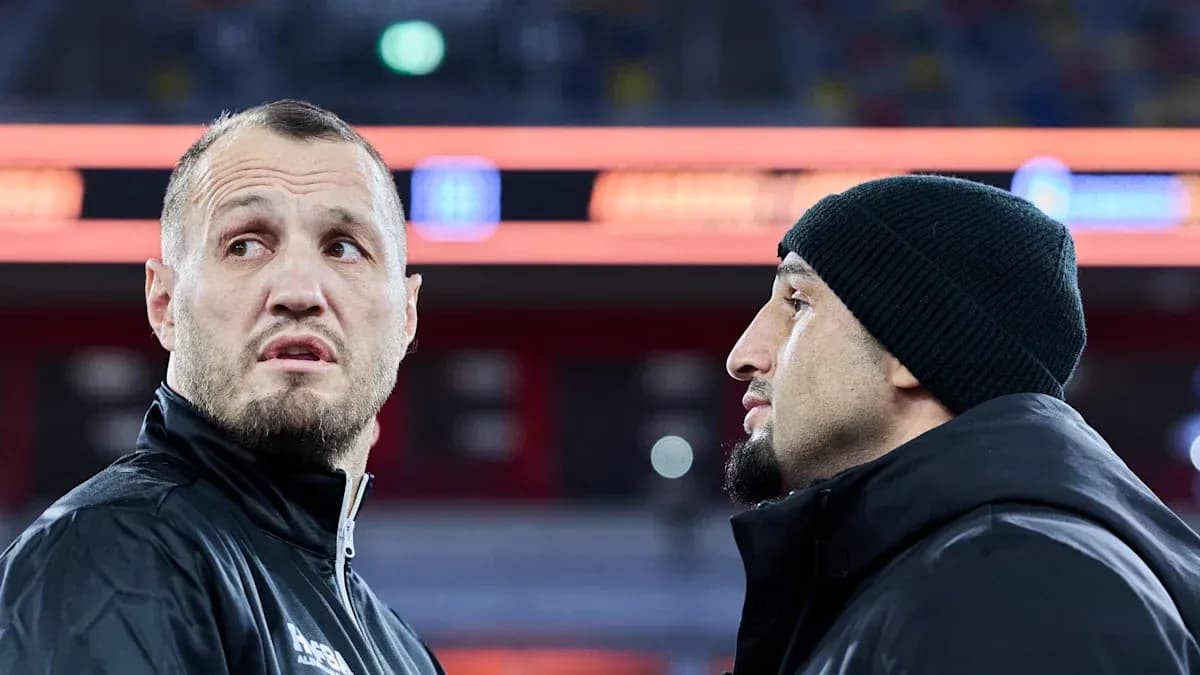
When Usyk vacated his world titles, the WBC elevated Kabayel to full champion in July. No more interim tags, no more waiting by the phone. At 27-0 with 19 knockouts, the 34-year-old walks into the Murker-Spiel Arena in Dusseldorf on Saturday not as a hopeful contender, but as the man with something everyone else wants.
Fifty thousand people are expected to be there to see what he does with it.
From the stands to center stage
The venue matters. Eleven years ago this very weekend, the same arena staged the last heavyweight world title fight on German soil. That night, an awkward, switch-hitting Tyson Fury took Wladimir Klitschko’s belts and ended a decade of control. Somewhere in the stands, a young Agit Kabayel watched a dynasty crumble.
He comes back now as the champion headlining the card, not the fan searching for a seat.
His first defence, against unbeaten puncher Nelson Hysa (25-0, 23 KOs), is more than a mandatory ticked off or a statistic on BoxRec. For Kabayel, it’s a chance to plant a flag: Germany is back in the heavyweight business, and this time the story won’t just run through the Klitschko brothers.
“They had their own era, their own history,” Kabayel says of Vitali and Wladimir Klitschko, who fought 85 combined professional bouts in Germany. He doesn’t deny their impact. He doesn’t pretend they didn’t turn the country into a heavyweight stronghold. But he draws a line.
“They did their business here, but they didn’t fight for Germany. They never really supported other German boxers. That’s why I want to do things differently and leave something for the next generation.”
It’s a sharp verdict on two giants of the modern era, yet it explains exactly where Kabayel wants to stand. Not just on the posters, but at the front of a movement.
A champion with a wider plan
Kabayel talks about responsibility like it’s part of the job description. For him, the belt isn’t just leverage for bigger purses and brighter lights. It’s a tool.
“Look at the undercard on Saturday. German talents,” he says. “And they are good talents. They just need their chance to show it, and I will help with that.”
He’s already started. Simon Zachenhuber is a case in point. Kabayel helped secure the 28-year-old a slot against Hamzah Sheeraz in July on the Anthony Joshua vs. Kristian Prenga undercard – a serious test, a serious stage, and the kind of opportunity Kabayel believes has been too rare for German fighters.
He remembers what it felt like to be overlooked. To stand in the Giza ring in May, face-to-face with Usyk, and sense – in his view – that the unified champion had little interest in sharing the ropes with him. To hear the suggestion that he wasn’t a big enough name, despite the scalps on his record and the danger he posed.
That slight still lingers. So does the failed pursuit of Fury. Those near-misses, those closed doors, are woven into the fabric of his rise. But he no longer sounds like a man begging for validation from the old guard.
“I’m a world champion. People will always discuss the older generations, but now it’s the start of a new one,” he says. “I want to make sure that in the next few years, nobody overlooks me again.”
Pressure, punch volume, and no apologies
For all the talk of eras and legacies, Kabayel’s foundation remains brutally simple: how he fights.
He’s built a reputation on pressure and persistence. He walks opponents down, hammers the body, and throws in clusters rather than in careful singles. It’s not a style designed for caution.
“Look at the knockouts from the last time. My fights are never boring,” he says. “I’m always moving forward, putting pressure on, hitting the body with a lot of combinations. That’s my style. It’s different from the other heavyweight champions, but I don’t compare myself.”
That relentlessness has carried him to the top of the WBC ladder. Yet his priorities have shifted now that the belt sits in his possession.
Asked if he needs to make a statement against Hysa, he shrugs off the idea of grandstanding for its own sake.
“A win is always a win,” he says. “I just got the belt, so I need to defend it. It’s less about making a statement and more about keeping hold of it. I want to leave everything in the ring and show the fans a great fight.”
There’s confidence in his voice, but not much theatre. He insists he doesn’t feel he has anything left to prove to anyone but himself.
“I watch myself in the mirror every day and want to improve. I’ve proved a lot already, but there is more. So much more to achieve. I want to write the history further.”
Business, belts and what comes next
His team know what this defence could unlock. Hysa is the only opponent that matters this week, they insist, but the horizon is crowded with possibilities.
“We won’t disrespect Hysa and look ahead. But we want the biggest fights possible after this one,” says Lasse Kruger, a key figure in Kabayel’s management.
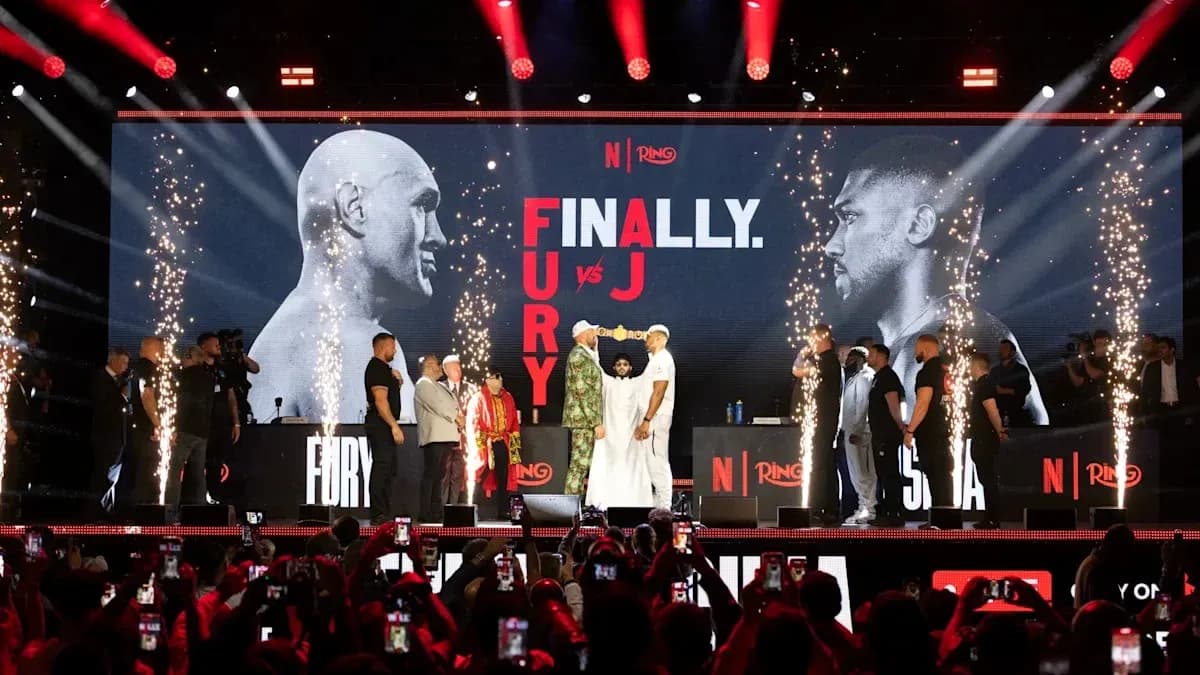
The heavyweight landscape is shifting again. Talk of a Joshua-Fury showdown refuses to die. Daniel Dubois holds the WBO title, Filip Hrgovic the IBF, Murat Gassiev the WBA. A unified picture feels distant, but the routes between these men are starting to form.
“It’s all a business, isn’t it? If the winner of AJ-Fury wants to fight, then sure, we will talk,” Kruger says. “Agit would fight on the moon if it’s for another belt. Bring on any unifications in 2027 as well. It’s up to the other opponents.”
For so long, Kabayel watched these conversations from the outside, his name rarely mentioned when the biggest nights were mapped out. The WBC title changes that. Now, if the division’s stars want to clean out the field, they have to come through him.
Yet when he talks about the future, he keeps circling back to Germany. To the undercards. To the young fighters who, in his mind, shouldn’t have to wait until their thirties to be noticed.
The Klitschkos had their era, towering and lucrative and dominant. Kabayel isn’t trying to erase it. He wants to build something that feels different: a heavyweight champion who doesn’t just rule from above, but pulls others up with him.
If he can keep winning, keep that belt in Germany, and turn title nights into a platform for the next wave, his legacy won’t be measured only in defences or unifications.
It will be measured in how many German heavyweights no longer have to spend their prime years shouting to be seen.