Real Madrid's Dominance: A 5-1 Victory Over PSV Eindhoven
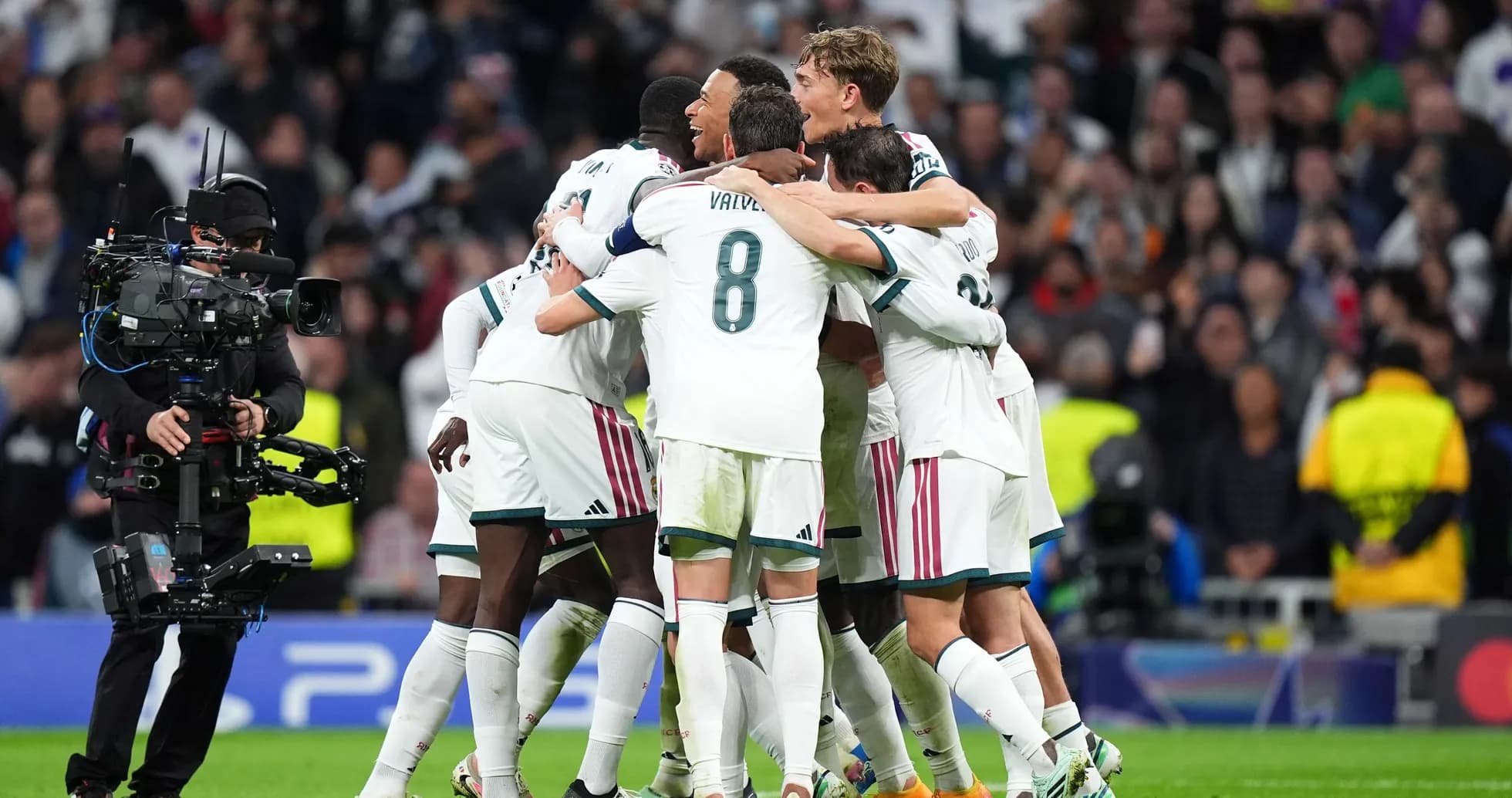
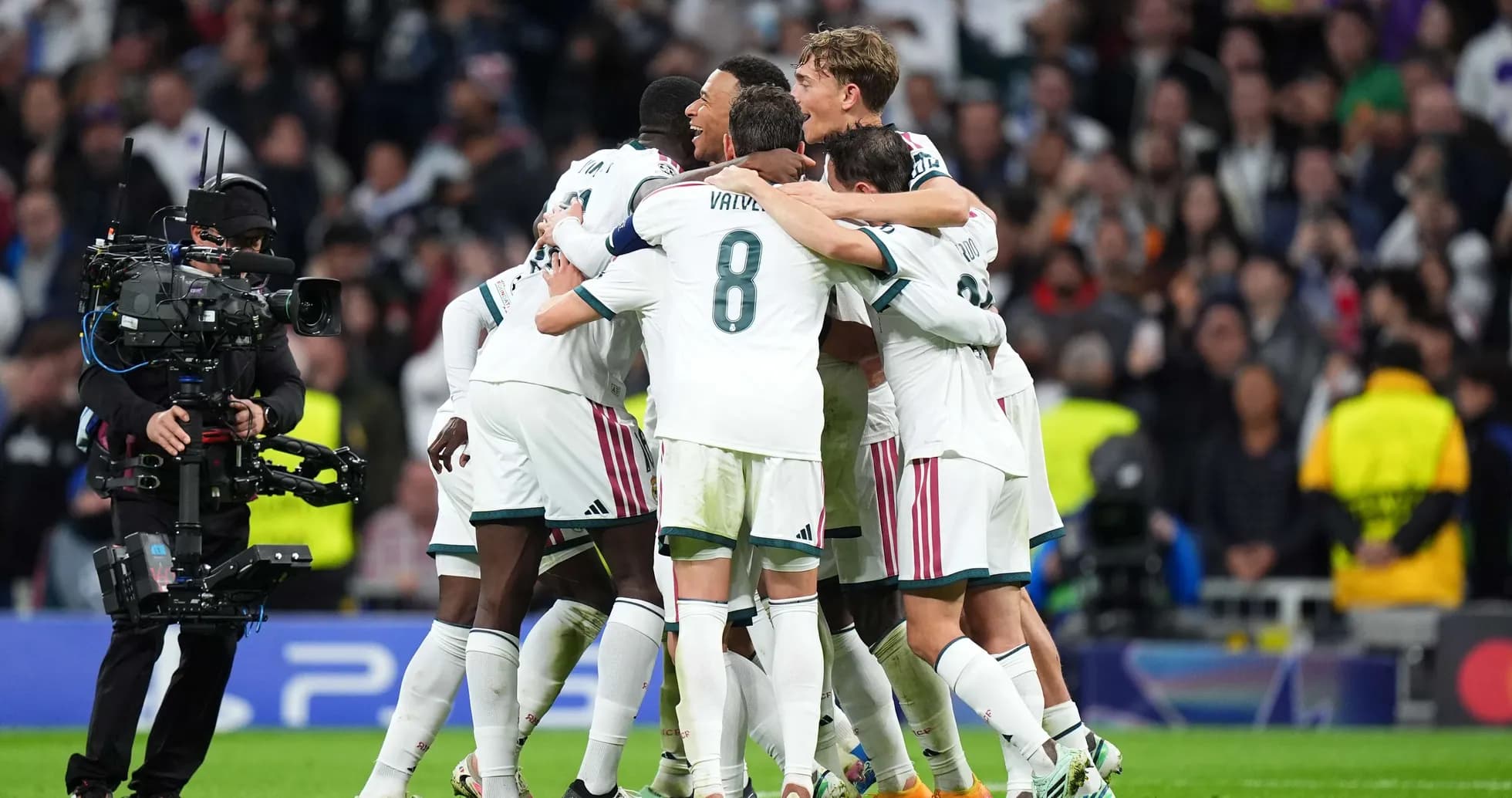
Under the lights of the Santiago Bernabéu Stadium, this was supposed to be a measuring stick; it turned into a statement. Real Madrid’s 5–1 dismantling of PSV Eindhoven in the League Stage - 5 of the UEFA Champions League did more than secure a perfect record. It crystallised the identity of a side that now looks like the competition’s benchmark.
Following this result, Real Madrid sit top of the Champions League standings with 15 points from 5 matches. Overall they have scored 18 and conceded 8, a goal difference of +10 built on relentless attacking and a tolerance for risk at the back. PSV, by contrast, remain marooned near the bottom of the overall table on 4 points, with 4 goals scored and 9 conceded for a goal difference of -5. The gulf in class that those numbers hint at was brutally visible over 90 minutes in Madrid.
I. The Big Picture: Madrid’s late-game machine
Real Madrid came into this game with a perfect form line – five wins from five in this Champions League campaign – and a scoring profile that already told a story. Overall they average 3.6 goals per game, with 3.7 at home and 3.5 on their travels. Most striking is their late-game surge: 50.00% of their goals have arrived between 76-90 minutes. This is not a side that merely finishes strong; it is structurally designed to overwhelm you when legs are heavy and minds are tired.
PSV’s numbers painted the opposite picture. Overall they average just 0.8 goals for per match (1.0 at home, 0.7 away) and concede 1.8 overall (1.5 at home, 2.0 away). Their own attacking peak lies between 46-60 minutes, where 75.00% of their goals have come. But that brief window of productivity is undercut by a defensive profile that frays the longer the game goes on: 33.33% of their goals conceded arrive between 61-75 minutes, and another 22.22% between 76-90. Against the competition’s most ruthless late-game side, that is a tactical fault line.
At the Bernabéu, those trends converged. PSV’s early discipline – reflected in a half-time lead of 1–0 – could not withstand the wave that followed. Once Real Madrid’s tempo rose after the interval, the numbers that had defined their season came to life in real time.
II. Tactical Voids: Absences and their ripple effects
Both coaches arrived with key absentees that shaped their plans. Jose Mourinho had to do without R. Asencio (broken leg), Endrick (groin injury), F. Mendy (hip injury) and Rodrygo (knee injury). That cluster of absences in wide and attacking areas might have forced some managers into conservatism; instead, it accelerated Madrid’s evolution.
Marc Cucurella’s presence at left-back, in place of a more traditional option like Mendy, tilted the side toward a more aggressive, possession-heavy approach from deep. With no Rodrygo or Endrick, the forward line narrowed into a devastating trio: Kylian Mbappé, Vinícius Júnior and Yan Diomande, with Arda Güler and Bernardo Silva knitting the game between the lines.
Peter Bosz’s PSV were more structurally compromised. Mauro Junior (groin injury), A. Nagalo (injury), S. Ouaissa (muscle injury), A. Plea (surgery) and J. Schouten (knee injury) stripped depth and balance from a squad that already lives on fine margins. The absence of Schouten in particular removed a natural screening presence in front of the back four, forcing Ivan Perišić and Kodai Sano into more defensive labour than their profiles naturally demand.
Discipline-wise, the season data warned of strain under pressure. Real Madrid’s yellow cards cluster late: 28.57% between 61-75 minutes and another 28.57% between 76-90. PSV’s bookings spike around the break – 37.50% between 31-45 – and then spread across the final half-hour. On this night, as Madrid turned the screw, PSV’s capacity to defend without fouling eroded, and Bosz’s bench, thinned by injuries, had few stabilising answers.
III. Key Matchups: Hunter vs Shield, Engine Room vs Enforcer
The headline duel was always going to be Kylian Mbappé against a PSV defence that concedes 2.0 goals per game away from home. Mbappé entered this fixture as the competition’s top-rated attacker, with 6 goals and 2 assists in 5 appearances, firing 26 shots with 16 on target. His profile in this Madrid is clear: high-volume finisher, but also a facilitator, with 173 completed passes and 9 key passes at an 86% accuracy.
Against a back line anchored by Lutsharel Geertruida and Armando Obispo, and shielded by a midfield lacking a natural destroyer, Mbappé’s threat was multi-layered. When PSV tried to hold a higher line, his pace targeted the channels between full-back and centre-back. When they retreated, his link play with Vinícius Júnior and Güler carved out shooting lanes at the edge of the box. The 5–1 final score is an echo of PSV’s heaviest away defeat this campaign – also 5–1 – a pattern that underlines how fragile they become when forced to defend their box for long stretches.
If Mbappé was the hunter, PSV’s shield was more conceptual than individual. Overall, they have managed just 1 clean sheet, and their defensive minute distribution shows no safe zone: from 16-90 minutes, every segment carries a double-digit share of goals conceded. There is no period where they reliably shut games down.
In the engine room, Arda Güler and Bernardo Silva orchestrated the tempo against a PSV midfield built around Sano, Paul Wanner and Ruben van Bommel. Güler came into this tie as one of the competition’s most efficient creators: 4 assists and 1 goal in just 179 minutes, with 10 key passes and an 89% pass accuracy. He is not just a final-ball specialist; 3 tackles, 1 block and 1 interception show a willingness to press and counter-press.
Up against him, Sano and Wanner were asked to both build and break – a dual role that became unsustainable once Madrid’s press locked in. Without Schouten’s positional discipline, PSV’s midfield line stretched and split, leaving lanes for Güler to receive between the lines and feed runs from Mbappé and Vinícius Júnior. Once Jude Bellingham and Eduardo Camavinga were introduced from the bench, Madrid’s control of central zones became almost total, with fresh legs and physicality overwhelming PSV’s tiring core.
IV. Statistical Prognosis: Why the scoreline made sense
Strip away the emotion of a 5–1 and the underlying metrics still point in the same direction. Real Madrid’s season profile – 5 wins from 5, no draws, no defeats, 18 goals for and 8 against – describes a team that accepts defensive risk to maximise attacking volume. They have yet to keep a clean sheet, but they have also never failed to score. Every threshold from 0.5 to 3.5 goals has seen more “over” than “under”, and even the 4.5 mark has been cleared once. This is a side built for chaos it can control.
PSV, meanwhile, exist at the other end of the spectrum. They have gone “over” 0.5 goals in 4 of 5 matches but have never cleared 1.5, 2.5, 3.5 or 4.5. Their attack is low-volume and heavily time-dependent, spiking only in the 46-60 window. Their defence, already porous, carries an additional psychological burden: from the penalty spot this season they have taken 2, scored 1 and missed 1. That 50.00% success rate adds a layer of doubt to the one high-probability chance type that underdogs often rely on in games like this.
Overlay Madrid’s late-game avalanche (half of their goals between 76-90) onto PSV’s fatigue-prone defensive profile (33.33% of goals conceded between 61-75, 22.22% between 76-90) and the script almost writes itself. PSV could compete in phases – as their first-half lead showed – but the longer the match stayed open, the more it tilted towards a Madrid side with deeper resources and a more ruthless attacking structure.
The 5–1 scoreline, then, is less an outlier than an extreme expression of existing trends. Real Madrid’s squad, even with notable absentees, is layered with match-winners: Mbappé’s end product, Vinícius Júnior’s chaos, Güler’s vision, Bernardo Silva’s control, and the late-game injection of Bellingham and Camavinga. Behind them, a defensive line of Thibaut Courtois, Éder Militão, Antonio Rüdiger and Cucurella is not yet watertight, but it does not need to be when the attack is this prolific.
For PSV, the night underlined the gap they must close. Matěj Kovář, Dest, Geertruida and Kostić battled, and there were flashes from Guus Til and Sven Mijnans, but the structure around them could not survive 90 minutes at Bernabéu intensity. Until they add more punch to an attack that averages 0.7 goals away and more resilience to a defence that leaks 2.0 on their travels, nights like this will remain a risk.
In the broader Champions League landscape, this match felt like a preview of spring rather than just a November fixture. Real Madrid are already playing with the swagger and statistical profile of a side built for the 1/8 final and beyond. PSV, for all their endeavour, were cast here as supporting actors in a story that increasingly looks like Madrid’s to write.