Kimmich's Bold Critique of Bayern's Handling of Musiala
Joshua Kimmich walked into the mixed zone in Lille with the look of a man who had lost more than just a football match. Bayern Munich had been beaten 2-1, their Champions League evening already bruising enough. What followed turned it into a full-blown internal reckoning.
This was not a routine post-match debrief. This was a senior Bayern player publicly taking aim at the club’s own hierarchy – and doing it with precision.
“Not Bayern-like”: Kimmich goes after the board
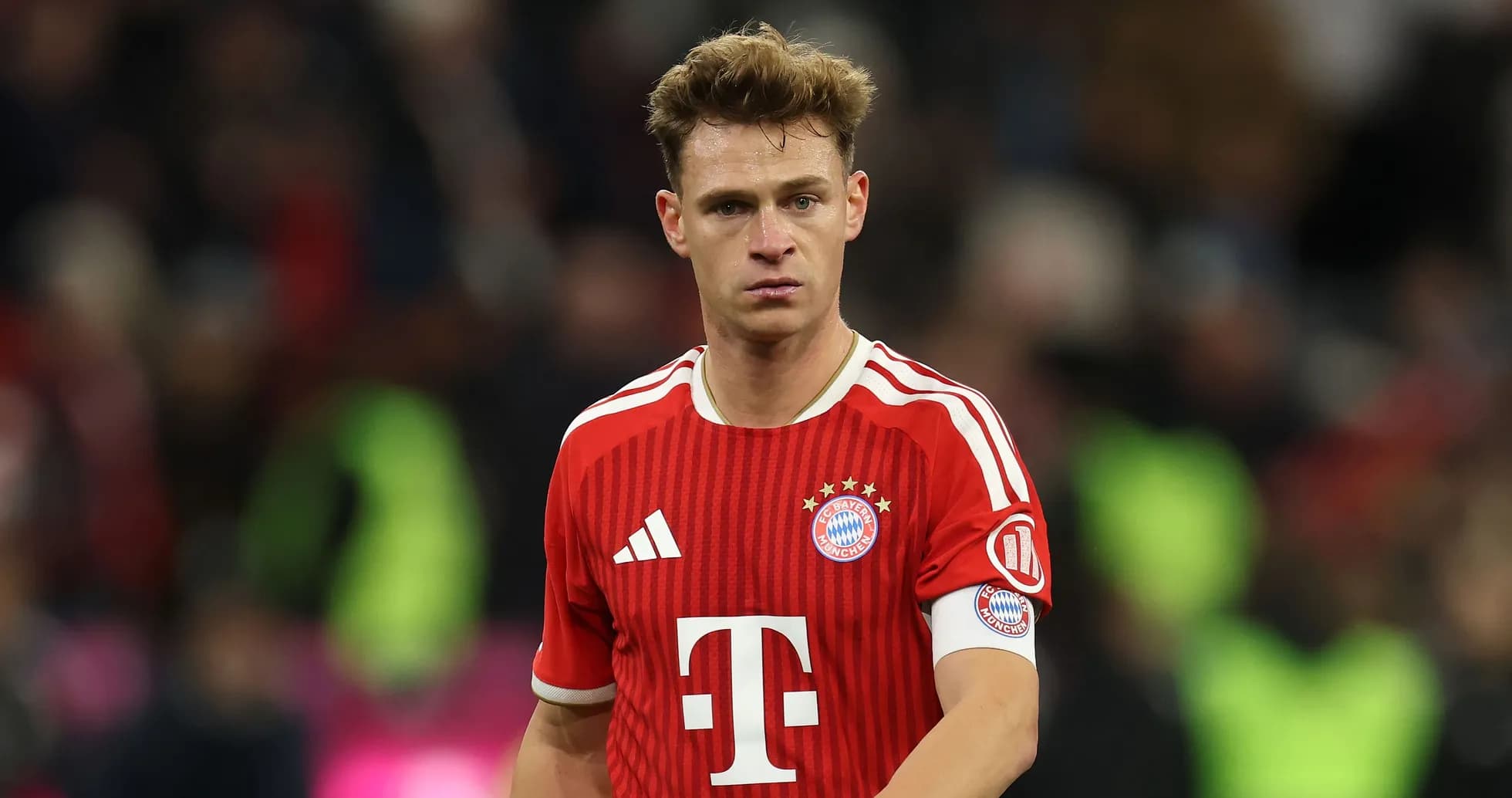
Kimmich, captain on the night in Manuel Neuer’s absence, did not bother to soften his words. He went straight for the way Bayern’s powerbrokers have handled Jamal Musiala’s health and contract situation, and he did it in a tone that left no room for misunderstanding.
“What I don't understand is the way this is communicated in public. That must never happen! That this is carried out on the back of a player,” he said, as quoted by BILD. “Of course, the club is always the highest and bigger than the player, but still not bigger than the human being. That is an absolute no-go and also not Bayern-like!”
In a club that has long sold itself as a family, as “Mia san mia” made flesh, that phrase – “not Bayern-like” – cuts deep. It is a direct accusation that the people running Bayern are betraying the very identity they trade on.
A culture Kimmich thought he knew
Kimmich’s anger did not emerge from nowhere. It came from a sense of betrayal. He has repeatedly spoken in recent months about how special the club has been in dealing with his own situation and has used Bayern’s culture as a shield and a standard.
Now, he says, that standard has been dropped.
“Especially in the current phase, where I have also often emphasised that the club is very, very special, also now in my situation, it was very, very special, it is the case that one felt: Okay, this ‘Mia san mia’ is being lived,” he said. “This now was of course something that must not happen in this form and is completely, completely incomprehensible to me.”
Completely incomprehensible. For a player as measured as Kimmich, that is a damning choice of words. It paints a picture of a dressing room watching on in disbelief as private medical battles and contractual questions are dissected in public by men in suits.
Boardroom voices, private issues
At the heart of the storm are comments from Uli Hoeness, Karl-Heinz Rummenigge and Jan-Christian Dreesen. Across the last two weeks, the trio have spoken openly about Musiala’s neurological illness, his medication and whether he can return to “world-class” level.
Rummenigge even floated the idea of a salary reduction if the 23-year-old fails to hit his previous heights.
For any player, that would sting. For one coming back from a broken fibula and muscle tears, on top of neurological issues, it lands somewhere between brutal and reckless.
Kimmich drew a hard line. Performance? Fair game. Health and deeply personal matters? Off-limits.
“I think when it comes to the performance of us players, then you can always criticise. Then that is also completely legitimate and we have to endure that too. That is also part of the business,” he said. “But there it was about a different problem and that is something that, I believe, should be clarified internally at the table and not tried to be clarified publicly.”
He didn’t stop there.
“Especially at a club like Bayern Munich, which actually stands for something like being a family, that you stick together there. Especially in the current time, that really surprised me.”
The word “family” has long been a cornerstone of Bayern’s self-image. Kimmich’s message was clear: if you talk like a family, you don’t air a player’s medical file and salary debates in public.
Shielding Musiala from the storm
Amid the fallout, one figure sits at the centre yet stays largely silent: Jamal Musiala. Once the carefree face of Bayern’s future, he has been forced into a long, complicated battle with injuries and illness at an age when most players are still finding their feet.
Kimmich insisted that, inside the dressing room, the young attacker remains protected. He described a player who still finds joy in football, still works relentlessly to return, even as the pressure from above grows louder.
“Jamal has 100 per cent our backing!” Kimmich declared. “And I am convinced that he also has it in the club, even if one or the other has expressed themselves differently about it. I hope that Jamal feels that we all stand 100 per cent behind him – both the team, as well as the officials and the club.”
The words are both a reassurance and a challenge. A reassurance to Musiala that the dressing room is with him. A challenge to those in the executive boxes to match that loyalty with their actions and their language.
A crack in the Bayern facade
Bayern have always thrived on internal debate. Hoeness and Rummenigge built an empire on strong opinions and public interventions. But this is different. This is a current leader in the dressing room accusing the club’s elders of crossing a line that should not be crossed.
It comes after a painful defeat in Europe, at a time when the club is trying to manage transition, expectation and identity all at once. On the pitch, Bayern are searching for control. Off it, they are now dealing with a very public reminder that the old ways of speaking about players may no longer be tolerated.
The result in Lille will fade. Kimmich’s words will not. The next move belongs to Bayern’s hierarchy – and Musiala’s future in Munich may depend on how, and whether, they choose to listen.