Russell Dominates Practice as Tensions Rise in Las Vegas
The Strip glittered. The session snarled.
On a night when teams wanted clean data and calm preparation, Las Vegas delivered chaos: traffic jams, lock-ups, weaving duels and a simmering flashpoint between Max Verstappen and George Russell that the stewards will now pick over.
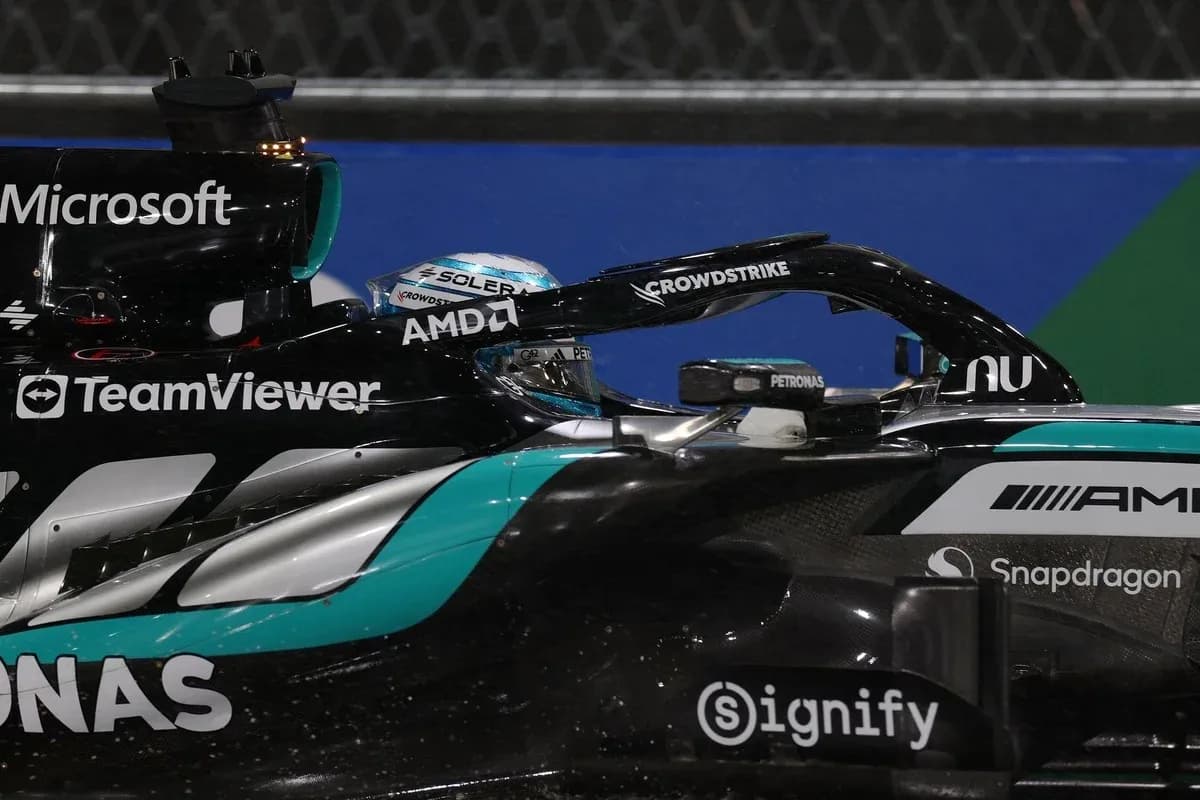
Amid it all, Russell stamped his authority on practice, the Mercedes driver repeatedly lowering the benchmark as others tripped over each other in the neon haze.
Russell on top as Mercedes show their hand
Russell built his rhythm early and never really let go of the top spot. A 1m35.124s arrived first, a clear statement that Mercedes had pace in hand. Then he dug deeper, chiselling it down to a 1m34.805s despite losing time in the final sector as he caught Franco Colapinto parked on the racing line on the run to Turn 14.
He wasn’t finished. A later effort of 1m34.306s stretched the gap again, and a 1m34.041s underlined his control, opening nearly a full second over Andrea Kimi Antonelli at one stage. On mediums, he still sat comfortably among the front-runners while others leaned on soft tyres.
It was controlled aggression from Russell, even if his evening was anything but quiet.
Verstappen quick – and right in the thick of it
Verstappen’s Red Bull looked sharp from the moment he rolled out. “Sharp out of the box,” came the assessment from the cockpit, the front end almost too pointy for his liking. The times backed it up: early laps in the 1m36s, then a 1m35.675s as Red Bull showed its usual knack for waking the tyres up quickly on a cold street surface.
Yet Verstappen’s session never settled. He complained about the steering rack – “just wrong” – and reported inconsistent rear-end braking, with notable moments at Turn 5 and Turn 12. He locked up at Turn 14 right in front of Lando Norris, prompting a dry “Instant karma, amazing” from the McLaren after the Dutchman had just dived past him.
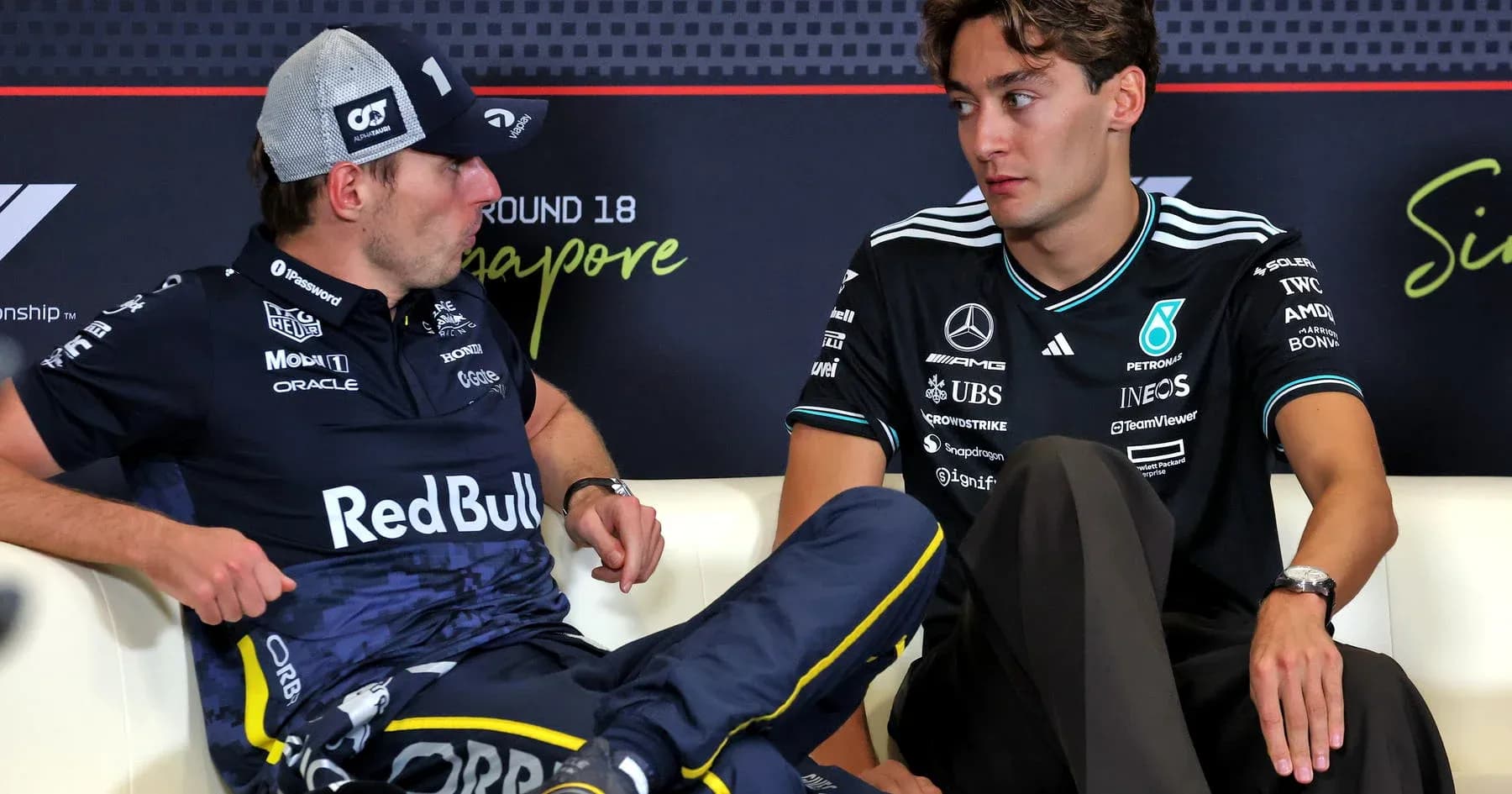
The flashpoint came at Turn 14 with Russell. Verstappen passed the Mercedes, Russell tried to retaliate, and neither wanted to yield. The pair came to blows at the braking zone, a move that drew the attention of the stewards. Later, Verstappen and Colapinto were both noted for erratic weaving on the back straight, adding another line to the Dutchman’s file.
Fast, edgy, and right on the limit – sometimes beyond it.
Norris fights traffic and finds speed
If there was a driver who spent more time staring at someone else’s rear wing than his own lap delta, it was Norris.
He was blocked by a Haas at Turn 7 and forced into the run-off. Next lap, Verstappen appeared in his way at the same corner. On another attempt, he found himself “caught between hell and high water” again, this time with more traffic in front of him as the field clogged the back straight.
Still, Norris kept chipping away. A 1m39.224s put him on top for a spell in the early phases of the session. Later, he dragged a slipstream from a Cadillac to clock a 1m37.254s as the times tumbled. McLaren’s shorter gear ratios weren’t ideal for the endless acceleration along the Strip, but Norris still ended up consistently near the sharp end, often within a few tenths of Verstappen and Hadjar as the soft-tyre runs unfolded.
Oscar Piastri quietly slotted himself into the mix too, climbing to fourth at one stage before being shuffled back as others found clear air.
Hadjar and Gasly light up the timesheets
Red Bull junior Isack Hadjar delivered one of the standout performances of the session. He repeatedly hauled his car into the top positions, at one point going quickest with a 1m39.032s. Earlier, he had threaded his way through Turn 14 after a heavy lock-up, somehow making the apex and still improving to second, just over half a second off Verstappen.
His duel with traffic was less forgiving. Hadjar’s late push was ruined when Alex Albon weaved in front of him through the final corner, forcing the Red Bull driver to lift. “He should get a penalty for that,” came the immediate verdict. Race control duly noted the incident.
Pierre Gasly also enjoyed one of his more assertive sessions of the season. The Alpine driver repeatedly muscled his way into the top five, splitting the Racing Bulls, then later jumping to third and even edging within 0.024s of Norris at one point. On a circuit that punishes instability, Gasly looked composed and confident.
Ferrari, Mercedes and the midfield maelstrom
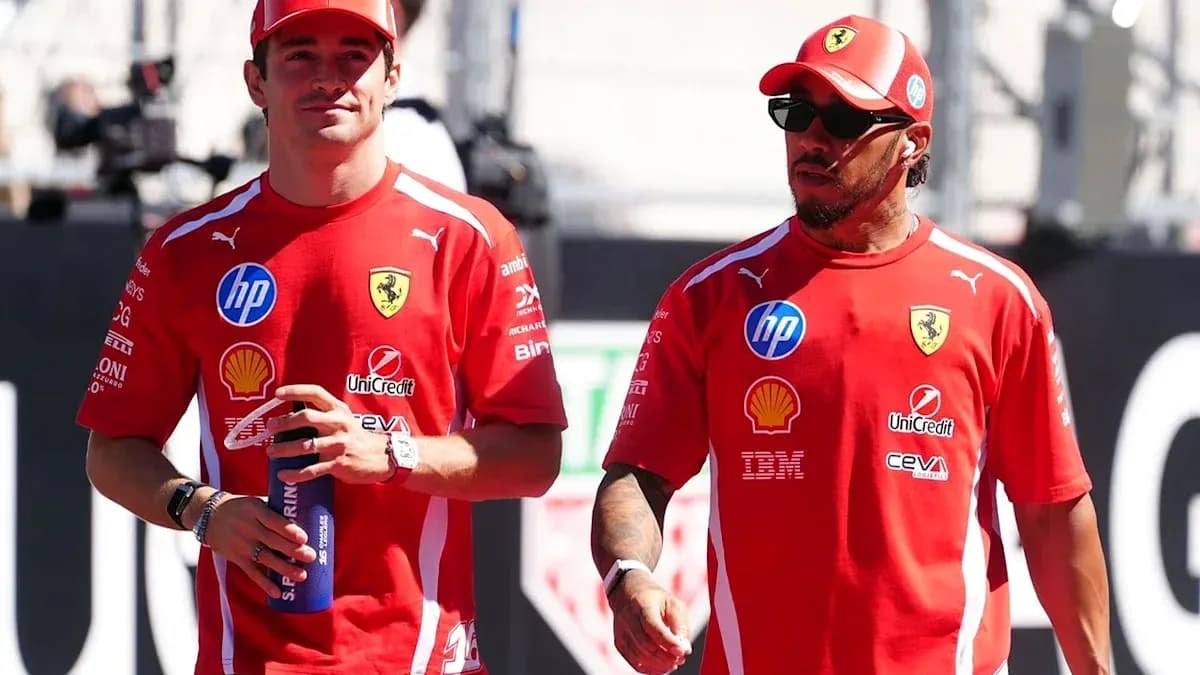
Ferrari’s evening felt scrappy. Charles Leclerc and Carlos Sainz both pushed the limits at Turn 14, each running off into the escape area as they searched for braking references. Leclerc also had an off following a Williams into the run-off, while Sainz locked up again later in the session.
Even so, the raw pace flickered through. Leclerc vaulted to second on the medium tyre during one phase, underlining Ferrari’s potential on longer runs. Sainz climbed to third on another attempt before a lock-up at Turn 14 halted his progress.
Antonelli quietly impressed in the other Mercedes, repeatedly returning to second place behind Russell and ending up within a few tenths on several runs. For a large chunk of the session, it was both Mercedes at the top of the times, a sight that will not go unnoticed in the paddock.
Further back, the midfield was pure Vegas chaos. Ollie Bearman suffered a big slide into Turn 1 under braking, then later had a push lap ruined when he found himself buried in a pack of weaving cars along the back straight. Colapinto had his own adventures, first with Verstappen and then as an obstacle for Russell at Turn 14. Valtteri Bottas and Arvid Lindblad cycled through softs, Lindblad sneaking into the top 10 more than once.
Fernando Alonso, in an Aston Martin that struggled down the back straight, still conjured a lap good enough for fifth at one point. It was a reminder that race craft and commitment can still bend the numbers on a circuit that should expose the car’s weaknesses.
Lock-ups, yellow flags and a track that bites
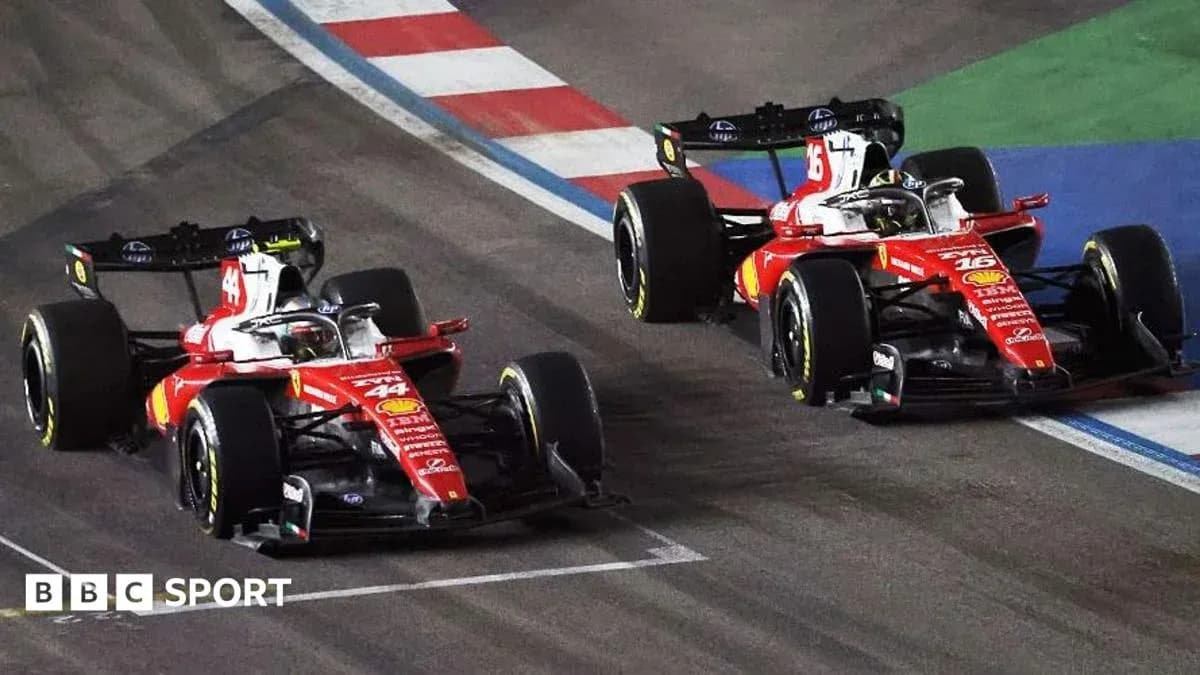
The Strip layout showed its teeth. Turn 14, at the end of the long run down the Strip, became a graveyard for braking points. Hamilton locked up there several times, once going straight on at the end of the straight. Albon carried too much speed and had to bail out mid-corner. Sainz, Hadjar, and others all flirted with disaster at the same spot.
Turn 5 also caught out a number of drivers. Russell had his own moment there, triggering a brief yellow flag. Verstappen reported the car not delivering the expected rear-end braking at the same corner. Camara went deep at Turn 5 as well, and later had to abandon Turn 7 after failing to get the car rotated.
Traffic, though, remained the defining feature. At one point the back straight resembled a rush-hour freeway, cars weaving, backing off, then sprinting for gaps. “Traffic paradise, as Yuki Tsunoda would say,” came the dry commentary, and it was hard to argue.
A glimpse of 2030 amid the 2020s chaos
Away from the lap charts, the FIA dropped a significant nugget: F1’s 2030 engine formula. A return to V8s is slated, with 2.1-litre units, a retained turbo, and reduced hybridisation. The plan includes a 200kW electric motor, split between 100kW for normal deployment and another 100kW as a push-to-pass boost.
On a night when drivers wrestled with braking maps, steering racks and tyre warm-up windows, the prospect of a snarling V8 era with tactical electric bursts felt like a tantalising counterpoint to the current complexity.
For now, though, the focus stays on the Strip. Russell has fired the first serious shot for Mercedes. Verstappen is quick but agitated. Norris is hunting for a clean lap. The stewards have replays to study.
Under the Vegas lights, qualifying is starting to look like a street fight.