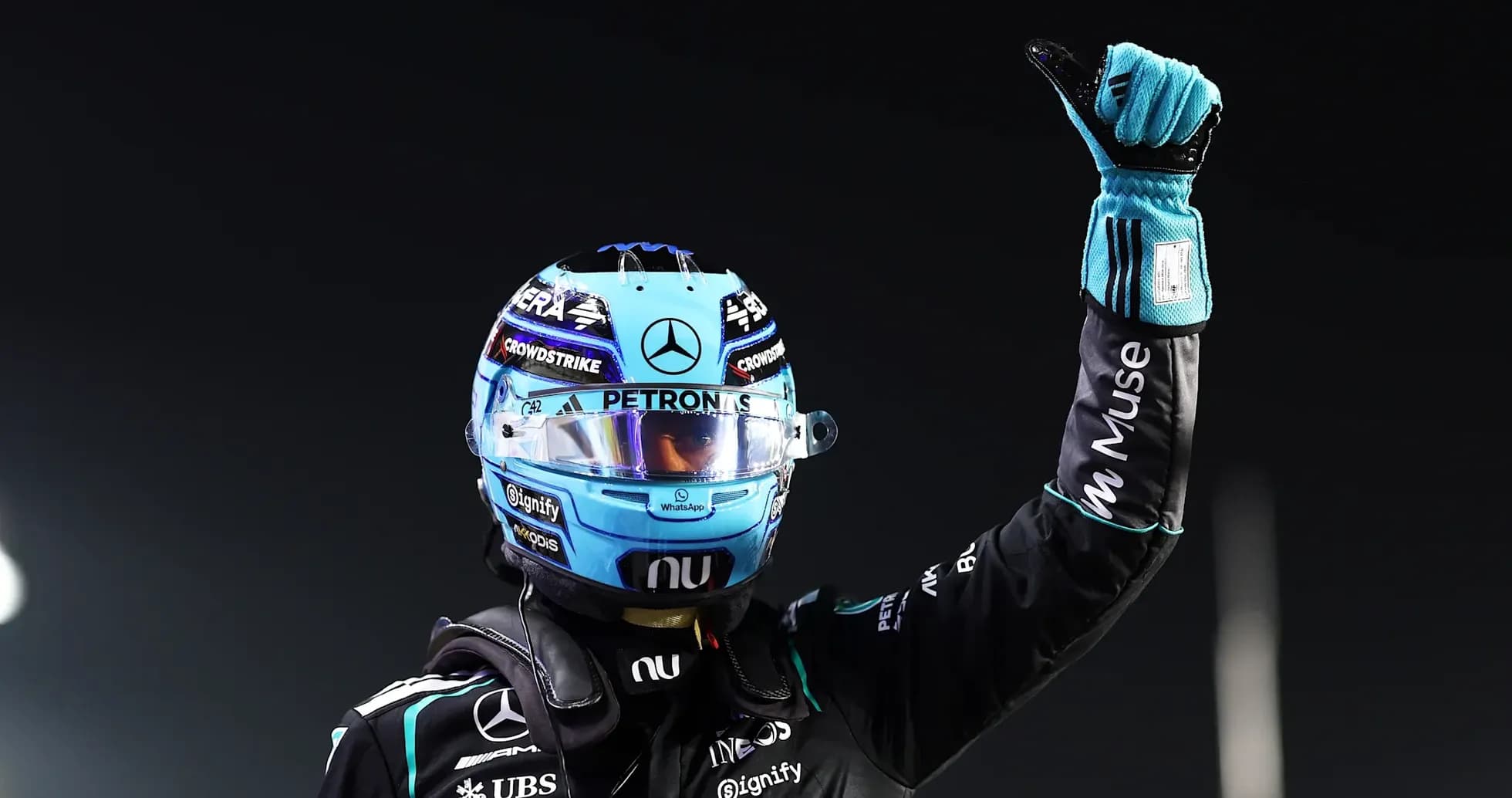
George Russell Claims Pole as Qatar Qualifying Shakes Up the Grid
Kimi Antonelli walked into qualifying in Qatar as the nailed-on favourite. Fastest in every practice session, seemingly in a class of one. By the time the lights went out on Q3, the story belonged to someone else. George Russell didn’t just steal pole; he dismantled the narrative Mercedes had been building around its prodigy all weekend.
The grid that emerged was jagged, unpredictable, and full of bruised egos. McLaren on the second row, Red Bull marooned on the third, Ferrari nowhere, Audi confused, Cadillac in crisis. Lusail has a habit of exposing weaknesses. It did so ruthlessly.
McLaren: maximum damage, minimum margin
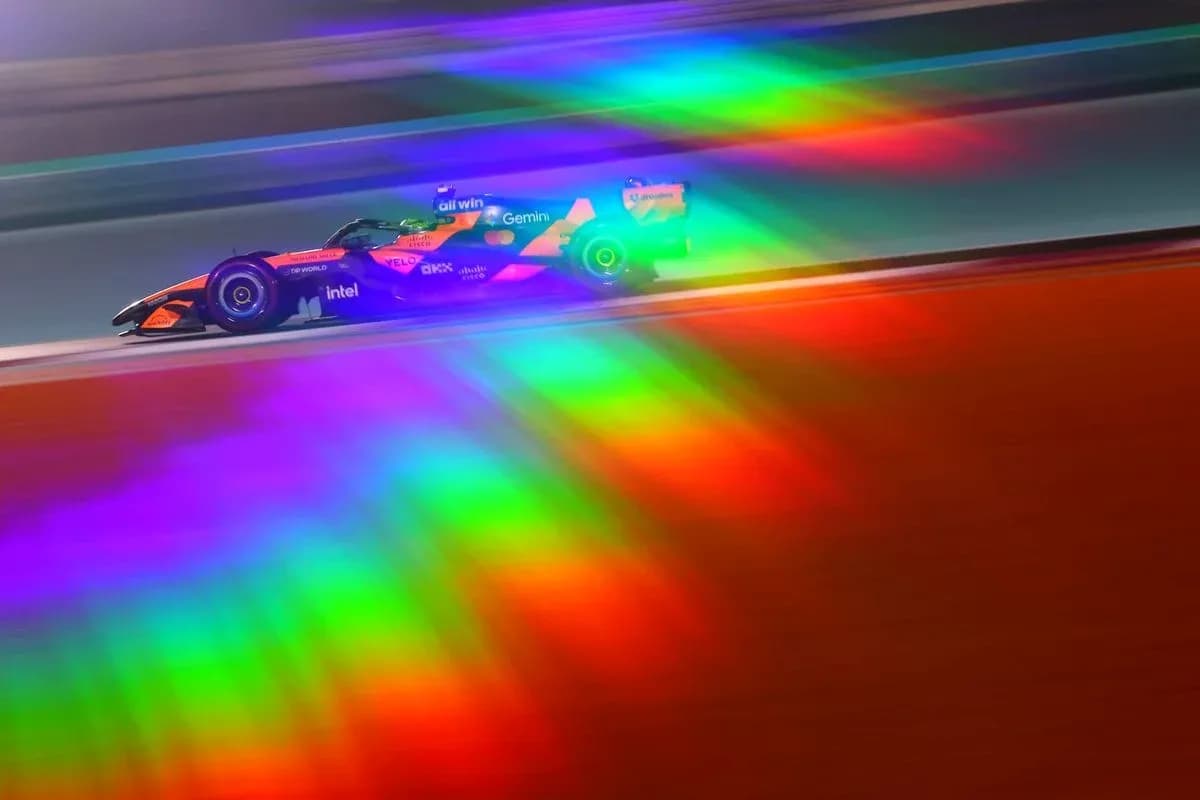
Oscar Piastri summed it up simply: third and fourth was as good as McLaren were ever going to get. He was right, but that undersells how sharp he and Lando Norris had to be to get there.
Four cars, 0.157s. That was the spread between the two McLarens and the two Red Bulls in Q3. Inside that, Piastri and Norris were separated by just 0.07s. When the margins shrink to that level, it stops being about the car and becomes all about execution. McLaren’s drivers nailed it.
Red Bull’s “disconnected balance” opened the door; McLaren kicked it down. They overturned the order from final practice, absorbed the pressure of a messy, traffic-affected session, and parked both cars ahead of the reigning benchmark team. Piastri felt he’d left nothing on the table. Norris, on the numbers, didn’t either.
Beating Red Bull on Saturday is one thing. Staying there on Sunday, with only one set of hard tyres each, is a different fight entirely.
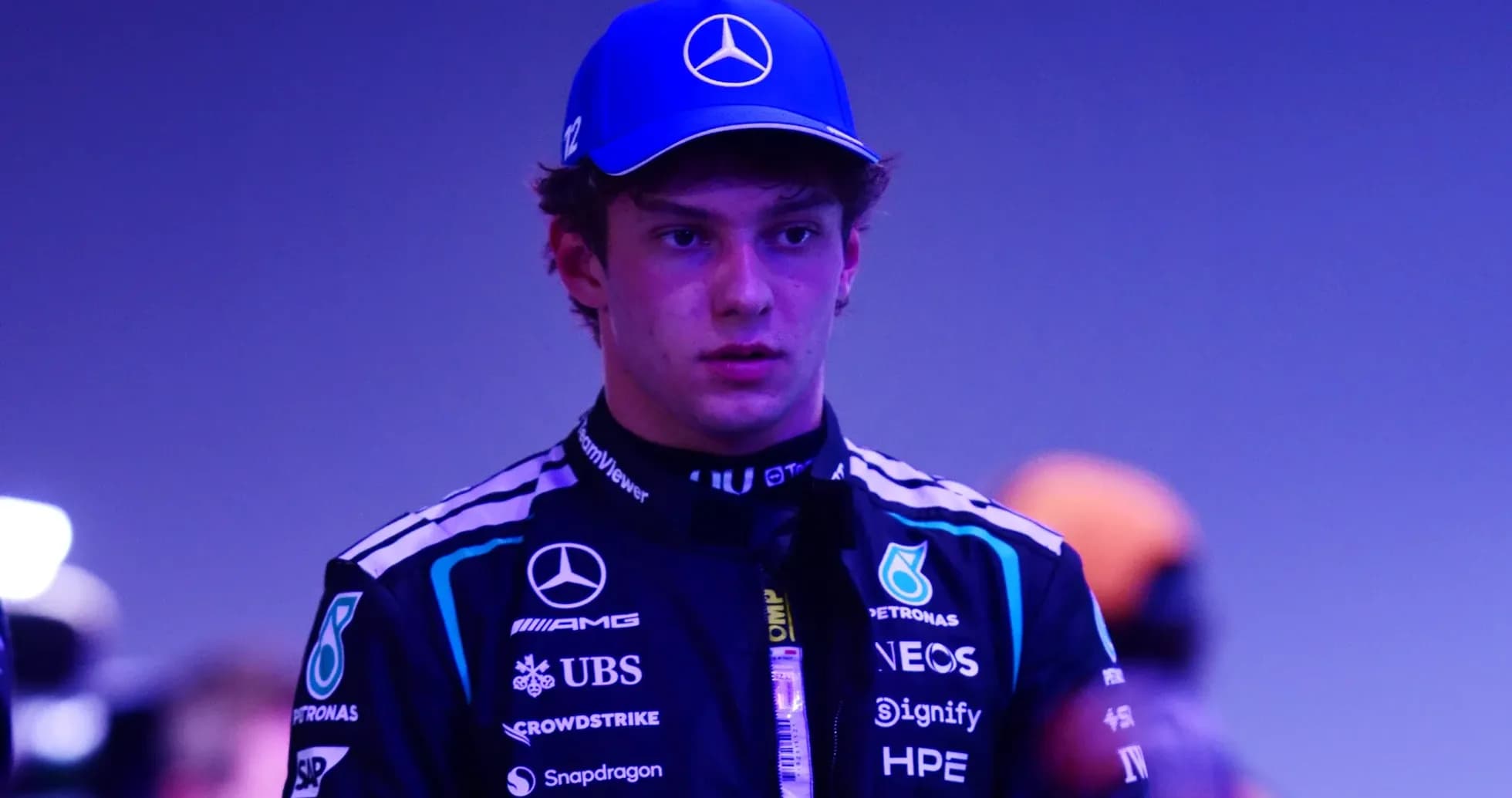
Antonelli: second, and seething
On paper, P2 on the grid keeps Kimi Antonelli’s title-chasing season on track. In reality, this one will sting.
He lost this qualifying in three distinct ways. The first was the most obvious: Russell simply outdrove him. Twice. The Brit set two laps good enough for pole, wiping away Antonelli’s apparent practice advantage and turning Mercedes’ intra-team duel into a one-sided contest.
The second defeat came in the corners Antonelli never solved. Turns 6 and 10, and the broader sector two, haunted him all weekend. The deficit there never shrank enough. For a driver who’s usually a fast learner, that lack of progress will bother him as much as the final result.
Then there was the political loss. Sensing the session slipping away, Antonelli pushed for a late change to his Q3 run plan, asking Mercedes to send him out at the very back of the queue for a cleaner track. The team said no. The frustration was obvious. For once, he didn’t get his way.
A mighty season or not, this was a clear, public setback. And it came at the hands of the man in the other garage.
Russell: a classic pole, on his terms
For George Russell, this was refreshingly uncomplicated. No barbs in the press pen, no set-up drama, no caveats. Just a driver completely in sync with a car that finally behaved exactly how he likes it.
This was Russell at his most methodical. He sacrificed corner entries to maximise exits, accepting a touch of early under-rotation to get on the throttle sooner and haul more speed down the straights. That style has not always paid off with these ground-effect cars. In Qatar, it was devastating.
Mercedes’ latest-spec machine prefers flowing, faster sections over fiddly, slow corners where its balance can turn knife-edge. Lusail played straight into that sweet spot. Russell trusted it, leaned on it, and built a lap that withstood everything Antonelli could throw at it.
Two pole-worthy laps, one emphatic message: if Mercedes are heading into a straight fight for this title, it won’t be a one-driver story.
Red Bull: exposed in the fast stuff
Red Bull arrived in Qatar as the form team, with four wins from the last six races. They leave qualifying with fifth and sixth on the grid and more questions than answers.
Isack Hadjar, the quicker of the pair, felt he’d let a front-row chance slip. His final attempt unravelled with what he called “surprise snaps” – the car biting back in places that should have been routine, like the flat-out Turn 9. One big slide, the tyres overheated, and the rest of the lap went with them.
Max Verstappen’s weekend never really came together. The “disconnected balance” he complained about on Friday never disappeared, despite Red Bull cycling through a series of set-up changes that led them, in his words, to “just going around in circles”. Nothing stuck. Nothing unlocked the pace.
The damage is more than just a bad Saturday. Verstappen sees Lusail as proof of a deeper problem: Red Bull still doesn’t have the high-speed grip to live with Mercedes. The data now sits “in front of their nose” for next year. That’s useful for the long term. It won’t help them launch from row three tomorrow.
Hadjar: painful result, important win
Hadjar called fifth “a bit painful” because he felt third was on. Strip away the frustration, and it’s still a significant day for him.
He outqualified Verstappen. Again. And he did it off the back of a Las Vegas weekend where he was fighting that same team-mate for the win before his front wing exploded and his race – and then a looming penalty – collapsed around him.
In Qatar, he’s clinging to a strategic lifeline. Red Bull have two sets of hard tyres left, the compound expected to define the race. The McLarens in front have only one set each after burning an extra hard on Friday. If Hadjar can stay in touch early, that tyre offset might be his way past them.
Fifth on the grid, Verstappen behind, tyre advantage in his pocket. It’s not the front row he wanted, but it’s a strong hand to play.
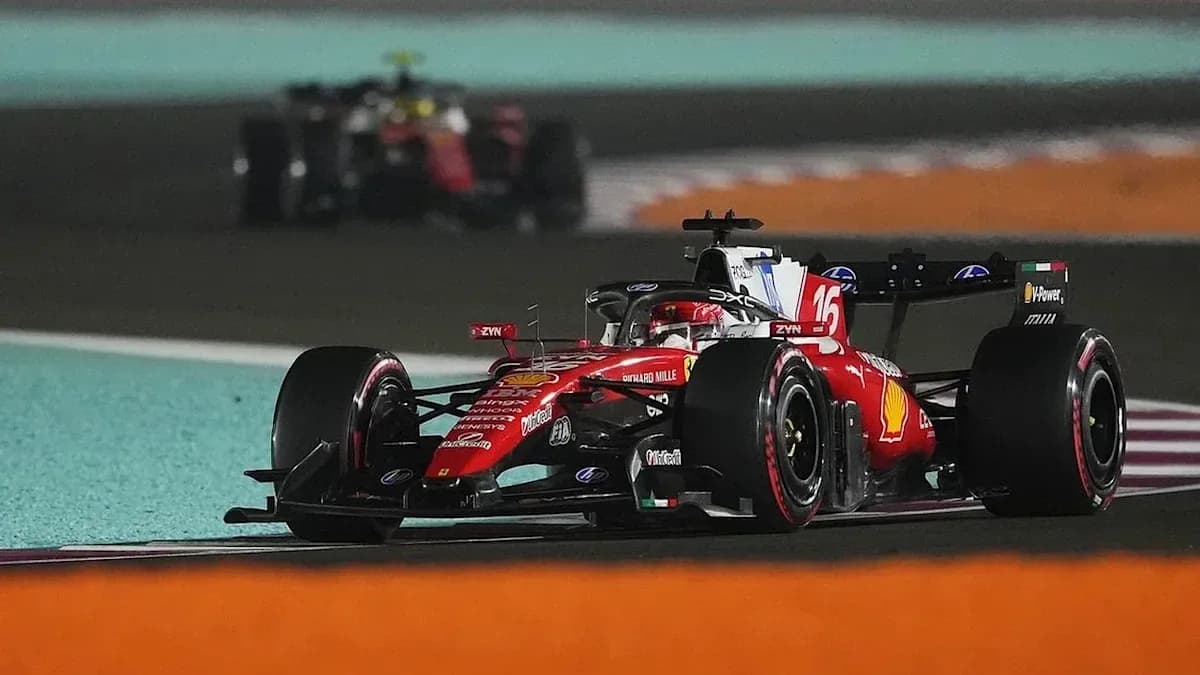
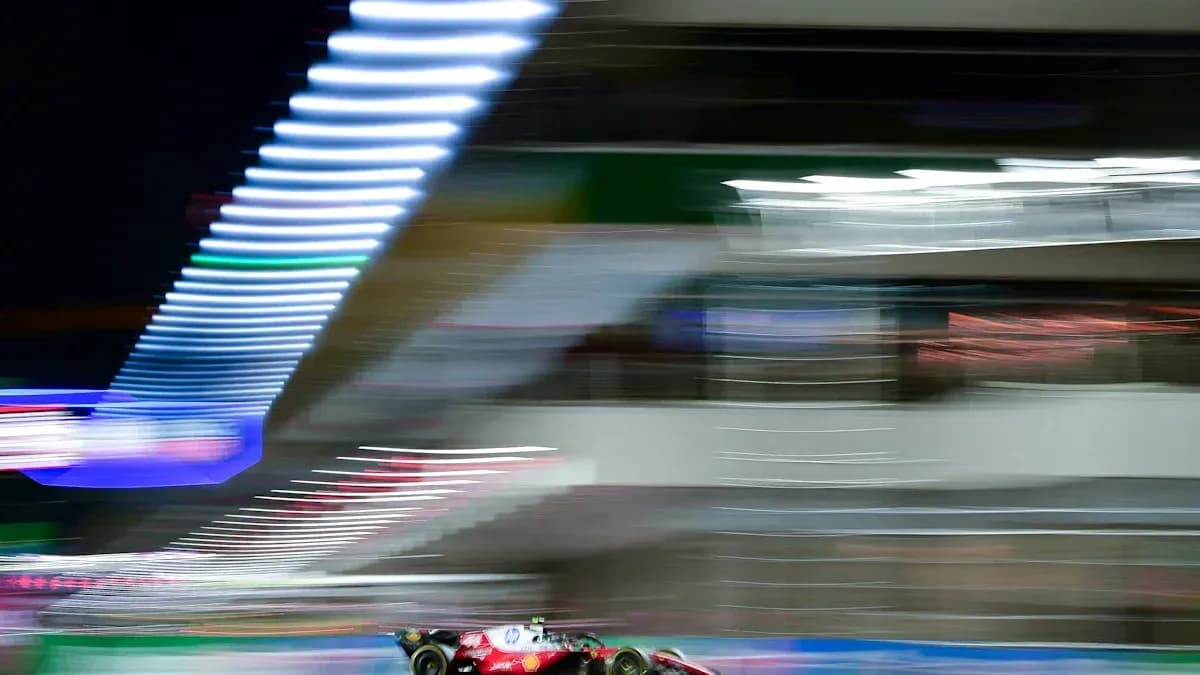
Ferrari: nowhere, and not sure why
Fred Vasseur didn’t sugar-coat it. Ferrari’s team boss labelled this their “worst qualifying of the year in terms of pace”, and the numbers back him up.
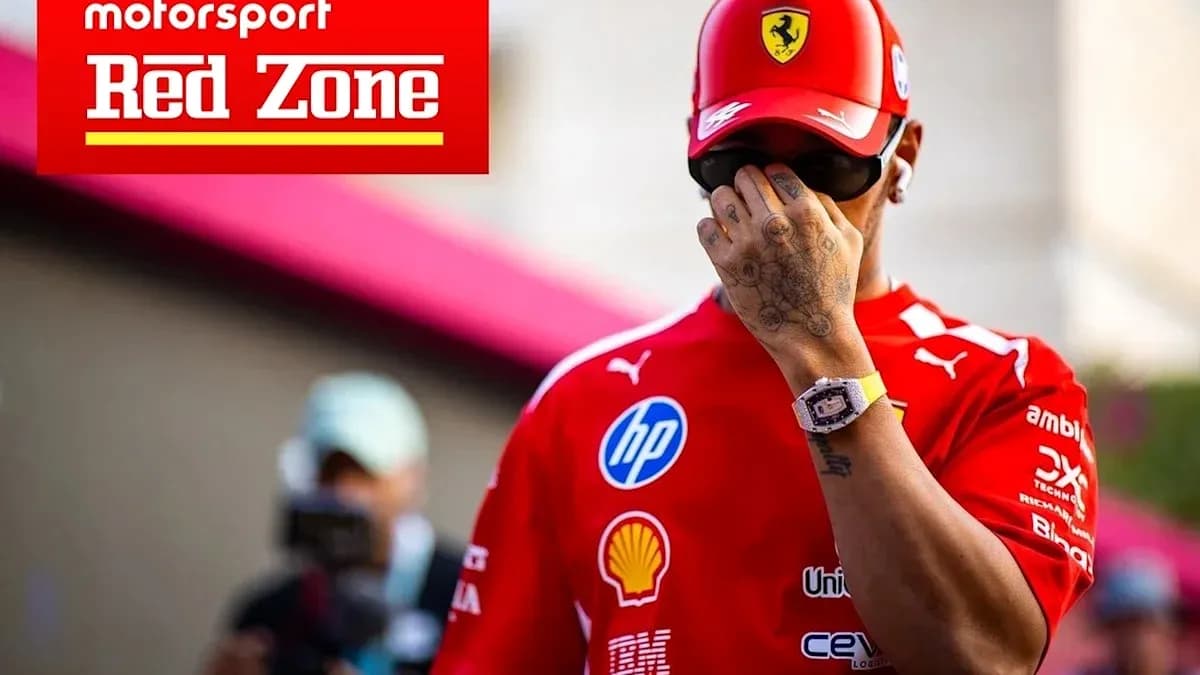
Charles Leclerc ended up 1.26s off pole. Lewis Hamilton was even further back, 1.413s down and behind a Racing Bulls. On a circuit that should reward a decent, stable front end, Ferrari simply never arrived.
The most troubling part? They don’t fully understand it. Tyre warm-up, a frequent Ferrari headache, wasn’t the culprit this time. Both drivers felt they got the rubber into the window. The car just never bit into the tarmac.
Leclerc pointed to the ultra-smooth Lusail surface as a likely factor. The balance, he said, didn’t feel terrible. The grip did. The SF- car slid all four wheels through the corners, offering no extra time if he pushed harder – just more sliding and missed apexes.
Normally, when a team is more than a second off, the driver steps out of the car talking about a “wrong” balance or a broken window of performance. Here, Ferrari felt broadly OK – and still got hammered. That disconnect is exactly the kind of problem that keeps engineers up all night.
Lindblad: Racing Bulls punch above their weight
Arvid Lindblad continued his quietly impressive rookie campaign with yet another Q3 appearance – his 15th of the season – and a big scalp on the way.
He put his Racing Bulls eighth on the grid, a tenth ahead of team-mate Liam Lawson and, notably, ahead of Hamilton’s Ferrari. For a driver still stitching together his first full year at this level, that’s a serious marker.
Lindblad leaned on something rare in modern F1: genuine circuit familiarity. He raced here in Formula 2 in 2025, finishing fourth in the feature race, and admitted that actually knowing where the track goes – rather than learning on the fly – “made quite a big difference”.
He’s realistic about Sunday. Ferrari, he insists, are not in Racing Bulls’ “race” over a full Grand Prix distance. The top teams, as he put it, “stretch their legs” when the lights go out. Still, with a strong engine and a clean starting spot, he has every chance to make life awkward for them for as long as the tyres let him.
Lawson, meanwhile, endured what he called a “super frustrating weekend” blighted by power unit issues. Lindblad’s wry response said plenty: he’s had “many of those” himself this year, plus four grid penalties to go with them.
Perez and Cadillac: a debut season unravels
Sergio Perez didn’t bother dressing it up. “A total disaster this weekend,” was his blunt verdict after qualifying dead last in 22nd.
The Mexican spent FP3 chasing a set-up that went nowhere, ending the session nearly seven-tenths behind team-mate Valtteri Bottas. A “massive cross weight” in the car meant they learned almost nothing from that final practice hour. It capped a run of mechanical and set-up issues stretching all the way back to FP1.
By qualifying, Cadillac had abandoned the experiments and fallen back to a baseline configuration. It stabilised the car, but at a cost: Perez described it as “super rear-limited”, not what you want when you’re trying to attack in the high-speed sweeps of Lusail.
He did at least close the gap to Bottas to 0.45s in qualifying. That’s small comfort when you’re still last on the grid. For a debutant constructor, a point-less season isn’t necessarily a failure in itself, but Perez was clear: operationally, Cadillac feel “far off”. That’s a harsher, more damning reality than any number on a championship table.
Audi: expectations high, answers missing
Audi turned up in Qatar expecting to shine. High downforce, long corners, heavy emphasis on balance – this should have been their playground. Practice backed that up, with both cars flirting with the top 10.
Then qualifying arrived, and the pace vanished.
Gabriel Bortoleto ended up 13th, his team-mate down in 16th. Both were more than half a second away from sneaking into Q3. For a team that hadn’t changed the car since FP3, the drop-off made no sense.
Bortoleto admitted he was baffled. The feeling he’d had earlier in the day simply wasn’t there. With a heavier car in FP3, he’d gone faster than he managed in qualifying trim. That inversion – lighter car, slower lap – is the kind of thing that drives engineers to dig through every line of data and every gust of wind.
Audi still sit just three points behind Haas in the fight for seventh in the constructors’ standings. On this evidence, they’ll need more than hope to turn that around on Sunday.
Bearman: one perfect lap, one big opportunity
Ollie Bearman walked out of the Haas garage knowing he’d done something special. P11 on the grid doesn’t scream “heroics”, but context matters.
He beat team-mate Rafael Camara by half a second. He beat both Audis. He finished just behind the flying Racing Bulls and put Haas right at the front of the midfield queue.
Bearman didn’t hide behind false modesty. He said Haas didn’t “deserve to be in P11 on car performance” and described his Q2 effort as that rare thing: a genuinely perfect lap. No obvious mistakes, no corners where he climbed out of the car thinking he’d left a tenth behind. “One lap per year” feels like that, he said. This was it.
Haas now have a crucial platform in their duel with Audi. Three points separate the teams in the constructors’ standings. Bearman knows exactly what’s at stake and has no intention of simply defending.
“Going forward” is his plan. Attack as the best form of defence. If he finishes ahead of both Audis, he counts it as a positive race, no matter the final position on the day.
Camara, by contrast, faded when it mattered. Strong through practice and only two tenths off Bearman in Q1, he couldn’t live with his team-mate’s step in Q2. Half a second slower, 15th on the grid, and a long afternoon ahead.
Pole for Russell. A wounded Antonelli alongside. McLarens poised. Red Bulls boxed in. Ferrari lost. Behind them, a midfield that smells opportunity and chaos in equal measure.
If this is how Qatar treats the favourites on Saturday, what kind of damage will it inflict on Sunday?