Sandpaper Storm: Fresh Faces Shine at MCG T20 Series
The sandpaper saga refuses to leave Australian cricket alone, but for a few hours at the MCG it has to share the stage. Australia and England open a five-match T20 series in Melbourne, a contest that may sit two years out from the next T20 World Cup, yet crackles with intrigue, subtext and a few careers about to change.
On the field, there is the clean, sharp line of a new series. Off it, the smudged fingerprints of Cape Town 2018 still mark everything.
Cummins backed as storm rages on
Cricket Australia moved first. Under intense scrutiny after the ball-tampering scandal roared back into public view, the governing body delivered its verdict on Pat Cummins: he stays.
After meeting the Test captain in Sydney on Friday, CA chair David Boon and CEO Todd Greenberg issued a statement on Saturday declaring “unanimous” support for the 31-year-old. Cummins’ integrity had been dragged into the debate once more after Usman Khawaja’s memoir claimed the entire Australia team knew of the plan to tamper with the ball on the 2018 tour of South Africa.
CA pushed back hard.
“We’ve expressed our support to Pat and our concern for everyone impacted by the events of the 2018 tour of South Africa,” Boon said. “We have learned from that experience and are proud of the team and the culture Pat and other leaders in the team have fostered over the past eight years and unequivocally reject any implication that Pat’s integrity has been compromised.”
The message was clear: no change, no vacancy, no coronial inquest into Cummins.
Yet the debate has only thickened. Cameron Bancroft’s explosive 4,000-word first-person account reignited arguments many thought were exhausted. Broadcasters pored over it on air. SEN’s Gerard Whateley called for a formal judicial-style inquiry, complete with witnesses and cross-examination. Cricket Australia’s softer “forum” proposal, floated hours earlier, suddenly looked flimsy.
Eight years on from the sandpaper in Cape Town, nothing – not even Khawaja’s book Sabr – has cut through like Bancroft’s own words. Every fresh statement seems to guarantee another: the next podcast, the next press conference, the next counterpunch.
And into that noise walks a T20 series that was supposed to be about something else.
Marsh ducks the microphones, Harper steps up
Mitch Marsh, normally one of the more relaxed voices in Australian cricket, has felt the heat more than most. The T20 captain endured a grim, stonewalling press conference before the recent ODI series against England, forced to parry questions that had little to do with swing or seam.
This time he stayed away. On the eve of the T20s, Marsh opted out of the pre-series media duties, wary of another public grilling as the Bancroft fallout gathered speed.
Instead, Victoria’s Sam Harper fronted up. The 29-year-old wicketkeeper, set for his T20 international debut on his home ground, offered the kind of local story every series launch craves. He has battled through serious concussion issues to get here; tonight, he finally pulls on the Baggy Green in the shortest format.
It was also a calculated shift in tone. Talk about the debutant. Talk about the cricket. Talk about anything but sandpaper.
Marsh, for his part, nearly withdrew from the third ODI in Hobart, anticipating the impact of Bancroft’s statement. He played, produced a brilliant catch, then nicked off early in a 97-run defeat that sealed the series for England. Even when he stays in the XI, the noise hums around him.
Toss, teams and a night for debutants
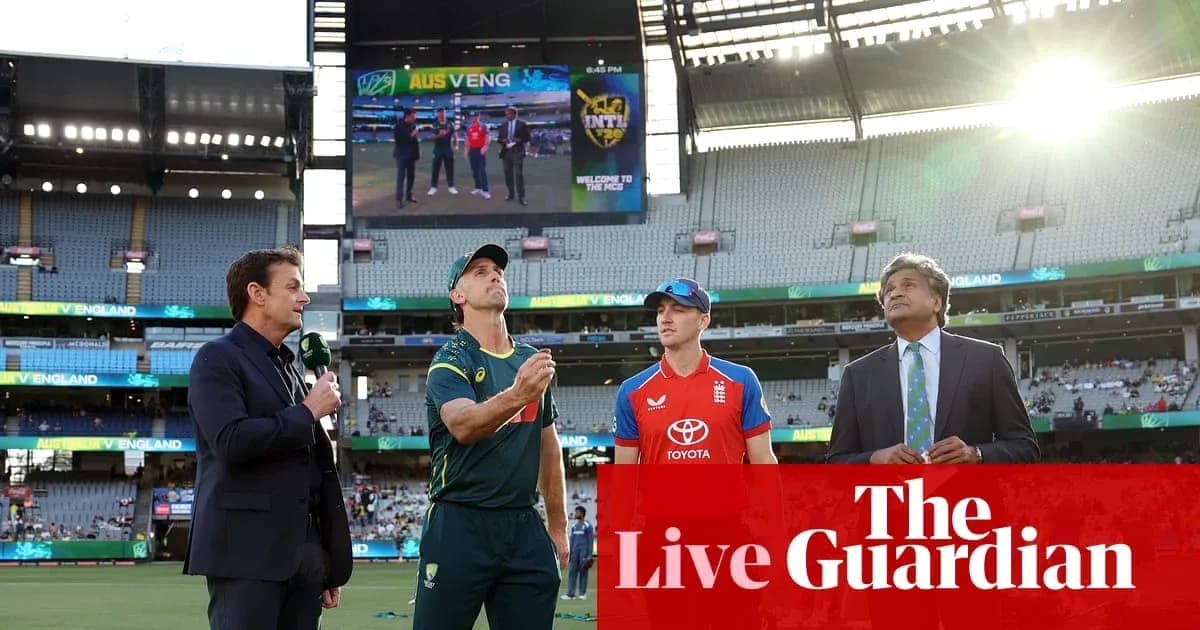
At the MCG, the cricket finally took control. Australia won the toss and chose to bowl. Harry Brook, now firmly installed as England’s T20 captain, said his side would have batted anyway.
Australia named two debutants: Harper with the gloves and 23-year-old Lechlan Shaw. Both step straight into a high-voltage rivalry, under the biggest lights the country can offer.
Their XI: Marsh (c), Fraser-McGurk, Harper (wk), David, Shaw, Edwards, Chaudhary, Davies, Dwarshuis, Meredith, Zampa.
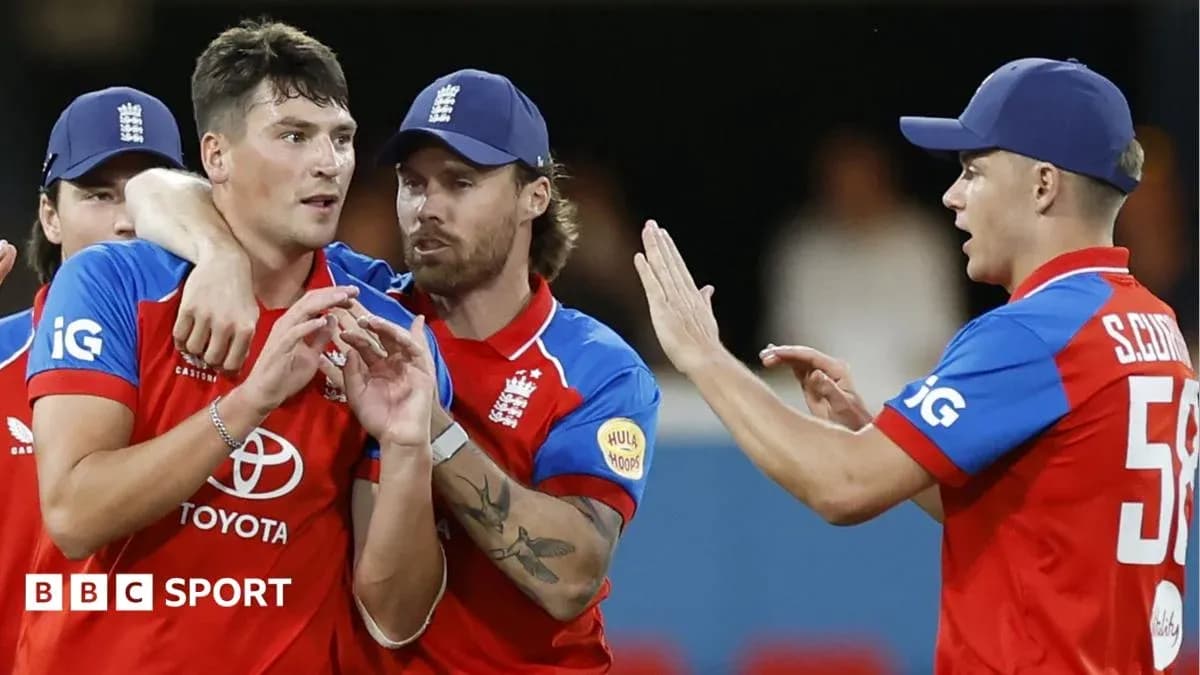
England, top of the ICC rankings and in scorching form under Brook, countered with a blend of power and guile – and a debut of their own. Fast bowler Henry Crocombe, recently joined to Surrey, received his cap from Sam Curran and will bowl his first T20 international overs against Australia, at the MCG, in front of a crowd that tends not to do gentle introductions.
England’s XI: Salt, Donald, Brook (c), Cox (wk), Banton, Jacks, Curran, Overton, Dawson, Rashid, Crocombe.
If the names feel fresh, the intent is not. England have turned into a T20 juggernaut, winning 23 of 26 completed games since Brook took over. They dismantled world champions India during the English summer and have spent the last two years playing with a kind of reckless clarity that leaves opponents gasping.
Australia, ranked third, are chasing that kind of coherence. They were swept 3-0 in Pakistan and barely left a footprint at the last T20 World Cup. A 3-0 win over Bangladesh in June offered a hint of a path forward, a glimpse of what a home World Cup in 2028 might look like if this generation clicks.
Beating England now would feel like more than a line in a results column. It would feel like a pivot.
England’s new edge, Australia’s search for one
There is a swagger to England’s white-ball cricket again. Brook leads a side that attacks from the first ball and refuses to blink. Phil Salt and Nye Donald at the top promise violence in the powerplay; blink and Donald, whose T20 strike rate sits at 173 and has soared beyond 200 in recent seasons, can take a game away.
Behind them, the middle order of Brook, Ben Cox, Tom Banton and Will Jacks offers layers of strokeplay and risk. With Sam Curran’s all-round nous and the spin pairing of Liam Dawson and Adil Rashid, England have options everywhere.
Rashid’s return to the white-ball side is significant. His partnership with Dawson gives Brook two contrasting spinners to throw at Australia’s middle order, especially if the pitch grips under lights.
Australia, by contrast, are still sketching the outlines of their next great T20 team. Marsh is the heartbeat, but the surrounding cast is in flux. Fraser-McGurk’s raw power, Tim David’s finishing, and the pace of Riley Meredith all hint at a more explosive future. Tonight, though, the focus narrows on Harper and Shaw. Debuts at the MCG are not gentle affairs; they are examinations.
A world watching, even from afar
Even as the MCG prepares for the first ball at 7.15pm AEDT (8.15am GMT), the wider cricketing world keeps moving. In Wellington, India have taken a vice-like grip on the first Test against New Zealand, closing day three on 486 for 4, a lead of 118. All of their top five passed fifty. KL Rahul, all silk and still somehow under-appreciated in the longest format, top-scored with 136.
The contrast is stark. India, settled and ruthless. Australia, talented but unsettled. England, rampant in one format, still patching others. And threading through it all, the unresolved questions of a scandal eight years old that refuses to die.
Tonight in Melbourne, debutants tug on caps, captains juggle match-ups, and fans look for escape in the clean geometry of bat and ball. But as Pat Cummins walks out somewhere else in the country, backed by his board yet shadowed by old events, one question lingers over everything Australia do this summer:
How long can a team move forward while the past keeps knocking on the dressing-room door?