Scotland Secures Third Place at Emerging Nations Trophy
Kathryn Bryce walked off in Ajman with bat and ball under her arm and third place secured. It was as complete a captain’s performance as Scotland could have asked for at the end of a campaign that promised more than it ultimately delivered.
Her 69 from 48 balls set the tone. Her first legal ball with the new ball ripped out Zimbabwe’s main threat. The rest of the afternoon followed her lead.
Bryce drives Scotland to a commanding total
Sent in to bat, Scotland needed a statement after the bruising nine‑wicket defeat by Pakistan that had shut them out of Wednesday’s final. Bryce supplied it.
She arrived in the second over and refused to budge until the last. Six fours, two cleanly struck sixes, and an innings that never lost its shape even as wickets fell around her. This was her third half-century of the tournament, and it looked it – assured, busy, ruthless on anything loose.
At the other end, sister Sarah Bryce played the perfect foil. Her 25 from 22 balls kept the board moving and allowed Kathryn to build the innings rather than salvage it. Between them, they dragged Scotland to 146-8 from their 20 overs, a total that always felt a step too far for a Zimbabwe side still learning to live with this level of pressure.
Zimbabwe’s resistance with the ball came almost entirely from Christine Mutasa. She attacked the stumps, varied her pace and finished with 4-26, repeatedly checking Scotland’s surge just as it threatened to explode. Without her spell, the target might have been brutal rather than imposing.
Early strike, swift collapse
Any faint Zimbabwean hopes of a chase needed a steady start. They lasted one legal delivery from Bryce.
Having found her range, the Scotland captain promptly removed Kelis Ndhlovu, and with that, the tone of the reply changed. Yet Zimbabwe did not fold immediately. Modester Mupachikwa (11) and Chipo Mugeri-Tiripano (22) stitched together a stand of 37 for the second wicket, nudging and steering their way to 52-3 and, briefly, a foothold.
That was as good as it got.
Once Mupachikwa and Mugeri-Tiripano departed in quick succession, the innings simply caved in. From 52-3, Zimbabwe stumbled and then crashed to 72 all out in 16.2 overs. No other batter made it to double figures. Scotland’s bowlers sensed weakness and went for the throat.
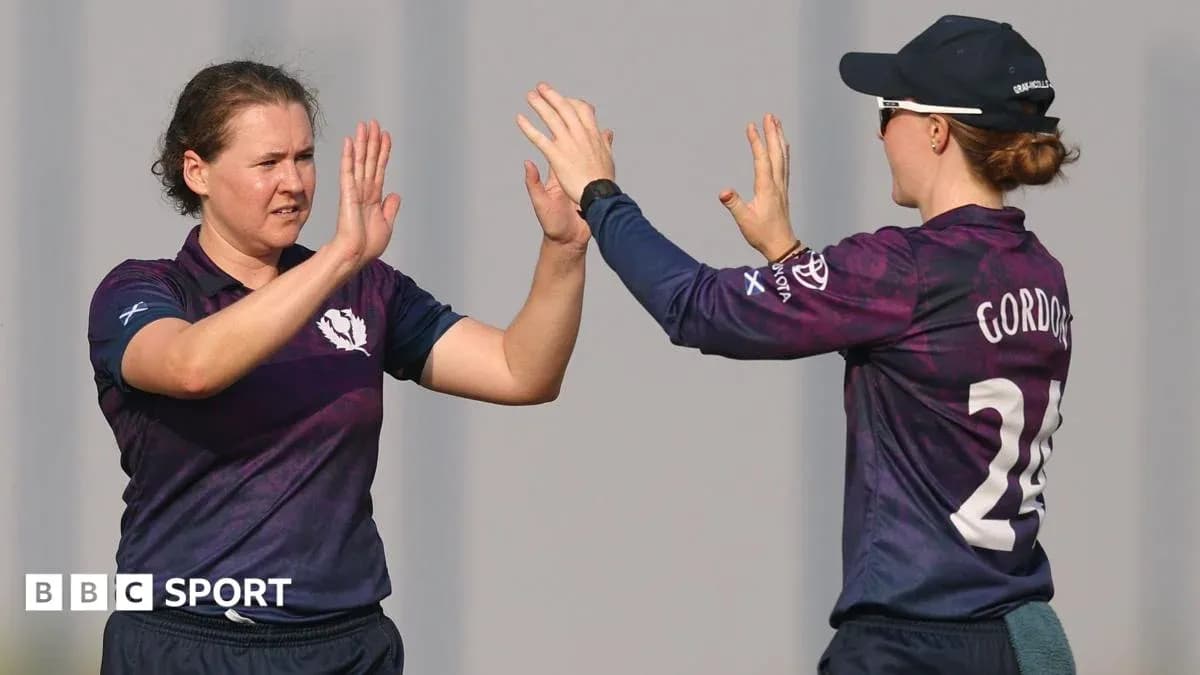
Kirstie Gordon led the clean-up with a superb 4-13, her left-arm spin ripping through the middle and lower order. She found grip, found rhythm, and found Zimbabwe’s tail badly exposed. Around her, the fielders closed in, the pressure rose, and the wickets tumbled in clusters.
Bryce, having already shaped the match with the bat, chipped in with that early key wicket and the kind of new-ball spell that let her spinners attack without fear later on.
A podium finish, and a hint of what might have been
When it was over, the margin – a 74‑run win – reflected Scotland’s control. They had been sharper, smarter, and far more clinical in the decisive moments.
Bryce highlighted the powerplay as the turning point, noting that early wickets had been missing in recent outings. This time, they arrived, and the game bent in Scotland’s favour before Zimbabwe could settle. It underlined a theme of their tournament: close, competitive cricket, separated by small passages of play.
Those “few overs here and there” that Bryce referenced have kept Scotland out of the final, where Ireland will face undefeated Sri Lanka after the Irish beat the Netherlands by 44 runs. Scotland instead leave with third place and a clear sense that their ceiling sits higher than this.
They finished this campaign not with a whimper, but with a hammering. The question now is whether performances like this become their standard, rather than their response.