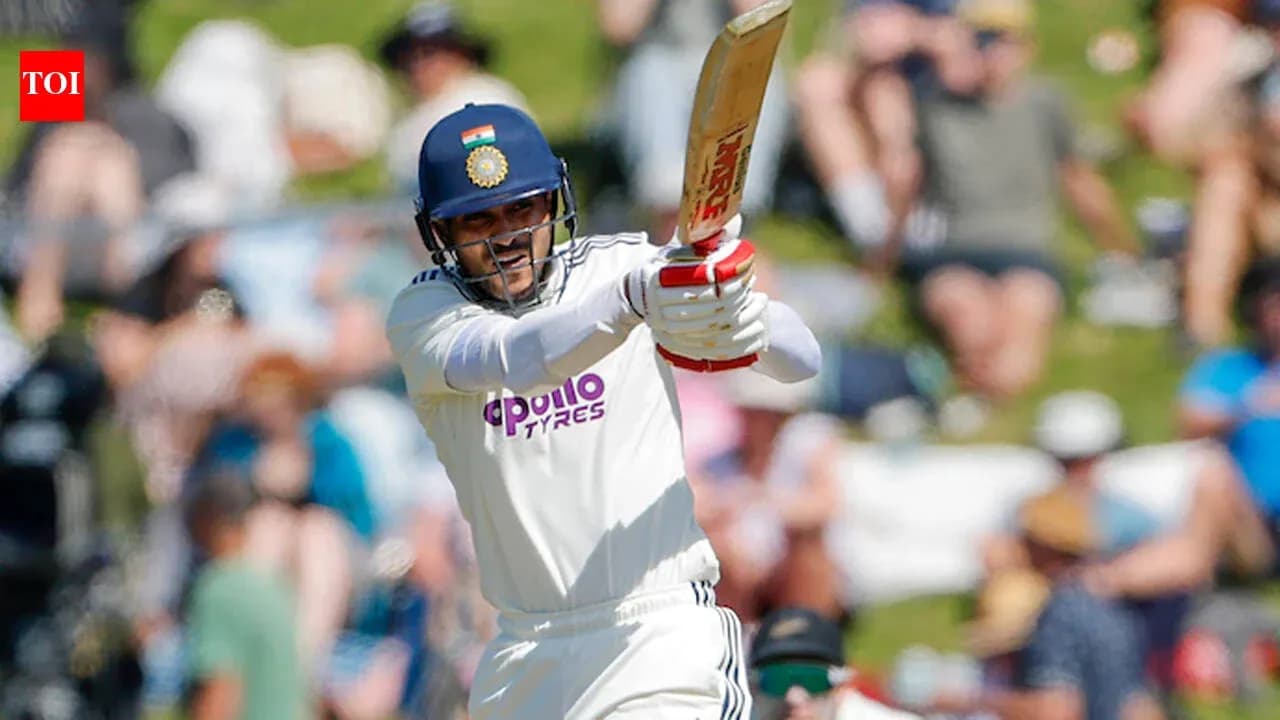
Shubman Gill's Near Miss: A Masterclass in Batting Control
In Wellington’s cutting wind, Shubman Gill batted like a man who had everything under control and just one thing out of reach.
He found his father first.
When Gill thumped a pull shot to reach his half-century, the Indian captain turned almost instinctively towards the stands behind square leg, bat raised, eyes searching. He always does. Somewhere in that sea of faces, Lakhwinder Gill sits in his “lucky” white kurta-pyjama, a familiar beacon in unfamiliar conditions.
On Saturday, the search was easier.
At the start of Day 2, Lakhwinder had parked himself behind the bowler’s arm, the classic purist’s vantage point. As the wind stiffened and the temperature dropped, he abandoned the textbook view for something more practical: a patch of sunshine on the benches near the museum, next to his wife, Keart Gill. By the time Shubman walked out to bat, his father’s seat – for once – was settled.
The son’s innings felt the same way. Settled. Assured. Almost inevitable.
Gill missed his hundred by two runs, bowled for 98 by Jacob Duffy, and yet he left India in a position of clear authority. His 146-ball stay was an exhibition in controlled aggression, built on timing rather than brute force, on judgement rather than bravado.
He first locked in with KL Rahul, adding 91 to steady and then stretch India’s grip on the game. Rahul’s presence at the other end allowed Gill to play at his tempo – brisk, busy, always probing. When Rahul departed, Rishabh Pant arrived and the mood shifted again. The pair rattled along to a 100-run stand, Pant injecting his usual chaos, Gill responding by tightening the screws without ever retreating into a shell.
The numbers told their own story. Fifty from just 66 deliveries, a scoring rate that never sagged even as wickets fell around him. Every time New Zealand sensed a window, Gill slammed it shut.
He picked gaps with surgical precision. When the field spread, he threaded it. When it closed in, he went over it. There was urgency, yes, but not a hint of panic. He left well, drove with a straight bat, and when the bowlers dug it in, he was ready.
New Zealand tried to mess with him. They set a double trap on the off side, two catchers waiting for a loose drive, while stacking the leg side for the pull and hook. It was a plan designed for a misjudgement, for one impetuous shot.
Gill refused to bite.
He stepped away to carve the short ball through the covers, turning their leg-side ploy into a liability. When they went straighter, he worked them through midwicket and square leg, his wrists snapping the ball into gaps that barely seemed to exist. The more they schemed, the calmer he looked.
The only real flutter came with a tight LBW shout. New Zealand went up in unison, the umpire’s finger followed, and for a moment the innings hung in the balance. Pant urged his captain to review. Gill did. Replays showed the faintest inside edge, enough to overturn the decision and keep him moving towards what felt like a destined hundred.
The cameras were ready for the script to complete itself: the second raise of the bat, another glance to the same sunlit corner of the stands, father and son connected again through a number on the scoreboard.
Cricket, though, delights in the cruel cut.
On 98, Duffy angled one in. It wasn’t a snorter, not a magic ball. Just a good Test match delivery, straight enough, late enough. Gill’s defence, so solid all morning, finally parted. The off stump rocked back. For a heartbeat, the Basin Reserve fell into that peculiar hush reserved for the dismissal of a man who seemed set for something bigger.
Gill paused, then began the long walk back. No dramatics, just a quiet, visible frustration. Two runs short of a first Test hundred on New Zealand soil, two runs short of the milestone his innings had deserved.
Up in the stands, Lakhwinder Gill felt it too. The white kurta-pyjama, the sunshine, the perfect vantage point – all of it suddenly framed not by celebration, but by what might have been.
India, though, kept their dominance, their captain having done the hard work to anchor the innings and seize control of the match. The scorecard will show 98, not 100. The memory will show something more: a leader dictating terms in alien conditions, shaping a game rather than simply surviving it.
In Christchurch, the ritual will repeat. Lakhwinder will pull on the same white kurta-pyjama, pick his spot in the stands, and wait for his son to find him again.
The question now is simple: when Shubman Gill raises his bat next time, will the number finally match the promise?