Tilak Varma's Century and Lessons in Captaincy
Tilak Varma walked off with a hundred to his name, but it was his words, not his runs, that sparked the louder debate.
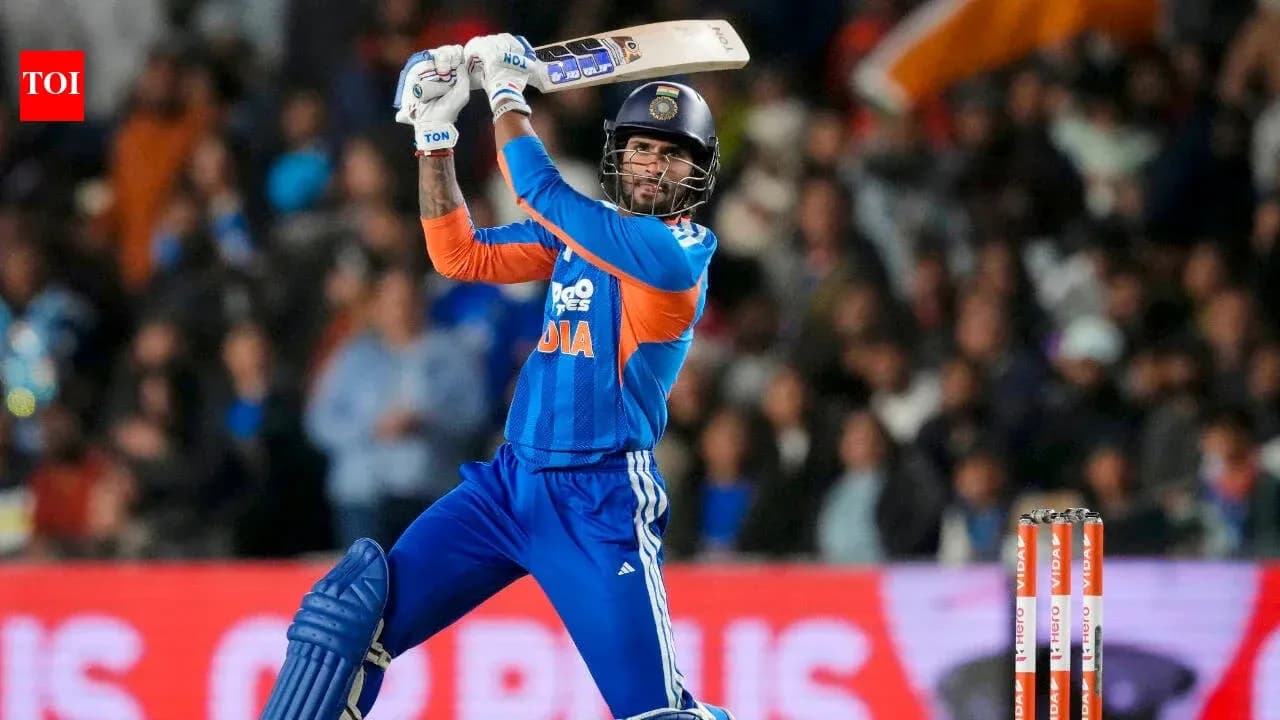
India A fell 48 runs short in a chase of 314, bowled out for 265 in 49.1 overs. On paper, Tilak stood tall: 100 off 149 balls, a lone centurion holding the innings together. In reality, the post-match narrative turned quickly from his resilience to his responsibility as captain.
A Lone Fight – and a Slow One
The chase never quite settled. Abhishek Sharma came out blazing, smashing 60 from just 34 balls and dragging the innings forward with clean, fearless hitting. At the other end, Tilak crawled. After 34 balls, both left-handers had faced the same number of deliveries; Abhishek had 60, Tilak just six.
That imbalance mattered.
The required rate kept climbing, dragging pressure onto every new batter who walked in. Wickets tumbled, and when India A slumped to 129 for 5, the game looked gone.
Tilak and Shahbaz Ahmed tried to rewrite that script. They stitched together a 112-run stand for the seventh wicket, Shahbaz contributing a crucial 56. They nudged, rotated, then began to push. The chase, briefly, felt alive again.
Then came the moment Tilak would later highlight.
Shahbaz fell in the 43rd over, dismissed just as India A were trying to lift the scoring rate. His wicket opened the gates. The lower order folded, and though Tilak finally found fluency late in the innings – accelerating, finding the boundary, dragging himself to three figures – the finish line stayed out of reach.
His century, completed off 140 balls, went into the record books as the second-slowest hundred by an Indian batter in List A cricket. His fifty had taken 95 deliveries. The numbers told a story: a captain who batted deep, but not quite at the tempo the chase demanded.
The Comments That Stung
If the innings was complicated, the presentation made it even more so.
Reflecting on the partnership with Shahbaz, Tilak said: “The way Abhishek started and in between again the way Shahbaz has given a partnership with me, that was crucial. But unfortunately, when we wanted to accelerate, Shahbaz got out. Otherwise, if he could have stayed for another two overs, something like that, then I could have finished the game.”
He doubled down on the idea of support later: “If any other batsman could have given me support, then I could have finished the game.”
The intent might have been to underline responsibility, to stress how badly he wanted to take the game deep. Instead, the emphasis on Shahbaz’s dismissal and the lack of “support” sounded, to many, like a captain placing the spotlight on others after a defeat.
For a young leader, it was a revealing moment.
Tilak did try to frame his knock in a team-first lens. Asked if this was the best phase of his batting, he replied that a performance could not be “best” without a win, and spoke about loving the “load and responsibility” of captaincy. Yet the references to partners falling around him overshadowed the self-critique.
Rahane’s Reminder: Critique Stays in the Dressing Room
Speaking on Sony Sports Network, the former India captain did not attack Tilak’s intent. He questioned his method.
"Nobody wants you to talk about your player in front of the world. If you want to say something, go say in the dressing room – it builds their confidence," Rahane said, cutting straight to the heart of leadership.
He acknowledged the chaos of those post-match minutes, the fog that can cloud a captain’s thoughts after a loss.
"Look, this happens in cricket. You put in the effort, results go your way or they don't. Sometimes you don't get the chance as captain, because so many things are running through your mind. You come to the presentation, whatever you want to say, maybe that thing doesn't come out, something else comes out," he explained.
It was a generous reading of Tilak’s comments, but not a free pass. For Rahane, the lesson was clear: presentation microphones are not the place to dissect a teammate’s dismissal.
"I'm sure Tilak Varma as a captain will learn. This is an experience for him on how to handle things," he concluded.
A Century, a Critique, and the Next Step
Strip away the numbers and the soundbites, and this was a classic early-career captaincy test. Tilak batted long, fought hard, and still walked back with questions swirling around his tempo and his tone.
The innings showed he can shoulder a chase. The presentation showed he is still learning how to carry a dressing room with him when the chase fails.
The runs are already on the board. The real measure, now, is what he does with this lesson the next time the cameras, and his teammates, are watching.