Timberwolves Fall Short Against Grizzlies Without Edwards and Ball
The Minnesota Timberwolves walked into the night with a chance to clinch West Group B. They walked out with a reminder of just how fragile their margin for error really is.
No Anthony Edwards. No LaMelo Ball. And in the end, no answer for the Memphis Grizzlies’ edge and execution in a 114-109 defeat.
Life Without Stars Gets Real
Chris Finch rolled out his first lineup of the season without either Edwards or Ball, a combination that had previously allowed Minnesota to survive and even thrive. They’d gone 11-4 without Edwards, leaning heavily on Ball’s poise and playmaking to steady them in tight moments.
This time, that safety net was gone. Ball sat with a left ankle sprain picked up against the Oklahoma City Thunder, his 75-game streak snapped, his status still day-to-day. Edwards remained out as he continues to recover from right knee surgery in late October.
The void was obvious on the floor and even louder in the locker room.
“We got tortured, and it's not like they were playing harder than us. We just wasn't just going for it, including me mostly,” Jonathan Kuminga admitted afterward, offering a blunt assessment rarely heard from a young player. “I gotta be the one that does all the tough jobs… I gotta be the motivation to the guys. I gotta find it, I gotta be there for everybody.”
It wasn’t just the production they missed. It was direction.
Kuminga put his finger on it: “I just think someone who could kind of calm the game. It's very high intensity and minds are moving fast, and I just think we needed somebody that could just kind of fill that position. A point guard, calm the ball down and distribute.”
Without Ball, nobody truly grabbed that role.
Memphis Sets the Tone
From the opening tip, Memphis imposed itself. The Grizzlies didn’t just outplay Minnesota; they dictated the terms.
They hammered the offensive glass, ripping down seven offensive rebounds in the first quarter alone. Each second chance felt like a gut punch, each extended possession another reminder of Minnesota’s looseness and lack of control. The Wolves coughed up six turnovers in that opening frame, repeatedly dribbling into trouble and inviting pressure.
Chris Finch saw the pattern clearly.
“I just think it was a case where everybody tried to do too much offensively,” he said. “We put our head down into a crowd and we missed a lot of easy baskets.”
Memphis fed off those mistakes. By halftime, the Grizzlies were shooting 51.7% from the field, punishing every lapse, every late rotation, every careless handle.
As if the absence of Edwards and Ball wasn’t enough, foul trouble started chipping away at what remained of Minnesota’s rotation. Jaden McDaniels and Shannon Jr. each picked up three fouls by the break, further blunting the Wolves’ defensive presence and versatility.
The game tilted, slowly but steadily, in Memphis’ favor.
Ayo’s Spark, McDaniels’ Surge
Not everyone in a Wolves jersey wilted.
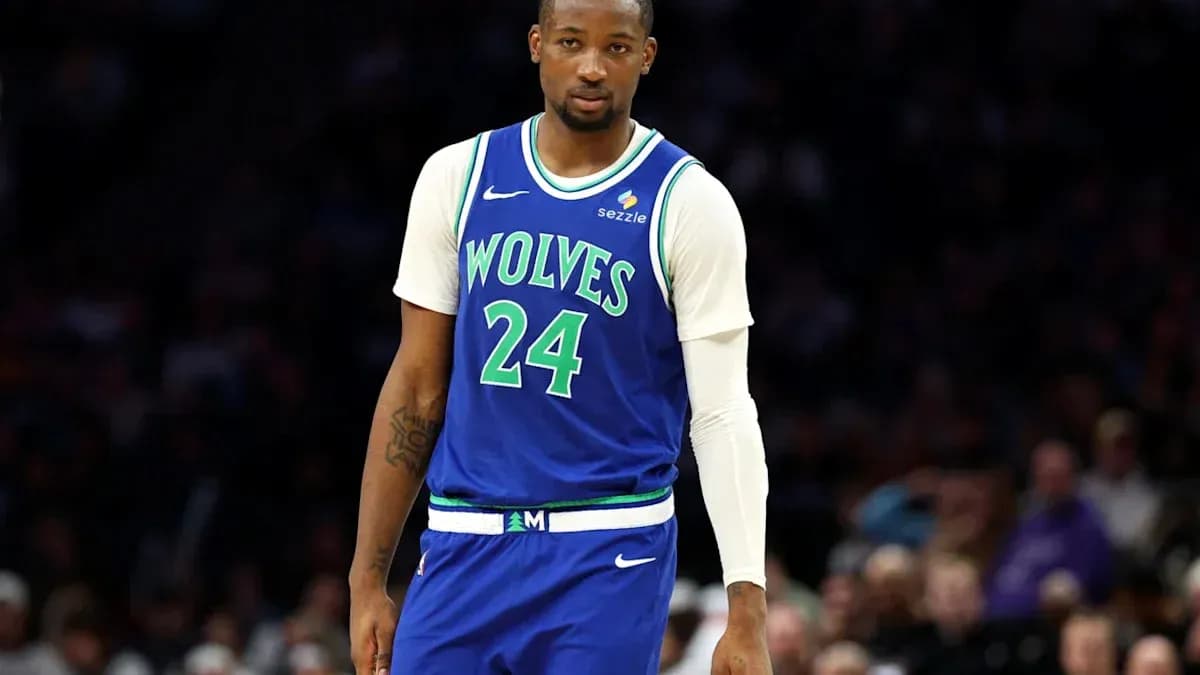
Ayo Dosunmu delivered one of the few genuine bright spots. He carved out an efficient first half, scoring 16 points on 6-of-7 shooting, attacking gaps and refusing to let the game completely slip away. In the final 30 seconds of the half, he poured in five crucial points to keep Minnesota within reach, a small burst of defiance amid the grind.
Out of the locker room, the Wolves finally punched back.
The third quarter belonged to McDaniels. After spending much of the first half hampered by fouls, he erupted with 10 points, 5 rebounds and 2 assists in the period, anchoring a 31-21 Minnesota surge. Just as significant, he did it without picking up another foul, allowing Finch to keep his best two-way presence on the floor and giving the Wolves a platform to mount a comeback.
For a stretch, the game flipped. The ball moved. The defense tightened. Memphis felt Minnesota’s length and energy in a way it hadn’t earlier.
But the damage from the earlier chaos lingered.
Turnovers, Free Throws, and a Missed Chance
The Wolves never fully cleaned up the mess. They finished with 19 turnovers, each one a missed opportunity in a game that tightened late. Memphis turned those miscues into 27 points, a brutal conversion rate that undercut every rally.
The Grizzlies also owned the margins: more steals, more blocks, more of the little plays that swing a five-point game.
At the line, Minnesota’s night turned from frustrating to wasteful. They shot just 61% on free throws, leaving points scattered all over the box score. On a night without Edwards’ shot-making and Ball’s orchestration, those empty trips loomed even larger.
The Wolves had figured out how to survive when Edwards sat. They had leaned on Ball’s control, his ability to slow the tempo, read the floor and get them into something coherent. Without either of them, the offense often looked like a collection of good intentions with no guiding hand.
Everybody tried to be the hero. Nobody truly became the organizer.
Kuminga, again, circled back to responsibility and energy—his own, and the group’s. “If I don't do it, it's like a human nature to take the energy out of a lot of activities,” he said, putting the onus on himself to set the tone.
On this night, Memphis set it instead.
The Grizzlies walked away with a 114-109 win and a statement of their own resilience. Minnesota left with a clearer picture of its dependence on two stars—and a pressing question:
When the stakes rise and the roster isn’t whole, who will actually calm the storm?