Usman Khawaja on Sandpapergate: The Cost of Truth
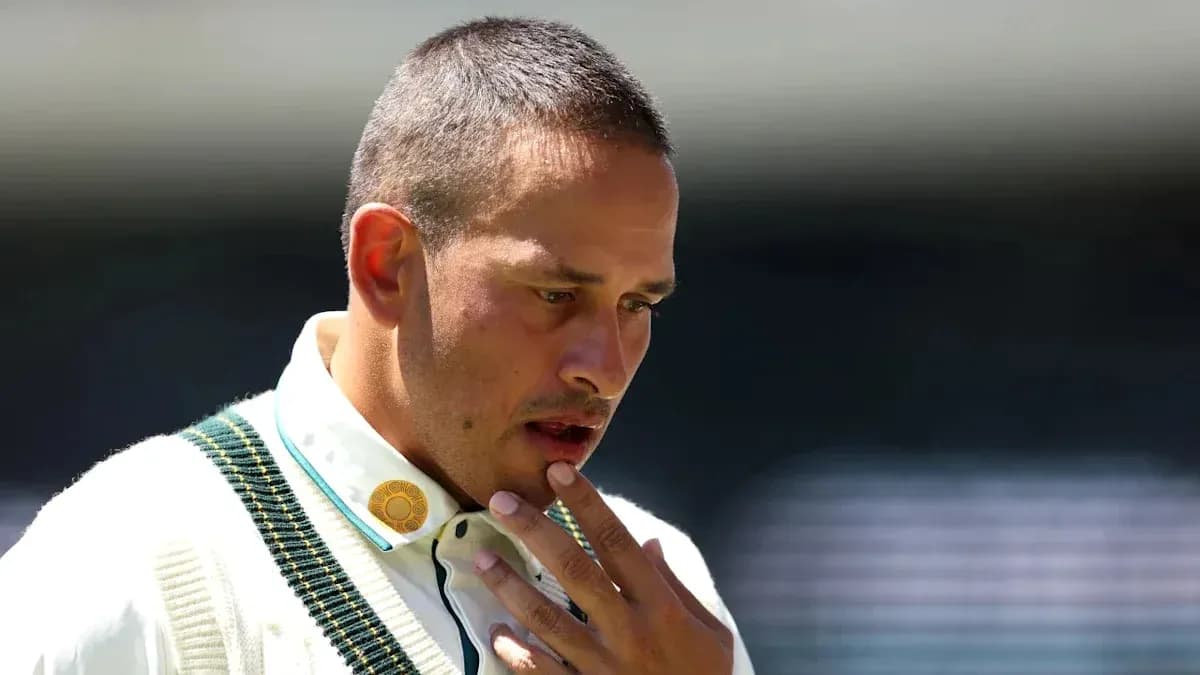
Usman Khawaja knew exactly what would happen if he opened his mouth too early.
Not the social media noise. Not the think pieces. The end of his Test career.
So when the retired Australia opener sat down on The Grade Cricketer podcast and laid out his version of Sandpapergate, he did it with his eyes open and his conscience, as he sees it, finally clear.
“Call me selfish,” he essentially told his critics. “I’m not running from that.”
He knows the charge: that he waited until his own baggy green was safely on the hook before publicly challenging the long‑held narrative of Cape Town 2018. That he let others – Pat Cummins, Mitchell Starc, Josh Hazlewood, Nathan Lyon – carry the weight while he stayed quiet and kept his Cricket Australia contracts.
Khawaja doesn’t dodge it. He leans into it.
“If I'm being brutally honest, if I came out and said that while I was playing, I was 100% my career was over; I couldn't play for Australia anymore,” he said. No hedging, no softening. Just a blunt admission that self‑preservation won out over full disclosure.
He accepts that some will see that as selfish. He also makes clear he understood the stakes.
“I don't want to hurt anyone individually, and I know they're still playing right now,” he explained, welcoming CA’s stance that there will be no further sanctions and no new names dragged through the mud. “I'm so happy now that CA has come out and said there's not going to be any more sanctions, no one's going to get in trouble. Pat Cummins remains as captain.”
The subtext is obvious: he waited until the governing body effectively declared an amnesty. Only then did he feel he could talk.
“He told me to shut up”: the Smith moment that changed everything
The most arresting detail from Khawaja’s account lands in a single, sharp line.
“At the start of all this, I tried to get Steven Smith to take it, he didn't take it, he told me to shut up, pretty much.”
In the days after the Cape Town scandal broke, Khawaja says he pushed the then captain to share the responsibility, to spread the truth wider than one man and one piece of sandpaper. Smith’s answer, as Khawaja remembers it, was simple and brutal: be quiet.
The story doesn’t end there. Khawaja revisits the same exchange from another angle, this time with a more generous reading of Smith’s intent.
He recalls telling Smith: “I'm going to tell everyone. I'm going, No, this is bullcrap, you can't take a year for this.” Smith’s response, as Khawaja tells it now: “I'm taking it, I'm copping it, it's on me.”
For Khawaja, that is the essence of leadership when a dressing room implodes.
“What does a great leader do when he stuffs up? He takes responsibility. I've never seen anyone take responsibility like that in my life.”
In his eyes, the “shut up” wasn’t a captain silencing dissent to protect himself. It was a man deciding he would carry the punishment alone, even if it meant the full story stayed buried.
Four-on-one and the bowlers’ statement
If 2018 was the explosion, 2021 was the aftershock that shook Khawaja most.
That year, Australia’s four frontline quicks released a joint statement denying any knowledge of ball tampering after Cameron Bancroft hinted otherwise in an interview. Khawaja was out of the Test side when the statement landed. When he returned in early 2022, he walked back into a room where the lines had already been drawn.
“2021 was a big one for me, 'cause then once that statement came out and it was like them, I wasn't in the team at the time, but I came back in the team; but even when I came back in the team, it was like four-on-one.”
Four bowlers. One dissenting voice. A settled public position, and a teammate who believed the truth was more complicated.
That imbalance helps explain why he stayed silent then and why he’s talking now. Inside the team environment, he felt outnumbered. Outside it, in retirement, he finally feels free.
Khawaja also widens the frame beyond Smith and the so‑called “bowling cartel”. He rejects the idea that only the captain carries the moral burden.
“We should have all said something, the coaches should have said something, everyone who knew ball tampering was going on at the time should have said something, but we didn't because this is what we wanted to do as a team.”
That line is damning and protective at the same time. Damning, because it confirms what many suspected: ball tampering wasn’t the act of one rogue fielder. Protective, because it spreads the responsibility across players and staff rather than pinning it on a single man.
Smith the scapegoat, Smith the “little brother”
Khawaja’s view of Steve Smith is complicated but unwaveringly admiring.
“The thing I say to Smudger, in my opinion, the greatest batsman in our generation, and Smudger is a great person and he was a great leader,” he said.
He talks about Smith not as a distant superstar but as someone he grew up with in the system, a younger teammate who became, in his words, “like a little brother”.
“I love him so much, he probably doesn't even realise how much I love him. Like, he's been like a little brother to me in a lot of ways because he came up the ranks, he's a couple years younger than me, we hung out a lot as a kid.”
That affection fuels his insistence that Smith should not be defined by the worst moment of his career. Not by the image of a tearful captain at a press conference, nor by the one‑year ban that followed.
“I just want people to be able to realise, like, what a sacrifice he made for the whole team,” Khawaja said. “Yeah, we stuffed up as a team before that, but like, he's a great individual, he's a great player, and he should be 100%, and I think when he finishes his career, that's what all people will remember, and that's what they should remember.”
To Khawaja, Smith’s silence since 2018 is not cowardice. It is a continuation of that original decision to “cop it” and keep copping it, even as others start to speak.
Leadership or lost opportunity?
Khawaja’s portrait of Smith reframes that infamous “shut up” in softer tones. It paints a captain who refused to share the blame, not because he wanted to protect himself, but because he wanted to shield everyone else.
It is a powerful image. It fits the public version of Smith too: a man who took his ban, disappeared, rebuilt, and rarely engaged with the deeper questions about who knew what and when.
Yet the same act that looks like sacrifice from one angle looks like secrecy from another.
If Smith did take the weight on his own, then his silence helped leave the story half told for eight years. Bancroft has worn the “sandpaper” tag ever since. The bowlers felt compelled to issue a statement. Khawaja, by his own admission, felt cornered into silence while he was playing and now walks into retirement with threats serious enough that he has had to use security.
Sacrifice and secrecy can be the same decision. The cost just lands at different times, on different people.
Khawaja is clear on one point: no one can be forced to speak. He also undercuts the idea that Smith alone owes the world an explanation. His line – “we should have all said something” – spreads the responsibility and, in doing so, also spreads the blame for eight years of half‑truths.
The most balanced reading of this messy chapter is that Smith deserves respect for carrying the can in 2018 and the space to decide whether he ever wants to say more. Khawaja, meanwhile, has chosen his moment and accepted the backlash that comes with it.
The story will not be settled by one podcast or one retired opener. It will only truly shift when more of those who were there decide they are ready to be as blunt as Khawaja has finally been.