Australia Completes Record T20I Chase Against England at the MCG
Australia 188-7 (19.5 overs) beat England 187-9 by three wickets
The MCG has seen bigger crowds, bigger occasions, bigger reputations. It hasn’t seen a T20 chase like this.
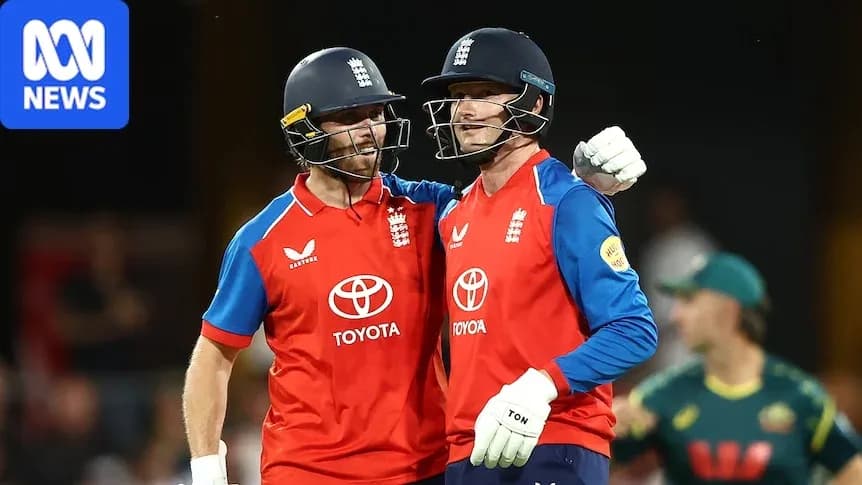
Under the lights in Melbourne, with a raw, experimental Australia side and a touring England outfit led by Harry Brook, a chaotic, brilliant night ended with Jack Edwards punching the winning boundary and the hosts completing a record T20I chase at the ground – 188 with one ball to spare and three wickets in hand.
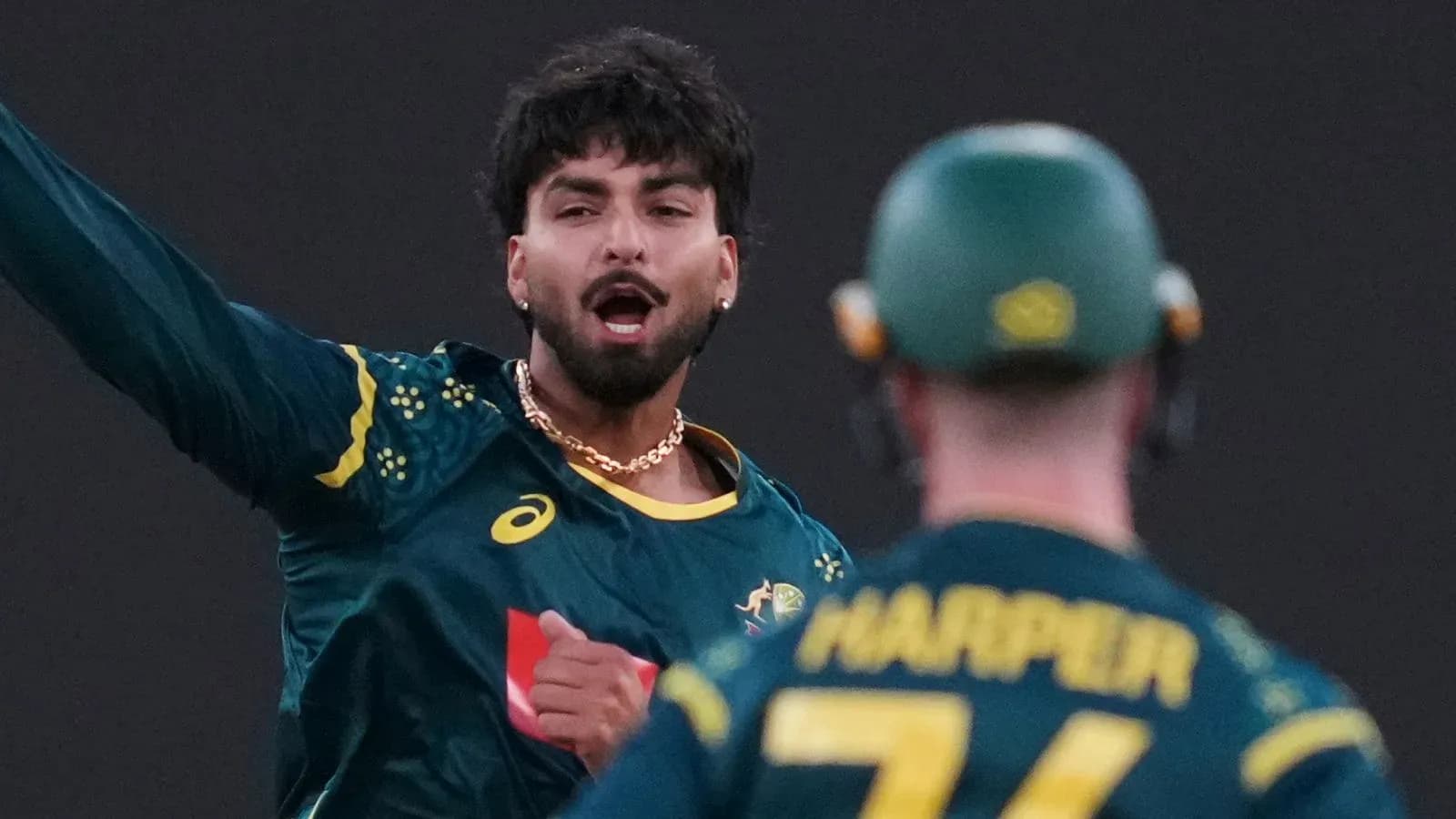
It took nerve. It took power. It took a breakout performance from Nikhil Chaudhary that changed the entire feel of this series opener.
Brook explodes, England waste a platform
Inserted by Australia, England’s innings began in shambles. First ball, Phil Salt lofted tamely to mid-off. Two overs later, Aneurin Donald, reprieved just moments earlier, followed him back for 10.
2 for not many, silence from the travelling fans, and Australia buzzing.
Then came the storm.
Brook, dropped on 2 and again on 3, turned those early gifts into something savage. He tore into Riley Meredith, three sixes in a row, 24 from the over, a 20-ball fifty that made the MCG suddenly feel very small. Adam Zampa’s first over went for 20 as Brook and Tom Banton cut loose.
Banton, also twice put down, joined the carnage. The pair added 107 for the third wicket and, at 119-2 halfway through the innings, England stood on the brink of something huge. Two hundred looked the floor, not the ceiling.
Then the game tilted.
Chaudhary, who would later own the night, first did his damage with the ball. His wrist spin ended Brook’s assault, the England captain nicking behind for 68 off 25, six sixes included. Within six deliveries, Banton followed, the debutant Lachlan Shaw flinging himself in the deep to pull off a superb diving catch.
England never really recovered that rhythm. The middle and lower order shuffled, swung, nudged. Jordan Cox’s 27 off 20 and Sam Curran’s 21 off 20 kept the board moving, but the punch had gone out of the innings. From 119-2 after 10, England dragged themselves to 187-9, just 68 runs in the back half.
On a big ground, with a ball gripping at times, they knew they’d left something out there. Brook said they were 10 short. It felt about right.
Early blows and a raw Australian chase
If England’s total looked a touch light, Liam Dawson did his best to make it feel heavier. First over of the reply, Jake Fraser-McGurk charged, misread the flight, and lost his off stump for 1. Australia 4-1, and the record chase already under pressure.
Mitch Marsh answered with a statement. Henry Crocombe’s first ball in international T20 cricket disappeared over deep backward square for six. Welcome to this level. To his credit, the young quick hit back, tightening his lines and eventually removing Sam Harper for 32 off 15 in his second over.
Harper had lit the fuse. Jamie Overton’s first over went for 21, and the tone of Australia’s reply shifted. Marsh, measured but powerful, anchored. Chaudhary then walked in and refused to treat the occasion with any deference.
He counter-attacked, threading gaps, launching when England missed their lengths, and turning what had been a nervy chase into something far more controlled. Marsh’s 37 off 32 and Tim David’s brisk 20 off 13 offered support, but it was Chaudhary who kept the scoreboard racing and the required rate in check.
David, handed a slice of fortune when he chopped onto his stumps and the bails refused to fall, couldn’t turn that luck into a defining hand. He fell the very next ball to Adil Rashid, who finished with a tidy 1-30 and briefly wrestled momentum back England’s way.
Chaudhary’s night, England’s wobble
The pressure built again. Three Australian wickets tumbled for 13 runs in just over an over. The MCG, which had been humming with the chase, suddenly tightened.
And yet Chaudhary stayed on script – his script. He picked gaps, ran hard, and chose his moments to swing. His 68 off 38 balls, the top score of the chase, felt like the work of a player who had decided this was his night, chirp and all.
When he finally holed out in the deep, Australia still needed 20 from the last two overs and were seven down. England sensed their chance. The bowlers huddled. Fielders snapped into tighter circles. For the first time since the powerplay, the tourists looked in front.
Edwards finishes the job
Edwards, 25 not out from 11 balls, played the kind of cameo that never looks huge on a scorecard but lives long in a dressing room. He cleared the rope twice at vital moments, striking with the clarity of a player who had stripped the situation down to its essentials: see it, hit it.
Every clean strike shifted the equation. Every misfield, every slightly miscued length from England, drew Australia closer. By the time the final over arrived, the panic had swung to the fielding side.
With one ball remaining, the scores and the story aligned. Edwards drilled the winning boundary and Australia surged onto the field, the record chase sealed, the young core of this side having passed a serious examination under lights at the MCG.
England bruised, Australia emboldened
There were scars for England beyond the scoreboard. Will Jacks, due to captain the side in the fifth and final T20I once Brook departs for Test duty in South Africa, left the field late on after splitting the webbing in his hand when Ben Dwarshuis hammered a drive back at him in the penultimate over. His fitness now hangs over the rest of the tour.
Brook, though, had already framed the night: a “very entertaining game” that his side probably let slip by failing to squeeze those extra 10 runs from a dominant position.
On the other side, Marsh’s words cut to the heart of what this match meant for Australia. He admitted he feared the worst after they dropped Brook twice – “Most of the time you don’t deserve to win” – but his young side ran through that doubt and straight into a landmark chase.
Chaudhary, who spoke of the “chirp” and the need to stay stable, walked off with Player of the Match and the knowledge that he had dragged Australia back with the ball and then driven them home with the bat on one of cricket’s grandest stages.
For a group Marsh called “the future of the Australian cricket side”, this wasn’t just a win. It was proof.