Basketball Australia's AI Cameras Spark Privacy Concerns
Basketball Australia is pushing ahead with AI-powered cameras in community stadiums across the country, insisting the technology is safe and valuable, as privacy advocates and activists accuse the sport’s governing body of putting children at risk and chasing new revenue.
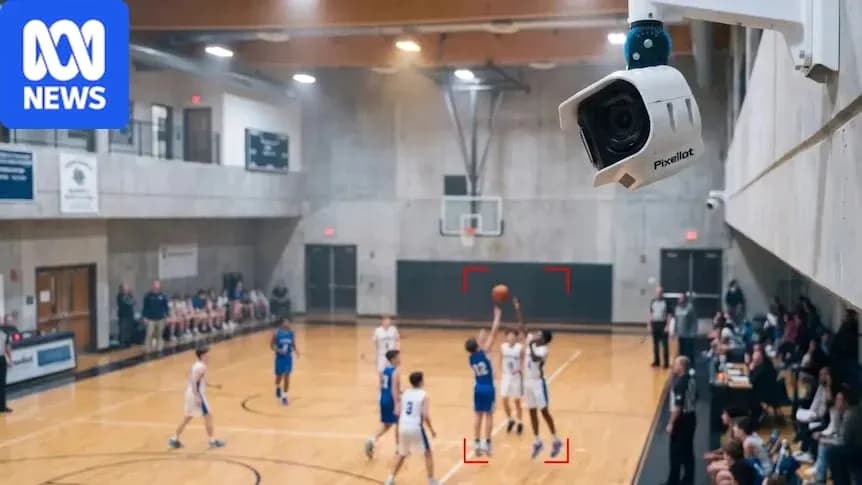
The system, branded Hoops TV, is built on “smart cameras” developed with Israel-based sports footage company Pixellot. Mounted in stadiums, the cameras automatically track the ball, film games and use AI to generate statistics. Every level is in scope — from senior domestic competitions down to junior fixtures.
The vision and data sit behind Basketball Australia log-ins, where players and their guardians can watch replays and pull out highlights. After trials this week with three associations — in Darwin, the Illawarra region of NSW, and Brisbane’s northern suburbs — Basketball Australia plans a wider national rollout in the coming months.
For the governing body, it is a step into a more modern, data-rich future.
“Video recording and capturing kids on video isn't new in Australian basketball,” spokesman Tim Brenton said, arguing that Hoops TV offers an “exciting opportunity for Australian community basketball”. In his view, the tech simply brings order to something that already happens informally.
“You can go into any stadium around Australia at any night of the week and find people videotaping,” he said.
That framing has done little to calm critics.
Privacy backlash and safety fears
Cyber-safety expert Susan McLean, a former member of the federal government’s Online Safety Working Group, has labelled the privacy implications “particularly concerning”. For her, the issue is not whether cameras exist, but who controls the footage, where it goes, and how securely it is stored.
“I'm not sure why Basketball Australia and all the states and territories are hell-bent on putting filming before child safeguarding concerns,” she said.
She points to a broader pattern of data breaches that have rocked major institutions.
“We have seen almost on a weekly basis [that] things are getting hacked. Coles has been hacked, Medicare has been hacked, Optus has been hacked.”
Activist groups GetUp! and Not All Clubs have seized on those fears. Last month they launched a petition calling on Basketball Australia to “stop filming kids with Israeli AI Cameras”, a campaign that has already attracted more than 13,000 signatures.
The petition raises concerns about Pixellot’s origins, noting that its co-founders previously worked for an Israeli weapons company and an “IDF [Israel Defence Forces] intelligence unit”. It also highlights a serious safety allegation from an earlier trial in Victoria: a woman protected by a family violence intervention order was allegedly contacted by the man named in that order after her game was live-streamed.
“The association had been warned a week before, and said only Pixellot could block the stream,” the petition claims.
Pixellot did not respond to a request for comment.
Who profits from kids’ games?
GetUp! has also zeroed in on the commercial side. Its media and campaigns lead, David Sharaz, questions whether children’s weekend sport is about to become a content product.
“These aren't professional athletes who are being critiqued at half-time on ESPN, these are kids. And the overall question is why are we filming kids?” he said.
“Are we going to be watching kids' sport and seeing an advert for Woolworths? Are your children being monetised?”
Pressed directly in an ABC interview about potential monetisation, Brenton did not answer on air. He later responded in a written statement, stressing Basketball Australia’s status as a non-profit.
“As a non-profit governing body, any revenue generated via BA-led programs and products are reinvested back into basketball nationally,” he said.
“Our aim is to create a model that benefits participants and contributes to the long-term growth of the sport.”
The tension is obvious: a sport hungry for new revenue streams and better services, and a community anxious about where the line sits when the subjects are children.
Opt-out model under fire
For now, Hoops TV is running on an opt-out basis. Games will be recorded automatically unless parents or players actively object.
To McLean, that approach is fundamentally flawed.
An opt-out model, she said, is “not a legally sound process for filming permissions”, especially when minors are involved. She argues that genuine consent requires a clear, proactive choice — not silence.
She also points out that some competitions are already walking away.
“There are several leagues in Victoria that I'm aware of that have refused to participate because they understand the child safeguarding issues that are at play here,” she said.
Brenton, though, expects only a small minority to decline.
“They want their games, they want their highlights, they want their statistics,” he said.
“There [are] also parents and families [who] will choose the other option and we respect both views.”
So the cameras are going up, the trial is expanding, and the divide is hardening. On one side, a governing body betting that parents will embrace replays, stats and a more polished product. On the other, campaigners asking whether the price of that convenience is a generation of kids growing up under automated surveillance every time they step on court.