Carolina Basketball's Roster Changes and Key Performances
Michael Malone sat down with Jones Angell on the Tar Heel Sports Network on Friday sounding like a man who’d lived a month in a week.
His starting guard, Neo Avdalas, was gone to a wrist injury. His frontcourt, thin and undersized, suddenly received a lifeline when a court ruling cleared Cameron Fens—at least for now—to play. On top of that, Carolina secured one of the premier high school recruits in the country for next season.
One roster spot closed. Another cracked open. A third, somewhere in the future, quietly fell into place.
“In this business,” Malone said, “the show must go on.”
It did, and it sounded like it.
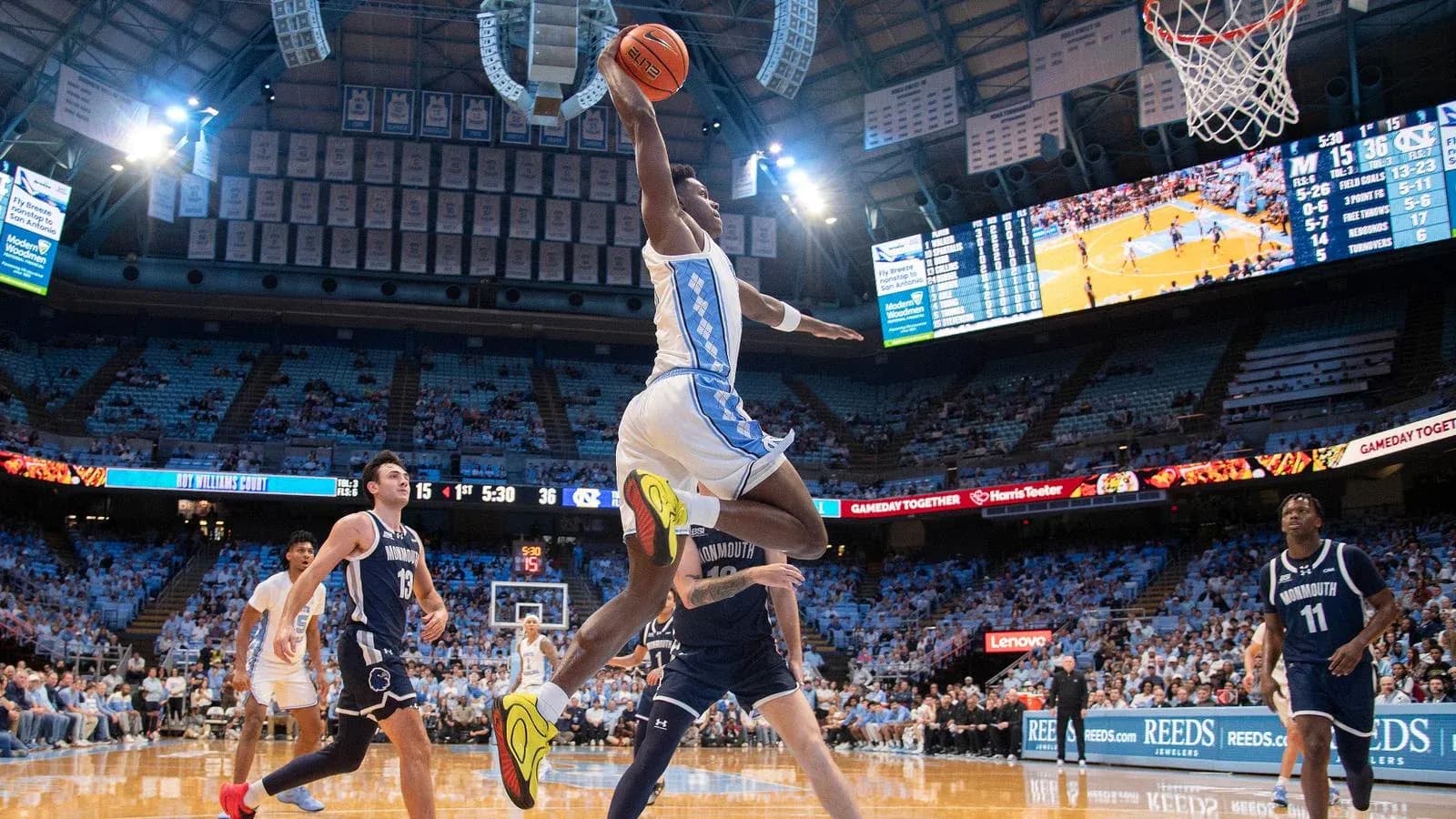
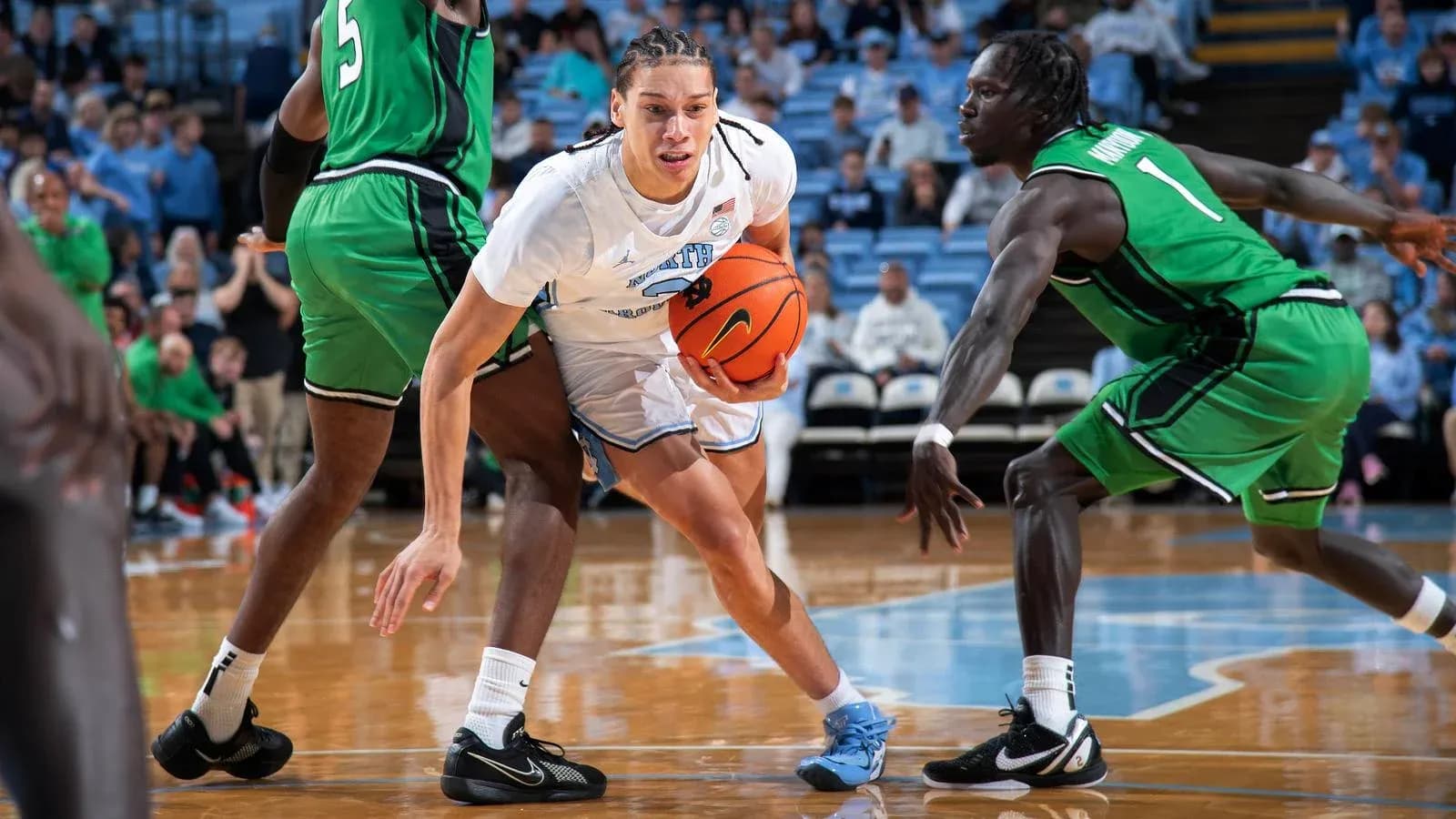
Fens checked in for the first time with 17:26 left in the first half and the Smith Center reacted as if a banner had just dropped from the rafters. Ninety seconds later, he grabbed the most ordinary of rebounds and the building roared again, the kind of sound usually reserved for milestone wins, thunderous dunks, or the sudden promise of Bojangle’s biscuits.
No biscuits this time. Just boards. On this night, everyone in the building understood which one mattered more.
Fens finished with a team-high eight rebounds in only 18 minutes, a clear answer to Carolina’s most obvious need, even as Marshall still edged the Tar Heels 41–40 on the glass. That narrow deficit told its own story: help had arrived, but the work remained.
This is Malone’s reality now. The rulebook feels like it’s written in pencil. Eligibility can hinge on a filing, a hearing, a judge’s interpretation. Some days it barely resembles college basketball at all.
Then the players remind you they’re still college kids.
The Tar Heels learned of Fens’s eligibility on the practice court Thursday. Practice stopped. The ruling was announced. The gym exploded. Terrence Brown jumped on Fens’s back and the big man carried him partway around the floor like a victory parade. The next team huddle broke not with the usual call, but with “Fens on three!” and the booming response: “1-2-3 FENS!”
“It was so fun,” Sayon Keita said later, grinning as he stood in the hallway Friday night after posting six points and six rebounds in 16 minutes. “Everybody was so happy for Cam that he can play now.”
The business side might be cold. The locker room isn’t.
Of course, the game refused to follow a clean script. It rarely does for this team.
Early in the second half, Malone seethed as his players—Fens included—watched too many loose balls bounce the wrong way. Marshall carved out five quick second-chance points, and the head coach’s frustration boiled over on the sideline. Defensive rebounding, the very issue that had dominated the week, suddenly looked optional.
Then the mood flipped.
Keita crashed the offensive glass a few minutes later, muscled his way to a rebound, and hammered it back through the rim. The lead stretched to 13. Malone lit up, visibly delighted, as if he could see hours of practice finally cashing in.
“I’ve been working on offensive rebounding every day,” Keita said. “It is very important for us. I still have to work on my box outs and go after every rebound.”
That’s the part that still feels pure. A player who doesn’t always get it right, but keeps chasing the right play, the right angle, the right habit. Progress, one possession at a time.
Carolina needed those flashes, because the performance was far from spotless. A late first-half lull let Marshall hang around when the Tar Heels had chances to pull away. Transition defense frayed repeatedly, gifting the visitors life in a game that should have been more comfortable.
They survived those lapses because one guard refused to drift.
Matt Able looked exactly like the primary scorer Carolina now demands he become. With Avdalas out, someone had to grab the offense by the collar. Able did it with a career-high 23 points, burying five three-pointers, knocking down three more shots inside the arc, and hitting two free throws. He also handed out three assists, a modest number on paper, but vital for a backcourt suddenly missing its starting organizer.
If those five threes sounded familiar to Tar Heel fans, there’s a reason. They’ve seen that exact show before—just from the wrong bench.
Nine months ago, Able drilled five three-pointers for NC State, a key piece in a win over Carolina. On that night, every make felt like a dagger. On this night, the same shot, the same form, the same arc became a lifeline.
One game, he’s the villain. The next, he’s the difference-maker wearing Carolina blue.
Monte Towe never did that. Walter Davis never did that. Lorenzo Charles, J.R. Reid—none of them imagined a world where a player could swing a rivalry one way in March and then flip jerseys and swing it back the other way before the year was out.
But this is 2026. Rosters churn. Courts decide who plays and when. Yesterday’s opponent becomes today’s solution.
The show goes on. The cast just keeps changing.