Charlton’s WSL Struggles: From Dream Start to Survival Fight
Charlton Athletic spent last season defying logic. Twenty-seven games unbeaten, scalps taken, budgets outpunched. A play-off win over Leicester City sealed a first-ever place in the Women’s Super League and felt like the start of something romantic.
Reality has arrived with a thud.
Ten games into their debut WSL campaign, Karen Hills’ side have no points, five goals scored and 30 conceded. They have already lost to the other promoted clubs, Birmingham City and Crystal Palace, and sit six points adrift at the foot of the table. The leap they longed for has turned into a freefall.
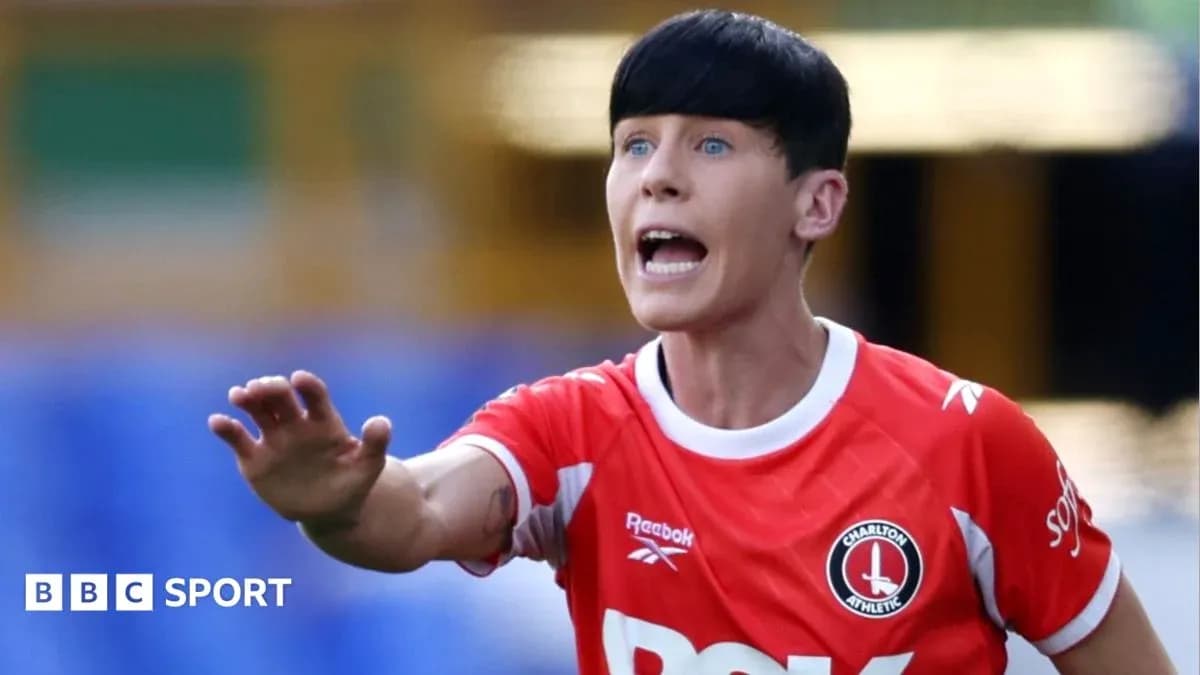
“I’m trying everything I can,” Hills said after last weekend’s 2-0 defeat by West Ham. The words carried more weight given what had happened seven days earlier, when Charlton led 2-1 at Crystal Palace with 16 minutes left and still walked away beaten. Those are the results that leave scars.
From defensive rock to soft underbelly
The irony is cruel. Last season’s surge was built on organisation and resilience, with an effective defensive structure and repeated heroics from goalkeeper Sophie Whitehouse. Charlton strangled games, managed moments, and looked like a side ready to step up.
The WSL has stripped that illusion bare.
No team in the division sees less of the ball. Charlton sit bottom for average possession at 30%, have mustered just 17 shots on target all season, and their passing accuracy stands at 66%, with 1,689 successful passes – the lowest in the league. When they do get it, they struggle to keep it. When they lose it, they suffer.
Set-pieces have become a recurring nightmare. They have conceded nine goals from dead balls, more than anyone else in the WSL, and 14 of the 30 they have let in have arrived in the first or last 15 minutes of matches. That is not just about quality. That is concentration, composure, game management – all the details that separate survival from a swift return to the second tier.
History offers a grim comparison. Only two other clubs have lost their first 10 games in a WSL season: Doncaster Rovers Belles in 2016 and Yeovil Town in 2017-18. Doncaster won just once and went down. Yeovil failed to win at all, drew twice, finished bottom and avoided relegation only because the league structure changed. Charlton know exactly which list they are on right now.
“We’re trying to build something”
Inside the camp, the mood is bruised but not broken.
Experienced defender Ashleigh Neville, a summer signing from Leicester City, expected turbulence. She walked towards it.
“We knew it was going to be a tough start to the season,” she told BBC Sport. “I was really excited to embrace that challenge. It’s been difficult with results but when you look at the first game compared to now, I’d like to hope that people can see we’re trying to build something.
“We’re trying the hardest we can off the pitch to get to terms with how quick the game is compared to the WSL 2 and the quality of players we’re up against.
“But it’s still a joy to come into work and people are wanting to be better, asking how they can improve and move forward.”
That last line matters. It speaks to a group still engaged, still listening, still believing they can learn fast enough to make this season more than a lesson in pain.
Hills has echoed that defiance, insisting this month that Charlton “will never throw the towel in” even as she admits results are “hurting” the club. The hurt is visible every weekend. So is the gap they are trying to close.
Injuries, finances and a widening gap
Charlton’s problems are not purely tactical. They are structural.
They are one of only three WSL clubs without a Premier League men’s side behind them, and that lack of financial muscle shows. Recruitment becomes a puzzle of bargains and belief, while rivals shop in a different aisle entirely.
Neville does not hide from that reality.
“I think the financial side plays a massive part. We do our bit where we can. But it’s hard to bring in the experienced players you need,” she said.
Injuries have twisted the knife. Summer signing Linda Lind Boama suffered a serious knee injury in September. Defender Grace Johnston was ruled out in October. Paula Partido, brought in from London City Lionesses, had to return to her parent club for knee surgery. Charlotte Newsham, so important in the promotion run, tore her ACL before the play-off win and has yet to feature.
That is a sizeable chunk of quality and continuity gone from a squad already light on depth.
Look up the table and the contrast is stark. Birmingham City, promoted alongside Charlton, spent six-figure fees on Manchester United duo Lisa Naalsund and Millie Turner. They broke their club transfer record in January with a reported £316,000 move for Wilma Leidhammar. Oceane Hurtre, signed last summer to power their promotion push, now has seven goals in 10 WSL games.
Crystal Palace strengthened with four-time WSL winner Bethany England and Lexi Lloyd-Smith, one of the standouts in WSL 2. Both clubs arrived in the top flight with ready-made WSL-level firepower. Charlton arrived with hope, structure and a tight budget.
“WSL 2 teams have to be even more ready for the WSL while they’re still in the WSL 2 so that when they do make that jump, it’s not a huge gap,” Hills said. Right now, that gap feels like a canyon.
“The gap is continuing to get bigger and you see some of the players the top teams have brought in and the finances they have. It’s a big challenge for us. We’re finding that out on a weekly basis.”
Expansion brings opportunity – and exposure
The league itself has changed around them. This season the WSL expanded from 12 to 14 teams, a move designed to add fixtures and ease the bottleneck between the top flight and the second tier. Charlton were one of the first to benefit from that growth, stepping into a bigger, bolder league.
Supporters welcomed the expansion. Coaches too, in theory. More games, more chances, more visibility. But visibility also means every weakness is exposed more often.
“If you look at the bottom three teams [in the table], it’s all the newly-promoted teams,” Hills pointed out. “The level that we’re coming into is already very well established.”
Neville sees the same picture from the dressing room. “We’re lacking in confidence going forward, and creativity for what we can actually provide,” she admitted. “It’s a vicious circle. If you haven’t got confidence because you’re losing games, how do you still get that confidence in games where we need it the most?”
That is the essence of Charlton’s season so far. A team that once swept through WSL 2 now trapped in a loop of early goals conceded, narrow margins lost, belief chipped away week by week.
Hope, or hard landing?
So is it already time to talk about relegation, even in November? History, form and the table all point one way.
Yet football seasons are rarely linear. One result can tilt the mood, one clean sheet can restore trust in a defensive line, one scruffy goal can break the drought and loosen shoulders in the final third.
Charlton do not have the deepest squad, the biggest budget or the softest fixture list. What they do have is time – just – and a manager and group of players who refuse to frame this as a doomed experiment.
They stunned the second tier by going 27 games unbeaten and outlasting richer clubs to reach this stage. Now comes the real examination: can that same stubborn streak keep them here, or will this campaign go down as a beautiful rise followed by the harshest of landings?