Florian Wirtz: From £115m Misfire to Liverpool's Game-Changer
Jamie Carragher’s line in August landed like a punch. Florian Wirtz, he said, looked more like a “£40m squad addition” than “the game-changer who cost £115m”. Brutal, a touch theatrical, but not entirely unfair.
Because for most of that first year at Liverpool, Wirtz did look wrong.
He arrived as the crowned prince of Bayer Leverkusen’s unbeaten Bundesliga season, the next great German creator, a player Bayern Munich had circled in red pen. Liverpool paid the sort of fee that changes a dressing room and a balance sheet. What they got back, on the surface, was 17 goal contributions in 49 games and a player who never quite seemed to belong to the chaos around him.
The numbers were underwhelming. The body language was worse.
He drifted on the edges of games. He looked light, almost flimsy, in a league that treats hesitation as a weakness to be hunted. The questions stacked up: Was he strong enough? Was he really a No 10, or just another left winger squeezed into the half-spaces? Arne Slot kept shuffling the pieces, knowing his own credibility rested on making Liverpool’s record signing work. He never found the fit.
There were explanations, of course, and some of them were real, not excuses. Wirtz walked into a dressing room still emotionally winded by the loss of Diogo Jota. That kind of void doesn’t show up on a data dashboard but it shifts the mood around a club.
He was 22, in a new country, carrying a price tag that has broken more players than it has made. Of the handful of footballers sold for £100m or more, only a couple have been unarguable successes. Most stagger under the weight. Wirtz was no different.
Then there’s the “Bundesliga tax”, that now-familiar suspicion that brilliance in Germany doesn’t always survive the flight over the Channel. Jadon Sancho was devastating at Dortmund, then shrank at Manchester United. Kai Havertz needed a change of scenery to look himself again. Erling Haaland is the exception, but he’s almost a separate category of footballer.
Wirtz’s summer offered no respite. Instead of a reset, he was handed a nation’s expectations and told to go and win the World Cup. Germany, short on genuine stars, pinned their hopes on him. Their Round of 32 exit to Paraguay turned him into a lightning rod for frustration. He was too young to carry it and too important to escape it.
By the time he reported back to Liverpool, he could easily have been broken.
Instead, the club and country around him changed.
Andoni Iraola walked through the doors at Anfield; Jürgen Klopp took charge of Germany. Two appointments, one shared effect: they rebuilt Florian Wirtz.
Iraola is a better fit for Wirtz than Slot ever was. Where the Dutchman leans towards control and structure, Iraola lives on the front foot. He once admitted he felt uncomfortable when his team sat deep with “10 players behind the ball”. That line might as well have been a welcome note to Wirtz.
At Bournemouth, Iraola’s side hunted high. They ranked among the best in the league for possession won in the final third, pressed with aggression, intercepted more than almost anyone bar Chelsea and still found time to be the eighth-highest scorers. Junior Kroupi, operating in the pockets Wirtz now loves, started to flourish under him.
Players talk about Iraola with a kind of conviction that matters. James Hill called him “absolutely phenomenal” and spoke about the belief he instils, that every game is there to be taken, not survived. That mindset, that licence to attack, suits Wirtz like a tailored suit.
The structure came from Iraola. The spark, intriguingly, came from Klopp – this time in a different shade of red.
Almost from his first day as Germany coach, Klopp made Wirtz his project. He talked about being “shocked” the first time he saw him live, labelled him an “extraordinary footballer” and kept repeating the message in public and private: you are the one. For a player whose confidence had been frayed, that backing mattered.
The effect didn’t show immediately. Wirtz started the season well enough, tidy and inventive, but not yet irresistible. Then came the first international break. He went away, came back, and something clicked.
Liverpool’s first game after that pause ended in a 3-0 defeat at Manchester City, a match warped by Ryan Gravenberch’s red card. It felt like another false dawn. It wasn’t. From that point on, Liverpool have won all but one of their games, with Arsenal the only side to beat them.
In that run, Wirtz stopped surviving and started dictating.
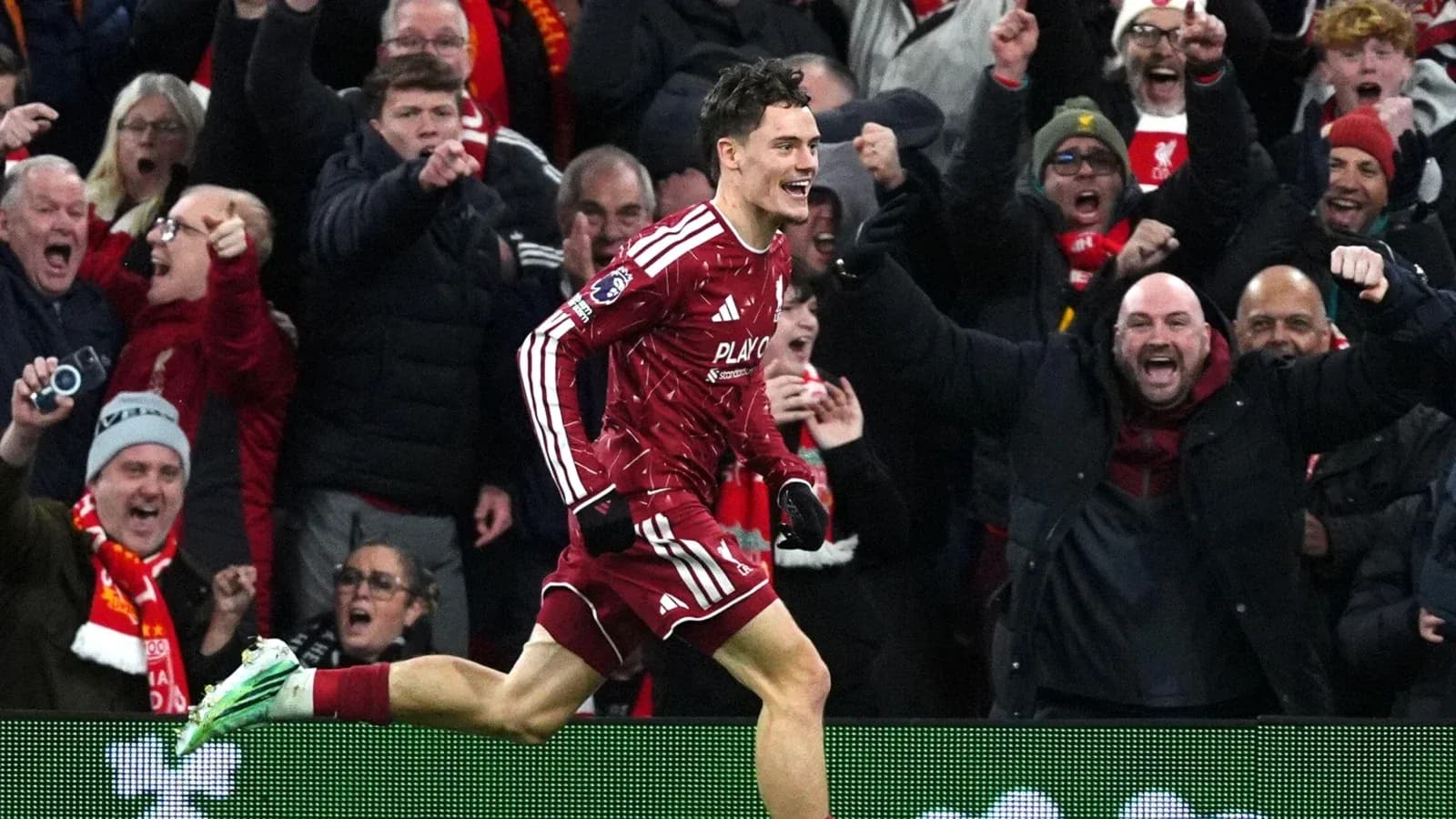
Against Crystal Palace, he ran the game. A goal, an assist, and a performance that bent the tempo to his will. He repeated the trick against Manchester United, threading passes through gaps that only he seemed to see. On another day he would have walked off with a hat-trick of assists; his teammates simply didn’t finish what he served up. Ten chances created told the story better than any highlight reel.
This is the version of Wirtz Liverpool thought they were buying. The one neutrals should relish in a league that often prizes raw power over subtlety.
For months, rival fans treated him as a punchline – the £115m misfire, proof that even the smartest clubs can get it wrong. That laughter has quietened. Now you watch him and see a midfielder whose technical level would have sat comfortably alongside the best of the last decade.
Players like this are disappearing from the Premier League. The game has tilted towards athletes who can sprint, press and crash the box. Wirtz can run, but that’s not why he’s here. His value lives in the angles he sees and the decisions he makes half a second earlier than everyone else.
Who else in this league has his feel on the ball? Not just the weight of pass, but the imagination behind it. Goals grab the YouTube thumbnails and the social clips, but the player who can steer the entire rhythm of a match will always shape seasons more than the one who simply arrives late in the box.
Wirtz is not Xavi. He isn’t Iniesta either. He lives somewhere in that space between the metronome and the maverick. He’s not the midfielder who will complete 120 passes just to keep the ball moving. He’s the one who wants to break something open, to play the through ball that slices a defence before it has reset.
If Pep Guardiola’s Barcelona killed you with a thousand short passes, Wirtz is aiming for the single stab that ends the argument.
He probably won’t score 15 league goals this season. He might never hit that mark in his career. But the value he offers refuses to be reduced to a line of numbers. It’s in the half-turn under pressure, the disguised pass that takes four players out, the sense that when he has the ball, the game might suddenly change.
He still has questions to answer. Being the standout against Crystal Palace and Manchester United doesn’t automatically validate a £115m fee. In Liverpool’s two biggest games of the season, he has drifted to the margins, unable to seize the stage in the way the truly elite do.
Yet his recent form hints at a player ready to rewrite that story rather than be trapped by it.
The league is faster, stronger, more intense than ever. There is less room for artists. For now, Liverpool have one who can still draw in fine detail between the lines.
Enjoy Florian Wirtz while you can. Players like this don’t tend to stay ordinary – or stay put – for very long.