Clippers Facing Hard Reset Ahead of Trade Deadline
The Los Angeles Clippers are staring at a hard reset, and everyone around the league can see it coming.
A 4–11 start. An 0–7 road record. Five first-round picks stripped away as punishment for salary-cap circumvention. This isn’t just a rough patch; it’s the kind of crater that forces a franchise to sell off anything of value and start counting draft assets like oxygen.
Clippers Pivot From Contenders to Sellers
League insider Marc Stein has reported what the standings and the sanctions already hinted at: the Clippers are expected to be major sellers ahead of the Feb. 11, 2027 trade deadline. The mandate inside the front office is clear. They need picks. As many as they can claw back.
The strategy is already playing out on the floor.
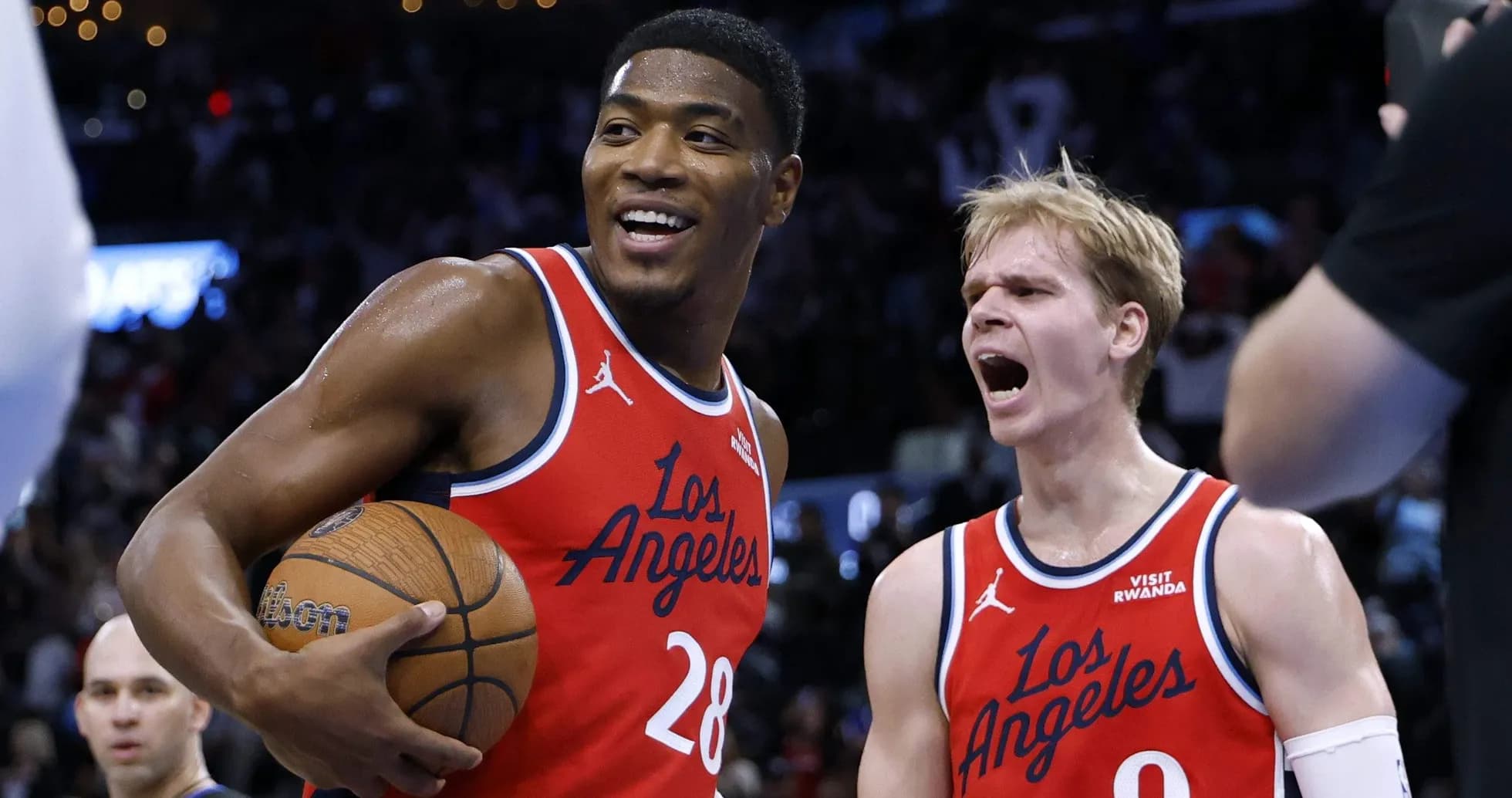
Veterans such as Max Strus, Derrick Jones Jr., Brook Lopez, Rui Hachimura, and Kris Dunn are logging prominent roles, not because the organization suddenly sees them as the long-term core, but because strong box scores now could turn into first-rounders later. Every made three, every defensive stop, every stretch of reliable play is part of a sales pitch to contenders.
This is asset management in real time.
Contracts Built for Contenders
For rival front offices, the Clippers’ roster looks less like a struggling team and more like a trade deadline menu.
Strus sits at the top of that list financially, on a $16.7 million expiring deal. He brings playoff experience, credible floor spacing, and the ability to slide across wing spots. For a contender hunting shooting without clogging future cap space, that number is easy to absorb and even easier to justify.
Hachimura follows at $14 million, in the second year of a two-year deal that includes a team option for 2027–28. That option is the hook. Trade for him, and you get a scoring forward who can stay in your rotation—or you decline the option and instantly open room on your books next summer. Flexibility is the value there as much as his mid-range scoring and size.
Jones Jr. offers something different: a defensive weapon on the perimeter. His $10.5 million expiring contract sits at a manageable mid-level slot, and his profile—elite point-of-attack defense, explosive athleticism, energy that travels—makes him the kind of role player coaches trust in playoff series when possessions tighten and matchups matter.
Lopez, on a $9.2 million expiring, brings rim protection and reliable three-point shooting as a stretch five. He fits neatly into almost any contender’s rotation. Need a big who can anchor a drop coverage, box out, and drag opposing centers out to the arc? Lopez is the plug-and-play answer, and his salary works as a clean matching piece in mid-sized deals.
Then there’s Dunn at $5.7 million on an expiring contract. He doesn’t come with the scoring reputation of the others, but his disruptive perimeter defense and bargain price tag make him an ideal add for any playoff team looking to shore up its guard rotation without touching its core.
Collectively, this group is exactly what contenders crave in February: short-term money, defined roles, and no long-term risk. For the Clippers, each one is a potential lifeline back into the draft.
Lue Turns Up the Heat on His Own Team
While the front office calculates value, Tyronn Lue is wrestling with something more immediate: a team that can’t close games.
After a 110–100 loss to the Dallas Mavericks on Nov. 21, the Clippers’ record slid to 4–11 and 0–7 away from home. The defeat didn’t come with any sugarcoating from Lue.
“When you come down the stretch, you got to be able to execute, at least take care of the basketball, and we wasn’t able to do that tonight,” he said. The game flipped fast. “You’re right there in the game, you play well on the road and it goes from a three-point game, really a five-point game with 4:14, we got the ball to a 14-point game in a minute.”
Then came the core of his frustration.
“Turnover. Turnover. Turnover…It’s the offense. You can’t get stops if you turn the ball over,” Lue said. “You can’t make up for turnovers. It’s too hard.”
That’s not a coach protecting his players. That’s a coach drawing a straight line between sloppiness and losing, between habits and the standings. It also underscores the tension of this season: veterans being showcased for trades while a coaching staff tries to build consistency in a locker room that knows it could be broken up by February.
A New Face, A Fragile Hope
Amid the chaos, there is one clear point of intrigue.
Brandon Ingram is expected to make his Clippers debut on Monday, Nov. 23, against the Houston Rockets. His arrival has been delayed by rehab from May surgery to repair a partially torn right Achilles tendon, discovered during a procedure to remove a right heel bone spur.
Ingram landed in Los Angeles in mid-September via a blockbuster trade with the Toronto Raptors that sent Kawhi Leonard north. It was a seismic move on paper: one franchise icon out, a two-time All-Star-caliber scorer in.
In Toronto last season, Ingram averaged 21.5 points, 5.6 rebounds, and 3.7 assists across 77 regular-season games, earning his second All-Star selection. Those numbers are not theoretical upside; they’re proven production from a player who can create his own shot, facilitate, and carry stretches of offense.
His debut, then, is more than just a medical milestone. It’s a glimpse of what the next version of the Clippers might look like.
Can Ingram become the centerpiece of a retooled roster built around his prime years? Will his presence on the floor stabilize an offense that keeps coughing up games late? Or will his first months in Los Angeles simply serve as the opening chapter of a longer, slower rebuild, powered by whatever draft picks the Clippers can salvage at this deadline?
The selling is coming. The veterans know it. The league knows it.
What no one knows yet is whether Brandon Ingram can give this stripped-down future something more than just cap space and draft boards to believe in.