Ferrari's Las Vegas Meltdown: Speed Turned to Self-Destruction
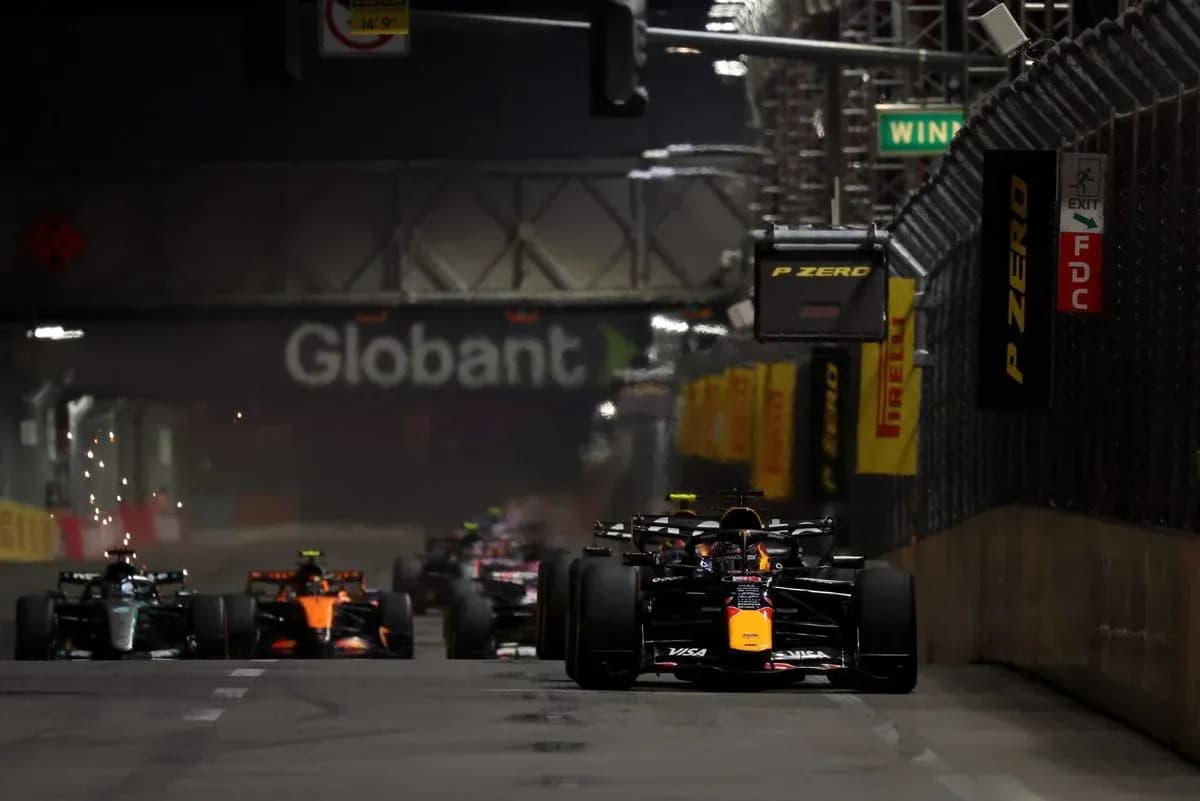
A few laps before it all blew up in Las Vegas, Ferrari were right where they dream of being: hunting down Max Verstappen with both cars, the stopwatch finally telling a story they could believe in.
Lewis Hamilton sat just 2.5 seconds behind the race leader. Charles Leclerc was 2.9 seconds back. The SF-26, so ill-suited to this strip of neon and ice-cold asphalt, had become the fastest car on track.
And then Lap 38 happened.
A Circuit Ferrari Were Meant to Hate
On paper, Las Vegas should have exposed every flaw in Ferrari’s armour.
The cold surface punished their long-standing tyre warm-up issues, robbing them of their usual bite in the corners. The endless straights along the Strip shone a floodlight on their power unit deficit and relatively weak ERS efficiency. In qualifying, Ferrari could mask some of that by playing with deployment strategy, sacrificing the middle sector to stay alive in a straight-line drag race.
It worked over one lap. Over a stint, the bill came due.
Data from FP3 long runs showed the picture clearly: Ferrari lagged the leaders on race pace, with around 70 percent of that deficit bleeding away in Sector 2 alone. The team rolled into Sunday with modest expectations and a realistic fear of being swallowed on the straights.
The race ripped up that script.
A Compressed Field and a Quietly Dangerous Ferrari
Ten laps into the Grand Prix, the top 10 cars sat within five seconds of the leader. In modern Formula 1, that is almost unheard of. No one escaped. No one disappeared.
Ferrari lived in that front pack from the start.
Hamilton, starting P11, one place behind Leclerc, immediately put his elbows out. He cleared his teammate on Lap 1 and surged as high as P6 before settling into a fight around P7–P8 with Lando Norris and Oscar Piastri by Lap 15.
Telemetry from the opening stint paints a tight picture: Antonelli and Piastri set the ultimate pace, but the rest of the front group ran in lockstep. Russell, Hamilton and Verstappen circulated at almost identical speeds over the first 17 laps. Only Norris fell away.
Then the race reset.
A Safety Car on Lap 19 dragged everyone into the pits and killed off strategy variety. Drivers flipped between softs and mediums, then committed to run their final compound to the flag. No more games. Just pace.
At the Lap 26 restart, Leclerc held seventh. Hamilton, having served a 10-second penalty and pitted a lap later than most, dropped to P13. It looked like his race had been blunted.
It hadn’t.
The Second Stint: Ferrari’s Pace Finally Roars
On the medium tyre, the SF-26 came alive.
Hamilton carved his way from P13 to P8 in just six laps, slicing through the midfield with the kind of authority that underlines raw performance, not trick strategy. Leclerc edged forward too, up to P6. Piastri sat between them, a papaya wedge between two red cars suddenly full of intent.
That’s when the internal storm began to build.
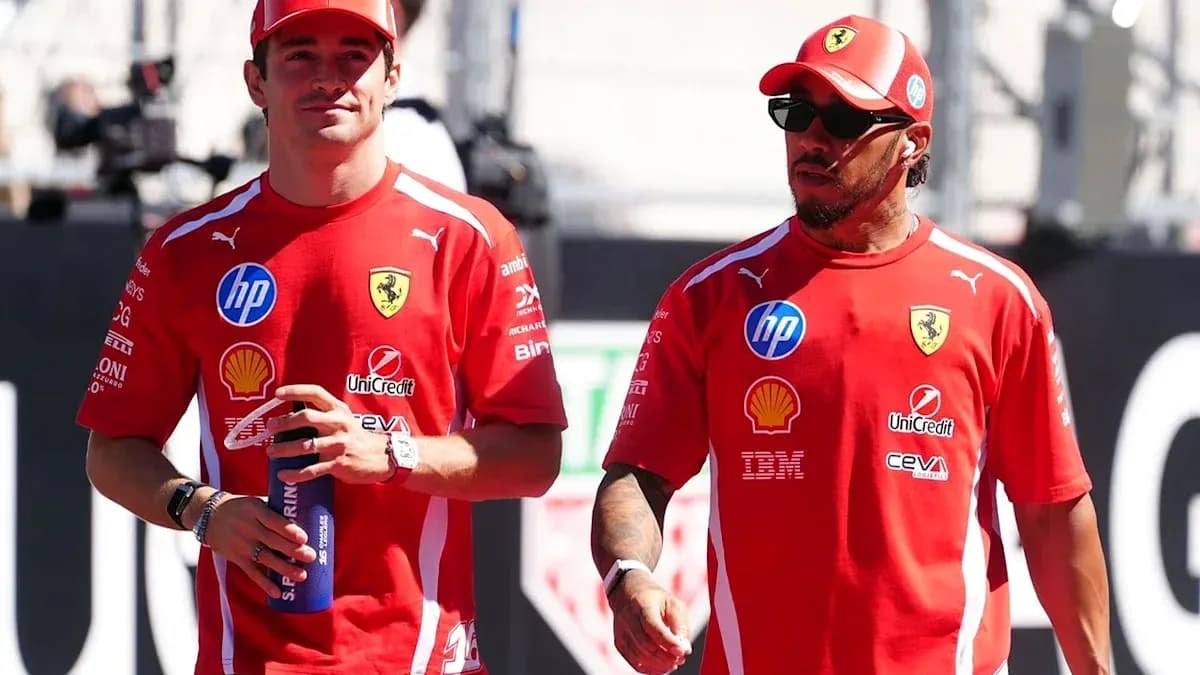
The battle with McLaren lit the fuse. Piastri moved ahead of both Ferraris, but Hamilton struck back, sweeping around the outside of Turn 3 to reclaim track position over his teammate. It was a clean, assertive move, the sort that usually settles the internal hierarchy for the next phase of the race.
And all the while, the lap times told a different, more important story.
In those early laps of the second stint, Hamilton ran the fastest average pace of any front-runner. The data shows him more than four tenths of a second per lap quicker than Verstappen on average over that stretch. Over a full run, that margin would inevitably shrink, but the message was unmistakable: Ferrari had the speed to take the fight to McLaren, and at least ask a serious question of Verstappen.
Both red cars were within three seconds of the lead. Overtakes were happening everywhere. The race had cracked open.
Anything was possible.
Lap 38: One Corner, Two Broken Races
The moment came at Turn 5.
Hamilton lunged down the inside of Piastri on entry, a bold attempt that didn’t quite stick. He failed to complete the move and compromised his exit, leaving just enough of a gap to tempt Leclerc behind.
Leclerc went for it.
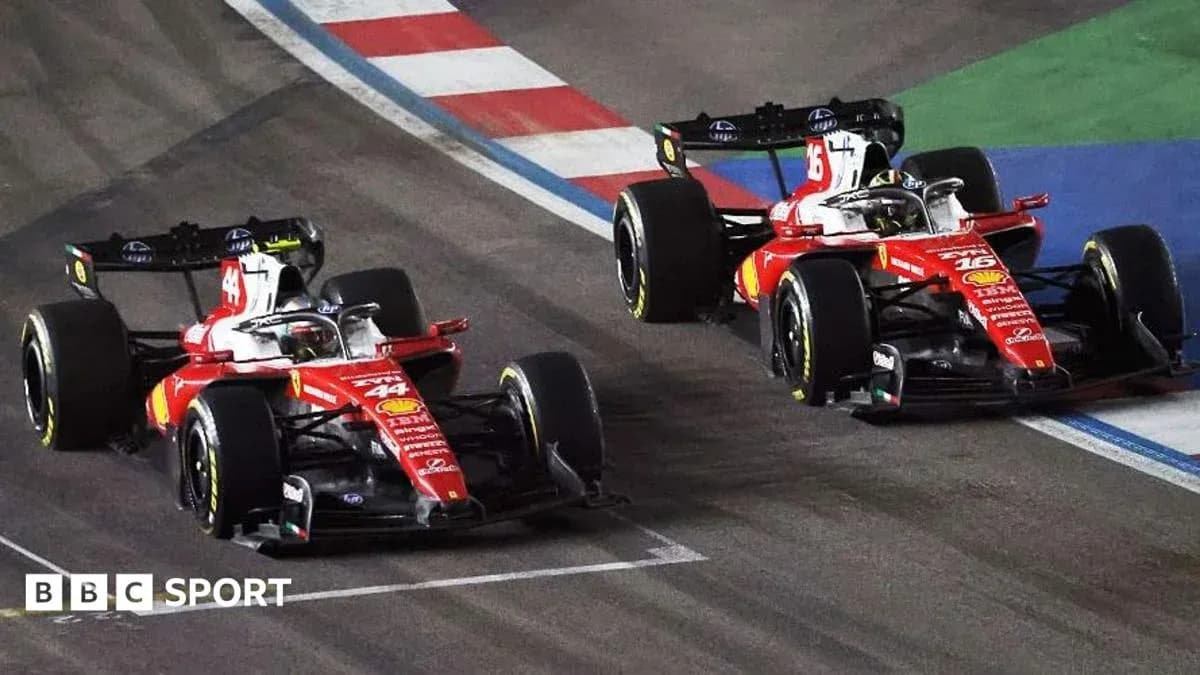
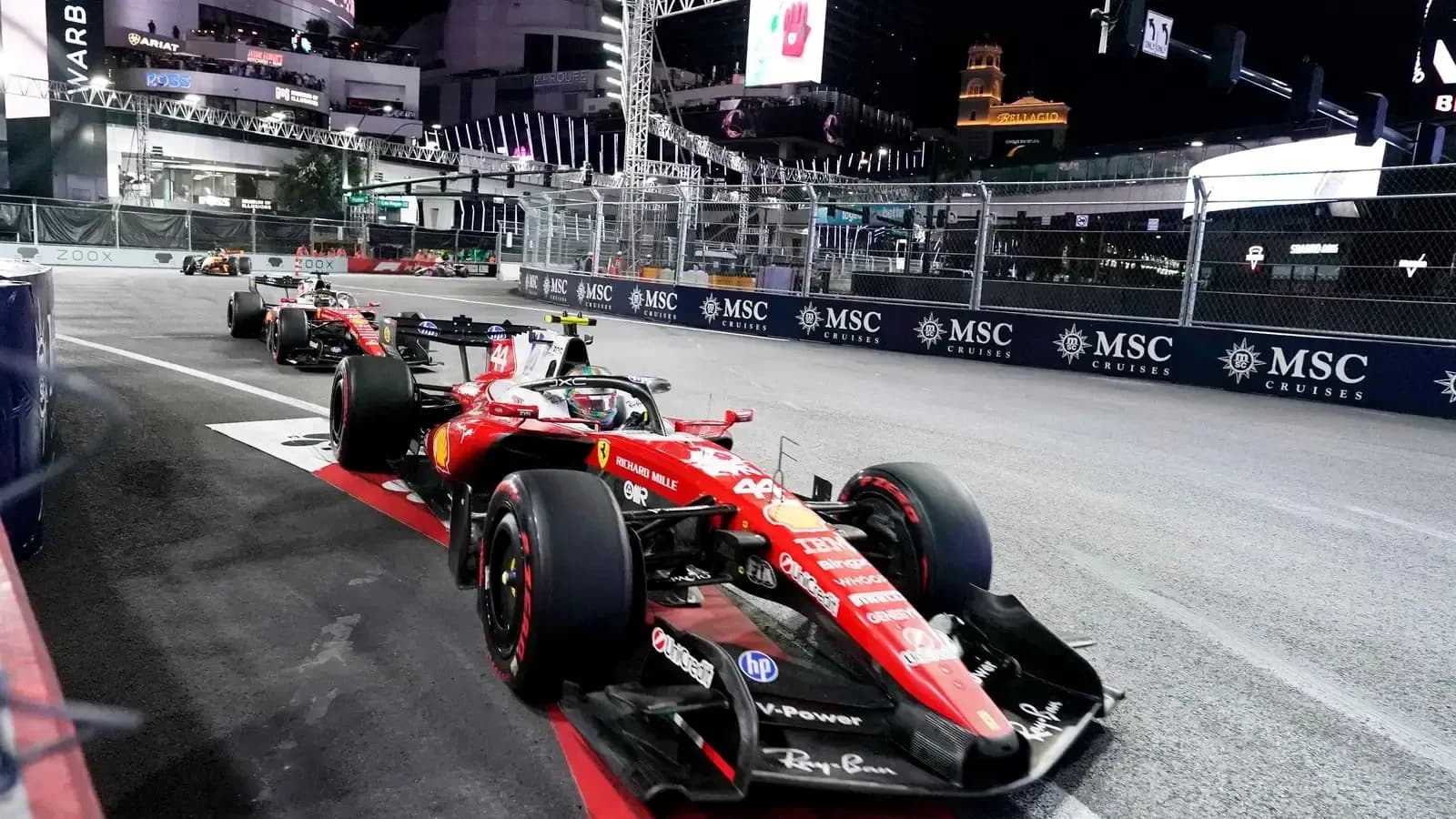
On the run to Turn 7, the Monegasque dived to the inside, trying to seize on Hamilton’s lost momentum. The two Ferraris met. Contact. Hamilton spun, left facing the wrong way, his race wrecked in an instant.
At the apex, Hamilton was ahead. The corner was his. The stewards saw it the same way and handed Leclerc a 10-second time penalty. One misjudged move, and Ferrari’s two-car assault on the podium dissolved into damage limitation.
From there, the numbers hurt even more.
Without that clash, Ferrari were in a prime position to beat McLaren. With Russell later brushing the wall and Antonelli losing battery deployment over the final two laps, the path to a double podium was not a fantasy. It was a thoroughly realistic scenario.
Instead, Ferrari walked away with seven points. Their second-worst haul of the season, only marginally better than the six they scraped in Brazil.
A Familiar Wound
The most damning part of the Las Vegas story is not the collision itself. Incidents happen in tight packs under pressure.
The real indictment lies in the pattern.
Ferrari had the pace. They had both cars in the fight. They had a race unfolding in a way that neutralised many of their weaknesses. And once again, a lack of clear internal boundaries turned opportunity into self-sabotage.
Whether stricter rules of engagement arrive is an open question inside Maranello. What is not in doubt is the cost of letting their drivers improvise at the very edge when so much is on the line.
In Las Vegas, the SF-26 finally had enough speed to change the narrative of Ferrari’s season.
Instead, it only reinforced the oldest one of all.