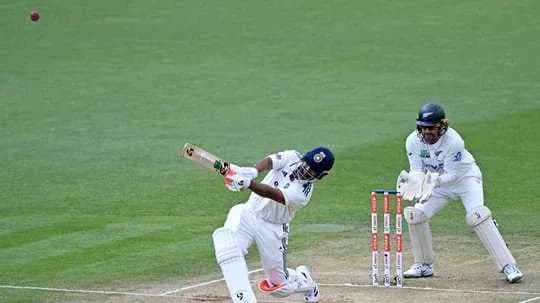
India's Record-Breaking 720: Pant and Jurel Shine in Wellington
Rishabh Pant lit up Wellington with a blazing century, Dhruv Jurel added a mature 78, and India turned a flat Basin Reserve pitch into their personal scoring strip, piling up 720 for 9 declared – their third-highest total in Test history and the biggest ever made in New Zealand. By stumps on Day 4, New Zealand were 119 for 2 in their second innings, still 233 adrift and clinging to Devon Conway’s calm, unbeaten half-century.
Pant’s statement, Jurel’s poise, and a record-breaking procession
India began the day already in control. By Lunch, they had turned control into domination.
Nightwatchman Anshul Kamboj set the tone with the bat, not the block. He tore into Kyle Jamieson and Nathan Smith in the morning’s first three overs, four boundaries flying as India surged past 500. Pant, never one to watch from the other end, joined the assault with a four and a six off Jamieson, and suddenly the fifth-wicket stand was rattling along.
That partnership carried extra weight. When Kamboj and Pant raised fifty together, it became the first time India had put on fifty-plus stands for each of their first five wickets in an overseas Test. A landmark built not on grinding accumulation, but on calculated aggression.
Kamboj’s 38, peppered with intent, ended when he launched Glenn Phillips once too often and perished to the offspinner, having added 68 with Pant. New Zealand, already weary, could not catch a breath. Jurel walked in, punched a couple of early fours, and the pressure stayed right where India wanted it.
Pant then moved into his familiar, destructive gear. A boundary off Jacob Duffy dragged him into the 90s. Then came the surge: a four and a six off Phillips took him to a 135-ball hundred, making him only the sixth Indian to score Test centuries in all SENA countries. A niche club, joined in typically emphatic Pant fashion.
The left-hander did not stop at the milestone. Two more sixes off Phillips, Jurel ticking along at the other end, and India swept past 600 for the first time against New Zealand, the lead stretching beyond 250. The hosts’ figures told their own story: Duffy eventually trudged off with 1 for 201, just the third bowler in Test history to concede 200 or more in an innings.
Just before Lunch, New Zealand finally found relief. Pant, on the charge again, holed out to deep midwicket off Rachin Ravindra. His 75-run stand with Jurel had pushed India into rarefied territory: it was only the fifth time in Test cricket that a team had registered fifty-plus partnerships for each of its first six wickets. India went into the break at a gallop – 143 runs in 27.5 overs at 5.14 an over – and a lead already out to 261.
The punishment did not end with Pant.
Jurel settled deeper, Washington Sundar joined him, and New Zealand’s bowlers were dragged through another long, unforgiving session. Jurel moved to his own fifty with a boundary off Daryl Mitchell and then pushed India’s lead past 300 with another four off the same bowler. With that, another stand passed fifty – and with it, history.
For the first time in Test cricket, a team had posted fifty-plus partnerships for each of its first seven wickets in an innings.
Washington’s 24 ended when Ravindra slipped one through to bowl him, but even the lower order refused to play the supporting act quietly. Akash Deep launched Phillips for two sixes in an over before the offspinner removed him, yet the onslaught simply shifted back to Jurel.
India crossed 700 as Jurel lashed a four and a six off Phillips, the lead sailing beyond 350. Phillips finally ended the wicketkeeper’s excellent 78 by stumping him for his third wicket, but the damage was long done. India declared at 720 for 9, the highest total ever made in Tests against New Zealand and the highest by any side on New Zealand soil.
Early cracks, Conway’s resistance
Faced with a mountain of runs and a day and a bit to survive, New Zealand needed a solid, almost stubborn start. They got the opposite.
Jasprit Bumrah struck in the opening over, Tom Latham edging behind to collect a pair for the match. The early wicket underlined the scale of New Zealand’s task: this was no gentle chase, it was survival against a charged-up attack with a huge cushion.
Henry Nicholls countered with a few crisp boundaries and a large slice of fortune. Shouldering arms to Bumrah, he was struck in front and India went upstairs, but the umpire’s original not-out call stood on DRS. That reprieve allowed him and Conway to guide New Zealand to Tea without further loss, 11 overs negotiated, 1 for something more stable, if not secure.
The pitch still offered little for the bowlers. That forced India into creativity rather than conservatism. In the final session, Conway and Nicholls brought up a half-century stand, but India refused to drift. They stacked close catchers on the leg side, tightened their lines, and turned the contest into a mental examination.
The pressure finally told.
Prasidh Krishna, who had been probing away, drew an inside edge from Nicholls onto the thigh pad. The ball ballooned into a dangerous area, but Jurel, still buzzing from his runs, flung himself forward from a slightly deeper short-leg position and completed a superb diving catch. Nicholls departed, New Zealand slipped to 60 for 2, and India’s belief hardened.
Rachin Ravindra walked in and felt the squeeze immediately. Fourteen balls, no run. India crowded him, hunted for a mistake. Ravindra finally broke free with a boundary to fine leg and then settled alongside Conway, the pair gradually absorbing the pressure.
Conway, compact and unflustered, picked off anything loose. He reached his fifty with a pull for four off Prasidh, dragging New Zealand past 100 and at least giving the home crowd something to cling to. Prasidh’s spell remained impressive – brisk, accurate, and constantly asking questions – but the breakthrough he wanted never came again.
By the close, Conway and Ravindra had added 59, New Zealand 119 for 2, and the deficit still a daunting 233.
India hold all the cards. New Zealand hold on to Conway and hope. Day 5 will decide whether this turns into a routine march to victory for the visitors, or a rearguard that bends the narrative of the series.