Kawhi Leonard Signals Return as Raptors Seek Stability
The cameras were already rolling when Kawhi Leonard finally broke the tension.
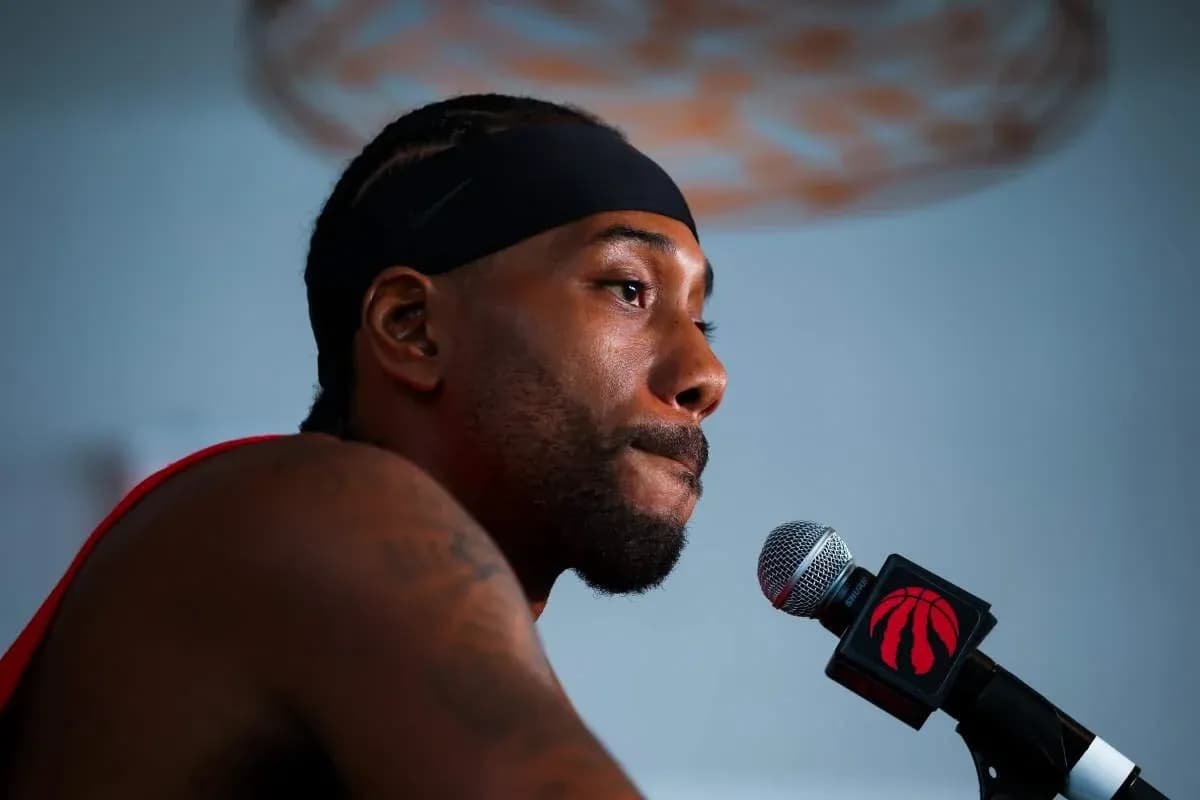
“Alright guys, get your stories going,” he said with a half-smile, rising into another jumper at Toronto Raptors practice. No grand announcement. No timetable etched in stone. Just Kawhi, back on the floor, getting shots up and letting everyone read between the lines.
For a franchise that’s been grinding through a bruising start to the season, those words landed like a lifeline.
A Star Nearing Return
Leonard has been out since October 23, limited to just the first two games of the 2026–27 campaign. In those brief appearances, he still looked like himself: 19.5 points, 7.5 rebounds, 3.5 steals per game, controlling tempo on both ends, dictating matchups, setting the tone.
Then the left knee flared up — swelling and patellar tendinopathy — and everything stopped.
Toronto has played 13 straight games without him, and it shows in the standings. A 6–10 record. A six-game losing streak in the middle of it. A roster patched together night after night while its most reliable closer watches from the sideline.
Now the tone around the team is shifting.
After specialized treatment and a steady build-up in his strength and conditioning work, Leonard has ramped up on-court activity. ESPN’s Shams Charania reported that the Raptors are “optimistic” the forward will return to game action within the next few weeks, noting that he’s been progressing, ramping up, and working to keep the swelling down.
Inside the organization, the belief is simple: when Leonard comes back, he’s back to stay. No half-measures. No cameo appearances.
For a team this thin, that’s not just encouraging. It’s essential.
Darko Rajakovic in Survival Mode
While Leonard rehabs, Darko Rajakovic has been coaching with one hand tied behind his back.
The Raptors’ head coach hasn’t just been missing his star forward. Scottie Barnes and RJ Barrett have both missed time. Rotations that looked clear in training camp have been shredded by reality. The projected starting five has rarely been intact, forcing Rajakovic into constant improvisation.
He hasn’t spent much energy on excuses.
“It’s controlling what we can control,” Rajakovic said. “Our preparation, our work, our intentionality, how hard we play, how hard we compete. We constantly show the film to the guys: what we need to do better, how we can stay ready, and just got to build. It’s a tough moment for us right now. But I think through these tough moments, something really good and something really special is going to be born.”
That’s the bet Toronto is making: that the pain of October and November hardens this group for what comes later.
Barnes, Quickley and Poeltl Carry the Load
With Leonard out and Barrett sidelined by a hamstring issue, the Raptors have leaned heavily on a new core trio.
Scottie Barnes has stepped into the spotlight as the primary scorer and playmaker. Every possession seems to start with him now — bringing the ball up, initiating sets, attacking mismatches, absorbing the defensive attention that would normally tilt toward Leonard.
Immanuel Quickley has taken command of the backcourt, tasked with both organizing the offense and providing enough scoring punch to keep Toronto afloat in tight stretches.
Jakob Poeltl, as ever, holds down the paint. Screens, rim protection, rebounding, short-roll decisions — the unglamorous work that keeps the structure of the team intact.
Around them, the depth chart has become a moving target. With Barrett out and forward Collin Murray-Boyles navigating concussion protocol, Toronto has had no choice but to turn to its younger pieces.
Ja’Kobe Walter, Jamal Shead, and Jamison Battle have all been thrown into the fire, asked to soak up real minutes instead of developmental scraps. Veteran forward Kyle Anderson has become a stabilizing presence, plugging gaps wherever Rajakovic needs him on a given night.
Some games, it’s enough to hang around. Some nights, it isn’t.
The Missing Piece
This is where Leonard’s return changes everything.
His presence doesn’t just bring back 20 points a night. It reorders the entire hierarchy. Barnes can toggle between initiator and secondary scorer instead of carrying every possession. Quickley can pick his spots more selectively. Poeltl’s screens suddenly free a Finals MVP, not just a young core still learning the league’s sharpest edges.
Defensively, Leonard’s impact is even more dramatic. One elite wing stopper allows everyone else to slide back into more natural assignments. Matchups simplify. Rotations tighten. The margin for error widens.
Toronto has survived the early storm. Barely. At 6–10, the Raptors are not buried, but the room for prolonged slumps is gone. They need their anchor back, and soon.
On Monday, as Leonard went through extended shooting work before the matchup with the Milwaukee Bucks, the visual was as important as any medical update. No limp. No visible hesitation. Just repetition, rhythm, and a quiet challenge to the narrative around him.
He spoke once, early: “Alright guys, get your stories going.”
The real story, though, won’t be written from practice. It will be written the first night he checks back in, the first time he takes a hit, plants on that left leg, and rises for a jumper with the game on the line — and the Raptors’ season balance tilting with him.