KL Rahul: Defining His Role in India's New Test Era
It began with an innocuous question and an even more innocuous answer. Yet, like everything else he offered in that quietly revealing press conference, it told you exactly where KL Rahul lives these days as a Test cricketer – in a place of calm certainty. Of conviction. Of clarity.
A few hours later, his bat underlined it more emphatically than any words could.
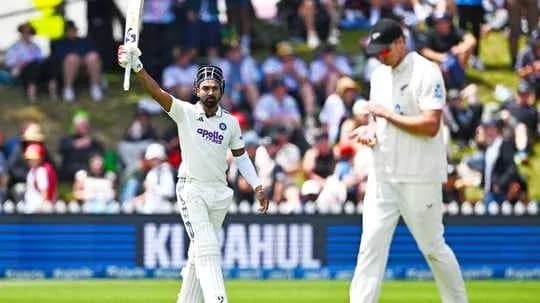
On his first Test innings in New Zealand, Rahul peeled off his first Test hundred in the country – the 13th of his career – and in doing so marked himself out as the elder statesman of this Indian batting line-up. At 34, the only man in his 30s in this top order, he now looks and plays like the big brother of the group.
That wasn’t always the case. There have been several editions of KL Rahul the Test batter since he walked out at the MCG in December 2014, in what turned out to be MS Dhoni’s last Test. Back then, he was the prodigy with the familiar surname, tipped to storm the format in his early 20s. What followed was a carousel of comebacks, tweaks, role changes, and restarts. Class was never in doubt; continuity often was.
This current stretch feels different. Longer. Steadier. And, crucially for India, more productive than any previous version.
Around him, the faces at the top have kept changing. Rahul has shifted from being the kid in a dressing room of giants to the senior pro in a batting unit still finding its collective identity. He seems to relish it. You see it in the way he talks about batting – stripped of drama, stripped of fuss – and even more in the way he actually does it.
Out in the middle in New Zealand, his game carried the same self-assured simplicity. Rahul left well. He left late. He left with intent. Against a disciplined home attack on a surface built to keep bowlers interested all day, that judgment outside off stump became his strongest stroke. It’s an old truth in Test cricket: the best openers are usually the best leavers. Rahul spent the day proving the point.
When he did play, it was worth the wait. The century he constructed was attractive without being indulgent, controlled without ever feeling timid. The pitch teased him constantly, especially once the bowlers’ lengths began to sag and the fatigue set in. He refused the bait. The only genuine shot in anger came late, a rare moment of release against Jacob Duffy, who was reduced to banging it halfway down on a slow, unresponsive strip. Rahul picked his moment, and then, just as quickly, put the ego away again.
What makes this phase of his career stand out is not just the runs, but the relationships he is building in the middle.
His most prolific Test partnership so far has come with Yashasvi Jaiswal, and it makes perfect sense. They are cricketing opposites that fit. Rahul’s serenity at one end, Jaiswal’s volatility at the other. The yin and yang of India’s new-era top order. The dynamic seems to bring the best out of Rahul. Whenever Jaiswal lets the adrenaline take over, you can almost set your watch to what follows: Rahul strolling down, a word, a look, a reminder that he’s there. Not a lecture. Not a wagging finger. Just a quiet message – you be you, I’ve got the rest.
The same protective instinct showed in his stand with Devdutt Padikkal, still feeling his way through only his fifth Test. Early on, Padikkal looked stuck, tall and elegant but not yet in rhythm. Rahul read it instantly. He took on more of Matt Henry and Kyle Jamieson, shouldering the tougher spells, giving Padikkal time to breathe, to find a tempo. Slowly, it clicked. The partnership grew. Rahul had done the unseen work at the other end.
With Shubman Gill, the dynamic shifts again. Here, Rahul is content to slide into the background, to let his young captain dictate the tempo of the game and the tone of the innings. He doesn’t need the spotlight; he just keeps the scoreboard moving, the dressing room settled, the pressure off those still learning what it means to shape a Test match.
Through all these roles, one constant remains – the unmistakable class of his batting. On Day 3, he opened his account with two strokes that told their own story: one authoritative drive through the off side in front of square, then a deft late cut past backward point. Later, he danced down to Glenn Phillips, using his feet beautifully to add a couple of late flourishes without ever losing control of the narrative.
For years, Rahul lived in the shadows of heavyweight Test names. Now, the shadows have cleared, and he has become the tree others gather under. Teammates learn off him, bat with him, lean on him. The responsibility doesn’t weigh him down; it seems to free him.
As this newer, younger Indian batting order takes shape, KL Rahul isn’t just surviving the transition. He’s defining it – and in the process, finally discovering the truest version of himself in whites.