Las Vegas: The New Heart of Formula One
Las Vegas didn’t need a title decider to prove its worth to Formula One. It just needed a cold, grey Thursday and a city that, even in its least flattering light, refuses to do anything by halves.
Under drizzle and gunmetal skies, long before a car turned a wheel in anger, the queues outside the circuit snaked into the streets. Fans in ponchos, hoodies and team caps waited for gates that were still shut. This was supposed to be the dead rubber of a season already wrapped up by Kimi Antonelli and Mercedes in Mexico. It felt nothing like it.
The locals, too, have shifted. The initial resentment at road closures, construction and the sheer intrusion of the F1 travelling circus has softened. Nevada’s hospitality industry knows a good bet when it sees one, and the tips and takings are starting to tell their own story.
Vegas, built to stay
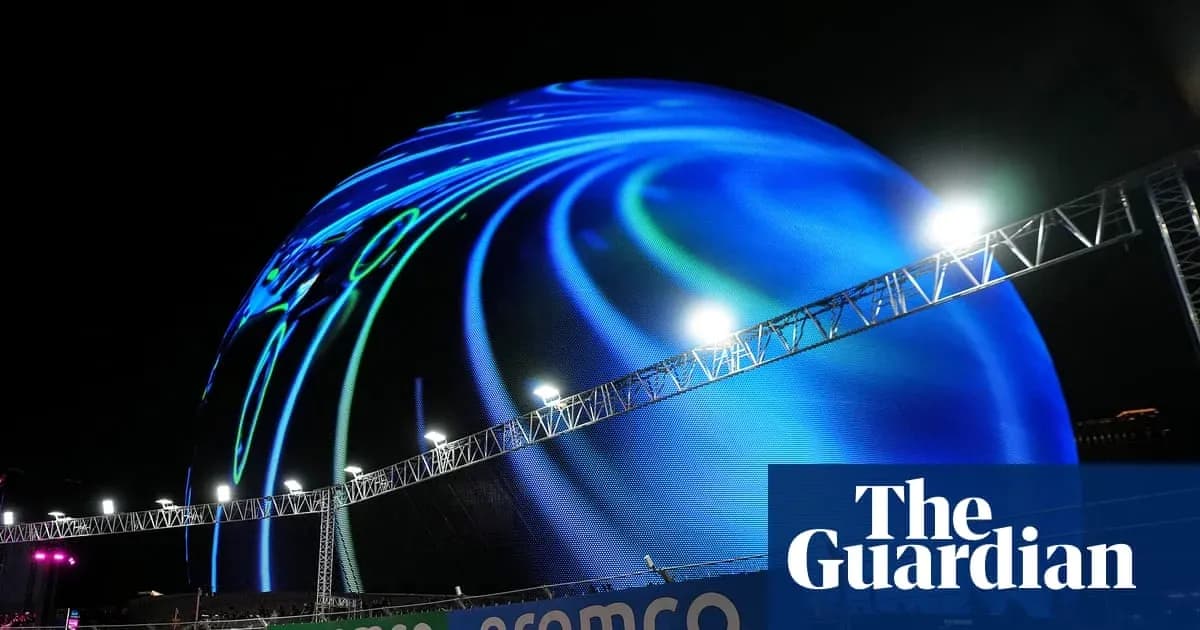
Las Vegas is only in its fourth year on the calendar, but it already carries the weight of permanence. The race is locked in until 2037. Purists may still grumble about the spectacle-first approach, the neon, the celebrity grid and the unapologetic showbiz framing. The numbers, and the noise, say something else.
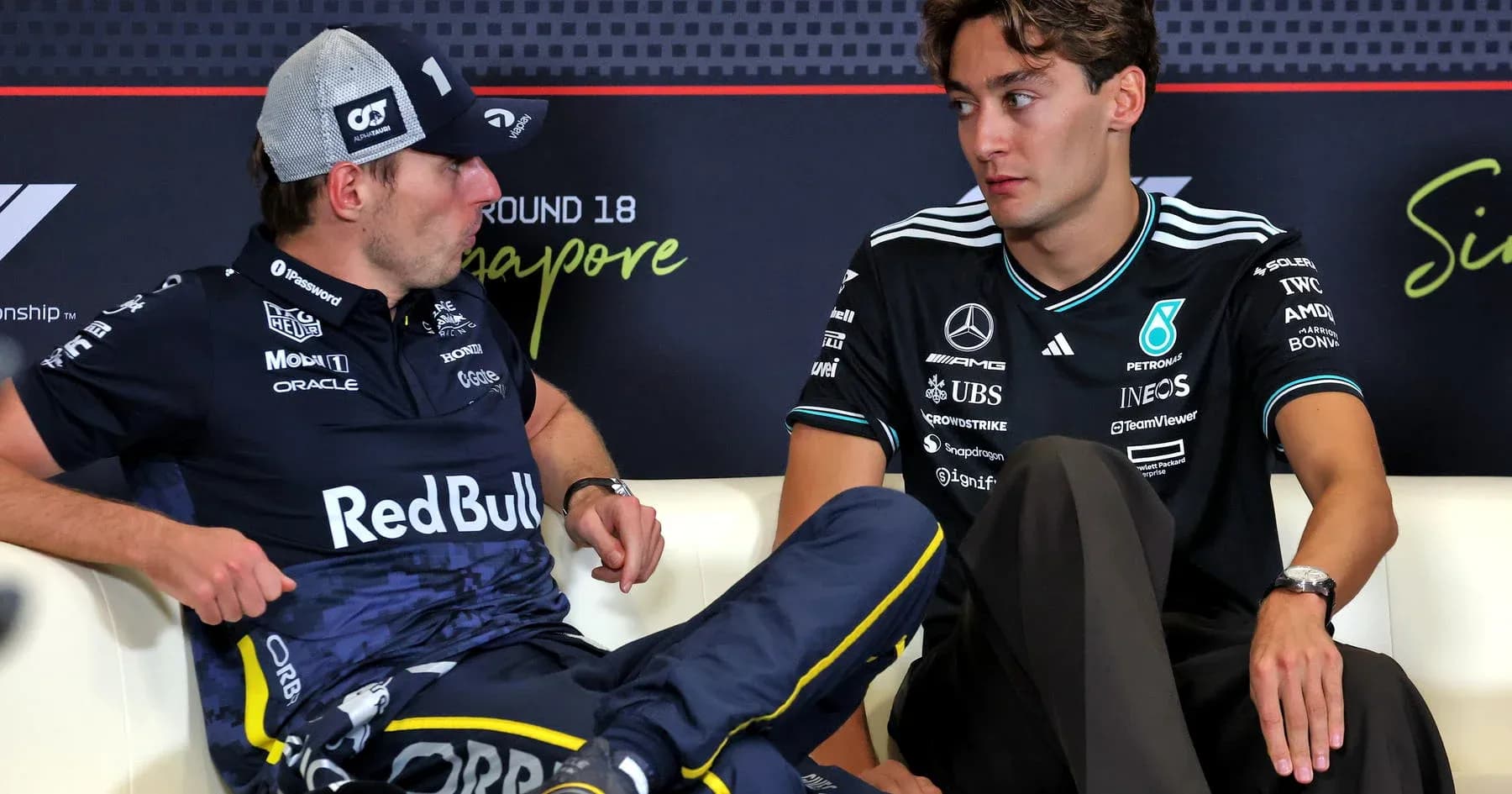
George Russell summed up the mood in the paddock this week. “With where the sport is now, I think you need a race like this on the schedule,” he said. “I guess it’s the biggest one, bar Monaco, from an entertainment perspective for the people who come here and for F1. This just feels like the Super Bowl.”
That line – “biggest bar Monaco” – is exactly what F1’s powerbrokers had in mind when they pushed the sport into the heart of the Strip in 2023. They spent around £500m building the paddock and circuit infrastructure. The debut was chaotic: a loose water valve cover wrecked the opening day’s running and legal challenges landed from angry businesses and residents.
Yet a year on, the race looks like a textbook case study in how to turn controversy into a cash machine.
Emily Prazer, F1’s chief commercial officer and president of the Las Vegas Grand Prix, doesn’t pretend it was smooth. “We have to admit where we perhaps were a little bit bull in a china shop about it,” she said. Time was short, the demands huge, and diplomacy came second to deadlines. Now, she points out, the sport spends hours in conversation with residents, businesses and local officials, trying to answer questions before they become complaints.
Working hand in glove with Clark County and the Las Vegas Convention and Visitors Authority has helped calm the waters. Money has done the rest. Across the last three years, the race has generated $3.2bn in economic impact for Southern Nevada. Tax income from the event hit $45m and $43m in the past two years alone.
For a city that measures success in hard figures, those totals speak loudly.
This used to be one of the quietest weekends of the year in Las Vegas. Now, research from the 2024 race weekend shows the average visitor spends around $2,400, and that’s before they’ve even bought a race ticket. Hotels are full, restaurants packed, casinos busy. The disruption, for many who live and work here, is being outmuscled by the returns.
A local tour guide put the equation bluntly during the first year of the race: it would only survive if the staff on the ground felt it in their pockets. On current evidence, that threshold has been cleared.
The business of F1, Vegas-style
The track is only half the story. Las Vegas has quickly become one of the sport’s key commercial stages.
This week alone, F1 unveiled a new partnership with wearable fitness brand Whoop, which will see some drivers’ heart rates broadcast live to fans and media. Nike has come on board in another major deal. Lego has joined the party with 4ft-tall minifigure versions of every driver standing guard outside hospitality units in the paddock, while celebrities are set to race Lego cars before Saturday’s main event.
In most venues, it might feel gimmicky. Here, it simply blends into the landscape.
The backdrop is a sport riding a wave of commercial growth, even as the drivers grumble. All season, several have voiced unease with the direction of the power unit regulations. That discontent helped push the FIA towards a dramatic pivot: a return to 2.1-litre V8 engines from 2030.
The agreement was formally signed off and announced in Las Vegas. The new engines will feature a smaller electric component, with half of that hybrid power restricted to overtake mode. The aim is clear: lighter, cheaper engines and a formula designed to encourage what F1 calls “attack-orientated racing”.
F1’s leadership has defended the current rules all year, insisting that fans are enjoying the product even if drivers are not. On Thursday night in the East Harmon fan zone, that argument had a soundtrack: pounding music, red and white neon, dry ice drifting over crowds who barely seemed to notice the rain.
Merchandise stalls did brisk business as practice spluttered along. There was no sense of a damp squib.
Gemma, 24, had flown in from New York state with two friends for their first live F1 experience. “We love the cars,” she said. “Love the drivers. It’s fun, exciting, there’s so much action and coming to Vegas, even in the rain they look amazing here.”
Her words line up almost perfectly with the sport’s own narrative: regulations that deliver action, a venue that delivers spectacle, and a fanbase that keeps turning up.
Tricky track, familiar star
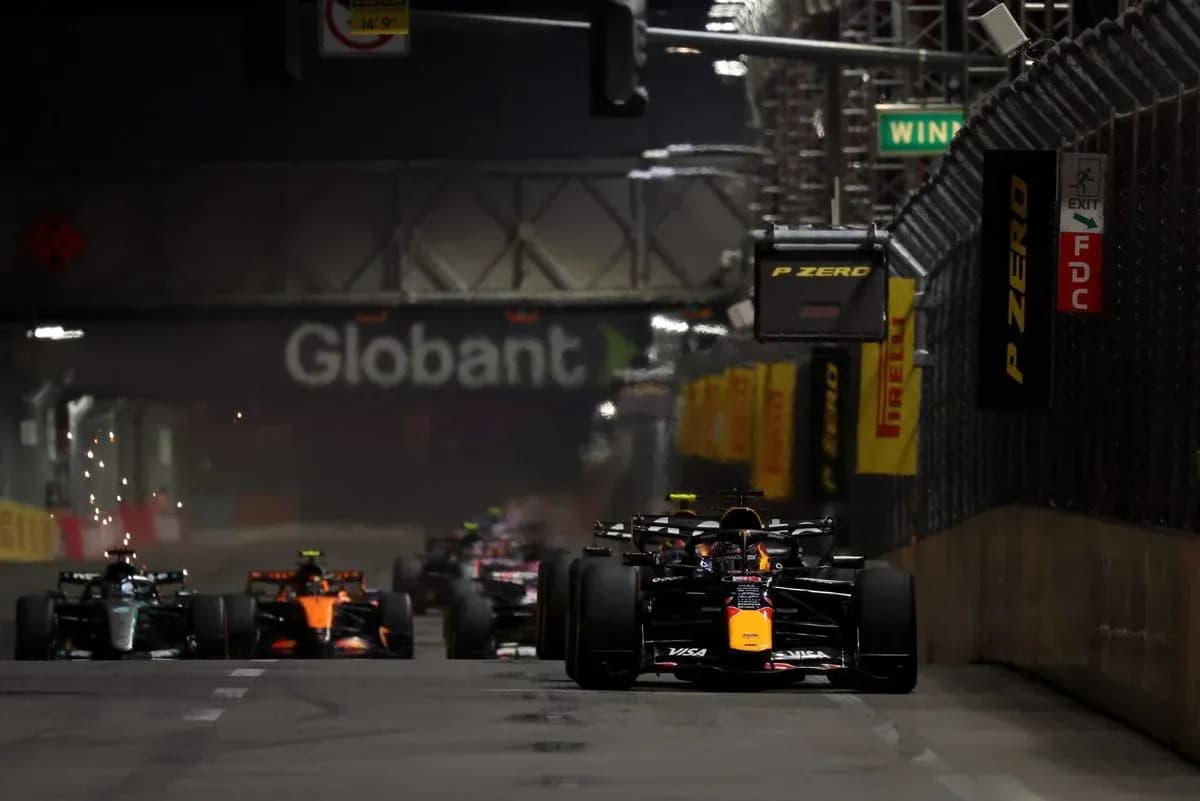
On track, the opening day underlined how fickle Vegas can be. First practice produced no meaningful lap times. Cold temperatures and persistent rain turned the circuit into a risk that most teams simply weren’t prepared to take, especially with dry conditions forecast for the rest of the weekend.
The second session finally brought some running. The surface stayed wet, so everyone bolted on intermediate tyres, but the track began to improve as the minutes ticked down. Those who ventured out late reaped the rewards.
George Russell topped the timesheets for Mercedes, making the most of the drying line. Pierre Gasly slotted into second for Alpine, another beneficiary of the evolving conditions. Charles Leclerc, always sharp on a slippery surface, took third for Ferrari.
It was a modest opening act in pure sporting terms, a teaser rather than a full show. Yet around the circuit, in the hotels and casinos and fan zones, the sense was unmistakable: F1 and Las Vegas have locked into the same rhythm.
The title may already be decided. The race, and the business wrapped around it, are very much alive.