Leicester City’s Struggles: From Premier League Glory to League One Woes
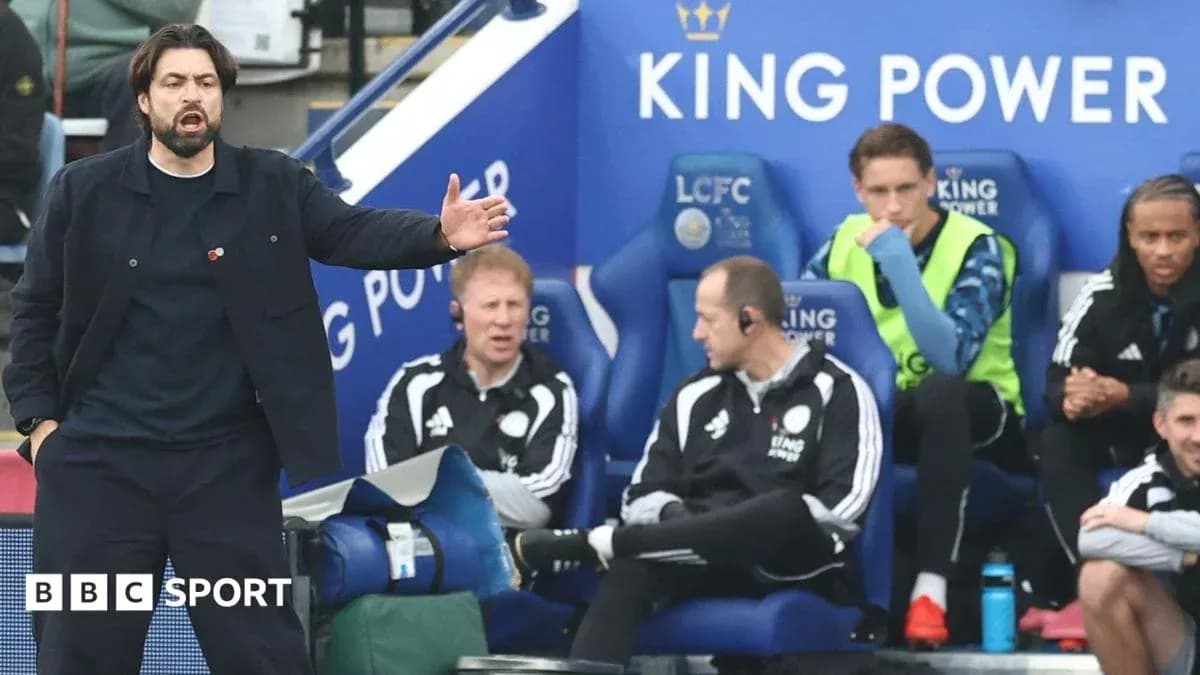
Leicester’s fall from Premier League fairy tale to League One reality has been brutal. The ownership saga swirling around King Power only adds another layer of unease. Russell Martin, though, is refusing to be dragged into it.
Reports this week suggested Leicester are no longer up for sale, months after being openly touted on the market for more than £200m, with Citigroup enlisted to attract buyers for the Srivaddhanaprabha family. The same family that bought the club for £35m in 2010 and bankrolled the most improbable title win English football has seen, then an FA Cup triumph five years later, now finds itself the target of protest and anger.
Three relegations in four seasons have changed everything.
From the Premier League to the Championship and then into League One, the slide has been relentless. The points deduction for overspending, the financial strain around King Power Stadium, the sense of drift — all of it has fuelled an increasingly discontented fanbase. Chants against owner Khun Aiyawatt “Top” Srivaddhanaprabha and chief football officer Jon Rudkin have become a regular soundtrack.
Now, with suggestions that the club is no longer on the market, the questions have only multiplied. Martin’s response? He is keeping his distance.
Asked directly about the sale being pulled, he was blunt: “I don’t know.” No attempt to dress it up. No grand statement. Just a clear line.
“It’s not my domain. I’m here to lead and coach the football department and football team, and it’s a job I’m absolutely loving,” he said, stressing that any ownership update will come from above, not from the dugout. “As far as we are concerned, it’s business as always.”
League One does not wait for boardroom clarity, and Leicester’s start has been anything but smooth. Martin’s side sit 11th after a stuttering opening to the campaign, and the manager has already felt the sharp edge of supporter frustration himself. Home defeats to Burton Albion, Oxford United and Peterborough have piled pressure on a coach brought in to steady a listing ship and restore some identity.
He knows the mood. He hears the discontent. But he is choosing his battleground.
Behind the scenes, Martin says his conversations with sporting director James McCarron, Rudkin and Khun Top have been firmly rooted in football matters: the current squad, the work on the training ground, the looming winter window and even next summer’s planning.
“We have a lot of communication around the squad, around the work we do, around planning, forward planning for January and next summer and all of the stuff,” he told BBC Radio Leicester. The message is clear: the technical staff are building for the medium term, regardless of whether a ‘for sale’ sign hangs over the club.
“We have a lot of communication between myself, John, James and the ownership group. So as long as we are really clear on that, the rest of it is out of remit and out of my control. I’m really relaxed about it, as I have been all the way through.”
Relaxed might not be the word many Leicester fans would choose. For a large section of the support, the announcement that the club was for sale in the summer felt like a necessary reset, even a chance for a fresh start after years of missteps. To now be told, via reports, that the club is no longer on the market only deepens the sense of uncertainty.
On the terraces, the judgment has been harsh. Khun Top and Rudkin have been singled out repeatedly, with chants urging them to leave. Martin, 40, has not escaped either, his name folded into the unrest whenever performances have dipped.
He is under no illusions. The only route back to any kind of unity runs through the pitch.
The former Rangers, Southampton and Swansea City boss has spoken of his desire to get supporters “more focused with what’s happening on the pitch” by turning Leicester into a team they can once again be “proud of”. Results, not rhetoric, will decide how long he gets to do that.
“The more games we win and the more they can see the team grow, the better it is for everyone and for all of us, regardless of what happens [with the sale of the club],” he said.
Ownership questions will not disappear. The legacy of King Power’s golden years still hangs in the air, in sharp contrast to the reality of League One grounds and mid-table form. But Martin has nailed his colours to the mast: he will live and die by what happens between the white lines.
In a club caught between its glorious past and an uncertain future, that might be the only thing he can control.