Liverpool Dominates Manchester United 4-0 at Anfield
Anfield under the lights, the scoreboard frozen at 4–0, tells only part of the story. This was a meeting of two clubs heading in opposite directions in the Premier League table, and Liverpool’s ruthless dismantling of Manchester United crystallised why one side sits 4th with 21 points and a goal difference of 8, while the other languishes 19th on 8 points with a goal difference of -9 after 11 matches.
I. The Big Picture – Iraola’s structure, United’s crisis of identity
Liverpool arrived into this fixture with a clear seasonal identity: high-tempo, vertical football from a 4-2-3-1 that has become their default shape, used in all 11 league outings. Overall they have scored 18 goals and conceded 10, a balance that underpins their top-four position. At Anfield, they had been efficient rather than devastating, with 8 home goals and 6 conceded, but this performance felt like their attacking metrics finally exploding into life.
Andoni Iraola’s starting XI reflected that intent. Alisson Becker anchored a back four of M. Kerkez, Virgil van Dijk, J. Jacquet and R. Araújo. Ahead of them, the double pivot of A. Mac Allister and D. Szoboszlai offered both control and vertical thrust. The line of three – B. Barcola, F. Wirtz and R. Ngumoha – floated behind lone striker A. Isak, the league’s second-ranked forward by rating with 7 goals from 10 appearances. It was a side built to dominate territory and punish transitions.
Manchester United, by contrast, arrived as a team still searching for a stable platform. Their overall record – 14 scored, 23 conceded – paints a stark picture of imbalance. On their travels they had yet to win, drawing 3 and losing 3, scoring just 4 away goals while conceding 12. That fragility informed Mauricio Pochettino’s decision to roll out a 3-4-1-2, a departure from the 4-2-3-1 used in 10 of their 11 league games.
S. Lammens started in goal behind a back three of L. Yoro, M. de Ligt and Lisandro Martínez. The wing roles fell to Diogo Dalot and P. Dorgu, with K. Mainoo and Y. Tielemans central. Bruno Fernandes floated as the nominal 10 behind B. Mbeumo and Matheus Cunha. On paper, it was a shape designed to add an extra body in the last line against Liverpool’s front four. In practice, it only multiplied the confusion.
II. Tactical Voids – Absences and discipline
Both squads entered the game with notable absentees that shaped their benches and in-game options. Liverpool were without C. Bradley, H. Ekitike, G. Leoni and A. Nallo, all ruled out by various leg and knee issues. It meant Iraola leaned heavily on his starting back four and trusted the technical security of Szoboszlai and Mac Allister to protect transitions rather than rotating heavily in defensive areas.
United’s injury sheet was longer and more destabilising. C. Baleba, B. Sesko and M. Ugarte were all missing, stripping Pochettino of a ball-winning midfielder, a direct centre-forward and a defensive shield. Several others – K. Darlow, A. Heaven, S. Lacey, M. Rashford and L. Shaw – were listed as questionable, and though Heaven and Lacey did make the bench, that uncertainty had clearly shaped preparation.
Discipline has been a season-long subplot for both sides. Liverpool’s yellow-card distribution shows a clear spike between 46–60 minutes, where 39.29% of their bookings arrive – a sign of an aggressive post‑interval press. United, meanwhile, are at their most combustible late on: 36.36% of their yellows come between 76–90 minutes, and they already have two red cards this season, one each for Lisandro Martínez and Leny Yoro. Both started here, and that latent volatility hung over United’s back line every time Liverpool accelerated through the thirds.
III. Key Matchups – Hunter vs Shield, and the battle for control
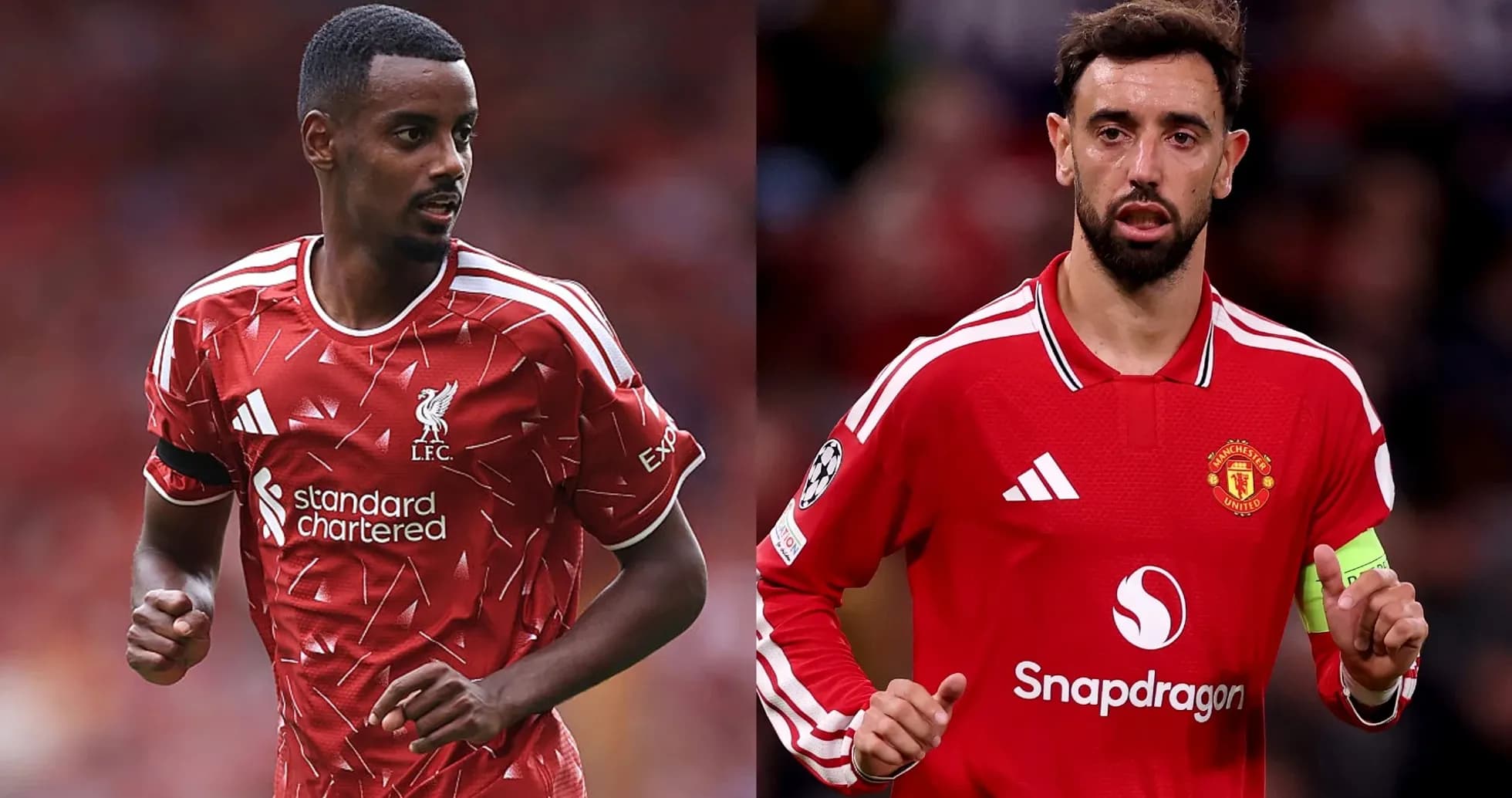
The headline duel was always going to be A. Isak against United’s makeshift defensive shield. Isak’s 7 league goals have come from a blend of movement and efficiency – 27 shots, 14 on target – and his capacity to both run channels and drop into pockets was toxic for a United unit still learning the angles of a back three. Yoro and Martínez, each with a red card already this season, were asked to defend large spaces against a striker who thrives when centre-backs are dragged out of their line.
Behind Isak, F. Wirtz and B. Barcola were the twin creators United never truly got to grips with. Wirtz came into the game with 4 assists and 33 key passes, operating as Liverpool’s primary conduit between midfield and attack. Barcola, also on 4 assists, offered a different threat: relentless dribbling (37 attempts, 13 successful) and aggressive pressing from the left. Up against Dalot and the right side of United’s back three, his ability to carry the ball inside and free Kerkez on the overlap repeatedly fractured United’s structure.
In the “Engine Room” matchup, A. Mac Allister and D. Szoboszlai faced K. Mainoo and Y. Tielemans. Mac Allister’s season numbers – 507 passes at 85% accuracy, 20 tackles and 9 interceptions – underline his dual role as tempo-setter and defensive screen. Mainoo, still developing, and Tielemans, more of a passer than a presser, struggled to impose themselves once Liverpool’s counter‑press bit. With Bruno Fernandes forced deeper to help progression, United’s link to the front two was repeatedly severed.
Fernandes himself entered as one of the league’s standout creators – 4 goals, 2 assists, 28 key passes – but Liverpool’s compact 4-2-3-1 box around him, with Mac Allister and Szoboszlai supported by Wirtz’s work rate, meant his influence was largely peripheral. Every time he tried to receive between the lines, a red shirt stepped in front, turning United’s attacks into turnovers that fed Liverpool’s transitions.
IV. Statistical Prognosis – Why 4–0 felt inevitable
Looking through the seasonal lens, Liverpool’s dominance aligns cleanly with the underlying trends. Overall they average 1.6 goals scored and 0.9 conceded per match, while United sit at 1.3 scored and 2.1 conceded. On their travels, United’s 0.7 goals for and 2.0 against pointed toward a side likely to be overwhelmed once Anfield’s tempo rose.
Liverpool’s clean sheet record – 5 overall, with 3 at home – matched the authority of van Dijk and Jacquet in this game. United, by contrast, still have not kept a single clean sheet this league campaign, and their worst away defeat before this was already a 4–0 loss. That previous collapse on their travels foreshadowed what happened here: once the first goal went in, the structural cracks widened quickly.
Even from the penalty spot, the margins were tilted. Liverpool have had 1 penalty this season and converted it; United have scored both of their 2. Neither side has missed from the spot, but Liverpool’s ability to generate high‑quality chances from open play meant they never needed that safety net.
Following this result, the narratives sharpen. Liverpool look every inch a Champions League contender, their 4-2-3-1 now populated by a coherent spine – Alisson, van Dijk, Mac Allister, Wirtz, Isak – and supported by high‑ceiling wide players like Barcola and Ngumoha. United, marooned in 19th, resemble a side caught between systems, with their most gifted creators – Bruno Fernandes and Mbeumo – starved of stable platforms behind them.
At Anfield, the gulf was not just in goals. It was in clarity of idea, cohesion of squad and the cold logic of the numbers. Liverpool are built to climb; Manchester United, unless something changes quickly, are built to suffer.