Manchester United's Crisis: Berrada and Pochettino Address Challenges
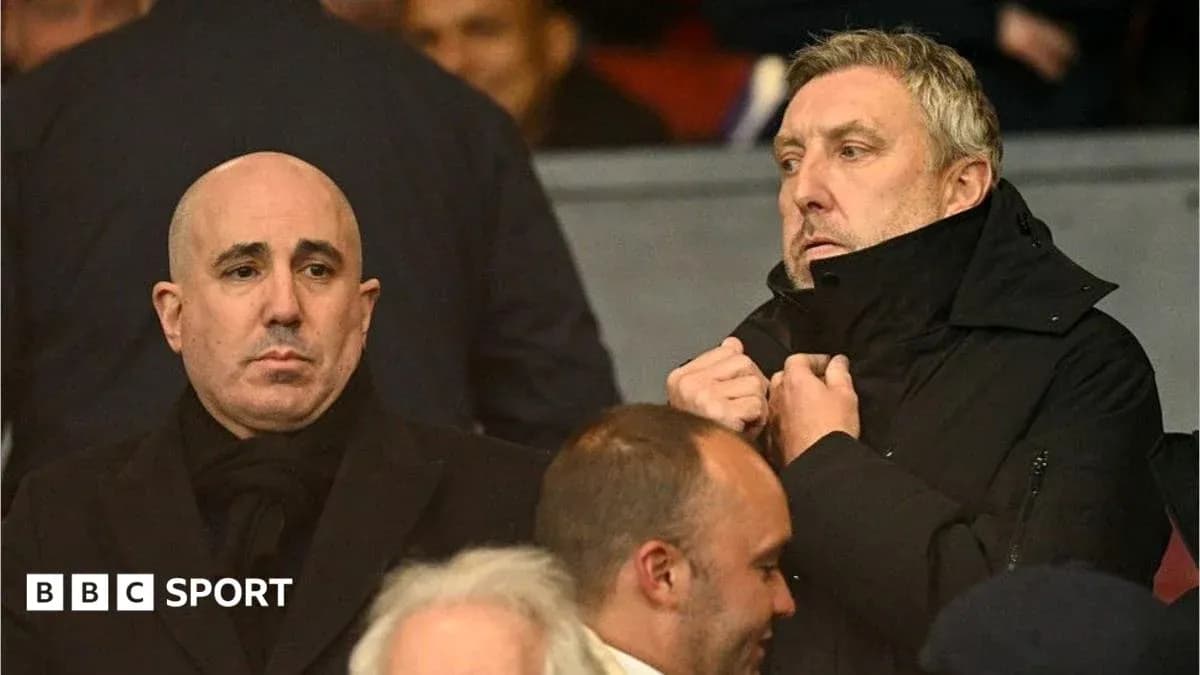
Omar Berrada leans into the question, not away from it.
Manchester United sit 18th in the Premier League. The club is angry, the fanbase is louder than ever, and the spotlight on the new regime is unforgiving. The chief executive knows all of that. He accepts a lot of the heat. But he believes some of it has gone too far.
“Being in this position comes naturally with the criticism and scrutiny we're going to get,” he told Sky Sports in a rare interview. “We accept it. Some of it is fair, some of it does cross the line.”
The line, as he sees it, has been crossed often in recent weeks. Social media campaigns calling for him and director of football Jason Wilcox to be sacked. Banners and chants aimed at the board. Songs now routinely targeting minority owner Sir Jim Ratcliffe, layered on top of the long-running fury at the Glazer family, whose leveraged buyout in 2005 saddled United with debt that now exceeds £1bn.
Berrada knows the environment. He also knows how it’s being amplified.
“We do live in this world of social media, where people like to generate negative stories about the club because it drives more engagement, and it drives more general noise and activity around the club,” he said. “But we park that.”
Recruitment under fire
The noise around Wilcox has been particularly sharp. His name has been sung at recent games, and not in celebration. The summer window is at the heart of it.
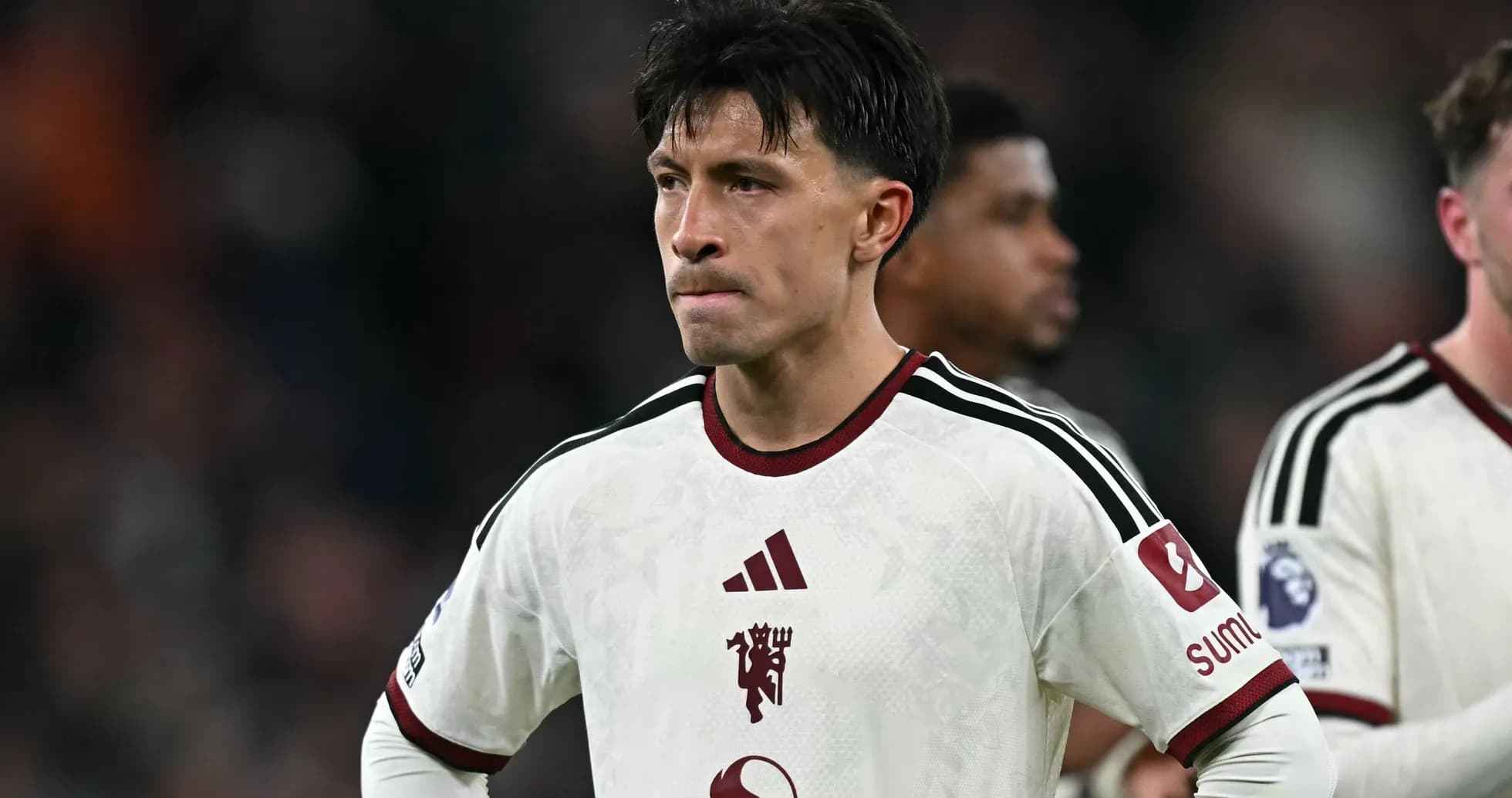
United’s recruitment has been hammered as unbalanced and short-sighted. After the 2-0 defeat by Atletico Madrid in September, Lisandro Martinez did not hide his disappointment, saying he “expected more from the technical director”.
Michael Carrick, now out of the job, felt badly let down by the market strategy. He wanted reinforcement at left-back and in attack. The club went heavy in midfield instead. That decision looks even more exposed with Luke Shaw and Benjamin Sesko both injured.
Carrick had pushed to move for Elliot Anderson and Mateus Fernandes. United walked away when Nottingham Forest and West Ham pushed their asking prices beyond what the club was prepared to pay. Anderson went to Manchester City for £116m. Fernandes joined Tottenham for £85m.
United went elsewhere. They spent a combined £118m on Carlos Baleba and Andrey Santos, who between them have started just seven Premier League games. They also triggered Youri Tielemans’ £35m release clause at Aston Villa. Tielemans has at least begun to make a tangible impact, scoring his first United goal in the chaotic 4-4 draw with Villa on 8 November and adding one assist.
The criticism has been fierce. Berrada stands his ground.
“When we look at the summer transfer window of 2026, I know we're receiving a lot of criticism for it, but we're actually happy with the players we bought,” he said.
“We think that Carlos Baleba, Youri Tielemans, Andrey Santos, and Karl Darlow – and let's not forget that we've also welcomed back Marcus Rashford, who had a very good season on loan at Barcelona – these are five additions that we think have made the squad fundamentally better.”
He insists there was a plan and that the club stuck to it.
“We went in knowing what we needed to do. Of course, there have been different dynamics at play and we've said consistently in the last few years we need to stay disciplined. We need to take the right decisions. We need to buy the right players, for the right value at the right time – in terms of what the squad needs.
“When we find the right opportunities, we will spend. But what we don't want to be doing is spending just for the sake of it. So, could we have signed an additional defender to strengthen the depth and the quality? Yes, but we have to find the right players at the right value.
“There's no point in us spending £40m, £50m for players we're not convinced are going to add value to the team.”
The message is clear: United will not be bounced into panic buys, no matter how loud the external pressure gets.
Pochettino steps into the storm
Into this swirl walks Mauricio Pochettino.
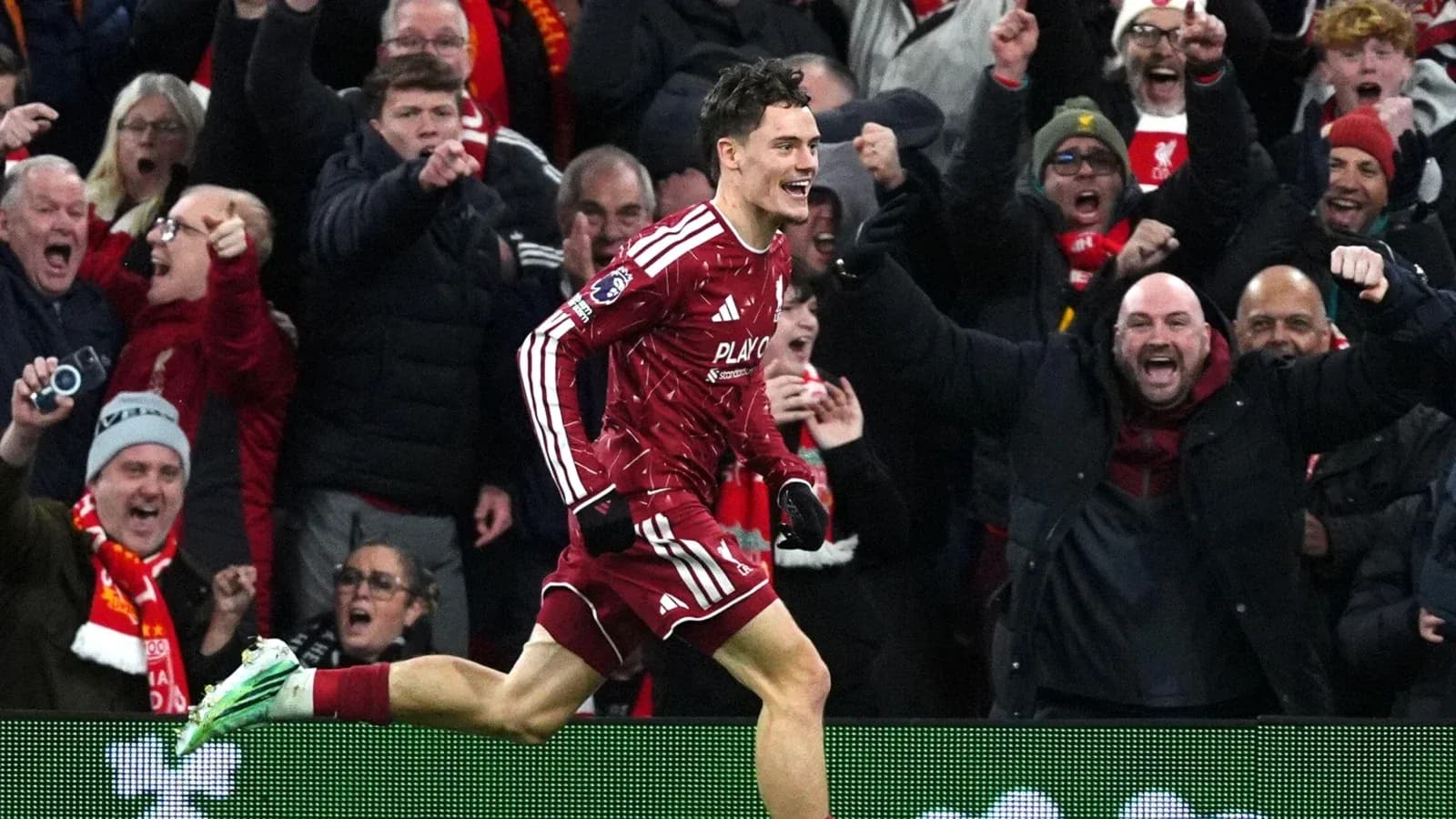
On Sunday, he leads United for the first time – at Liverpool, of all places. It is a brutal introduction, but also a stage he has always relished. Before Berrada’s interview aired, Pochettino spoke to the wider media and made one thing plain: his job title may read “head coach”, but he wants his influence to stretch far beyond the touchline.
“I know that, being a head coach, I am the guy that is going to decide the squad for Sunday,” he said. “I'm going to pick the starting 11 and I'm going to make the changes.
“Of course, in the future, I would like to be involved in all the main decisions that will happen on the squad.”
The hierarchy has already made one brutal decision. Berrada admitted there was little alternative but to dismiss Carrick, given United’s slide.
The team, he said, had “dropped off in many areas”. Performances dipped, results followed, and the table told its own story. United, 18th, staring at a crisis that is no longer theoretical but real.
Pochettino has wasted no time. He has spoken individually to virtually every player, trying to understand what has gone wrong inside the dressing room as much as on the pitch.
He has seen the data that shows United’s players have not been running enough. He is not prepared to treat numbers as gospel.
“If you don't put context on the data, it's very dangerous to talk,” the 54-year-old warned. Work-rate is one thing. Structure, confidence and clarity are another. He knows all three have been missing.
Culture, identity and a long road back
In his first in-house interview on Thursday, Pochettino talked at length about culture. Not as a quick fix. As a decade-long project.
He repeated the theme again.
“The culture of the club and the identity of the club is very clear,” he said. “It's a historic club, one of the best in the world. It's difficult to find another club the size of Manchester United.
The culture of the club and the identity of the club is very clear. It needs to be in a different place than we are now.”
That is the crux of it. United’s sense of self – a club that expects to compete at the very top – jars violently with their current reality. Pochettino is not promising miracles. He is promising a process.
He will start that process at Anfield with Bruno Fernandes still wearing the armband.
Pochettino confirmed the Portugal playmaker will remain captain for the trip to Liverpool, despite a sharp dip in form and a contract situation that looms over the months ahead. Fernandes, 32, is out of contract in the summer. There has been no breakthrough over an extension. United can trigger an extra year, but the debate has already started: after last season’s player-of-the-year sweep, is a clean break now the bolder call?
Pochettino was not biting on that.
“Bruno is our captain and he's a very important player,” he said. “I think we will have time after to talk about the [other] things that you are asking me.”
For now, the questions are simpler and far more brutal. Can United get off the floor? Can this reshaped hierarchy, under siege from its own support, prove it has the nerve and clarity to drag the club back toward its own standards?
Those answers will not come in one afternoon at Anfield. But they will start there.