Manchester United's Dilemma: Spend Big or Risk Relegation
Manchester United stare at a choice they never imagined: spend recklessly in January, or gamble that they are somehow too big to go down.
The 4-0 capitulation to Liverpool has stripped away any remaining illusions. What used to be a bad day at Anfield has turned into a recurring trauma, and it now frames every conversation at Old Trafford – from the boardroom to the dressing room.
A club stuck between the chequebook and the cliff edge
United can, just about, find around £150m to spend in a difficult winter market. That money was supposed to be part of a longer-term rebuild. Now it looks like emergency credit.
Do they burn it now to drag themselves out of trouble and tear up the next phase of planning? Or do they hold their nerve and risk the one scenario that used to be the punchline to rival fans’ jokes: relegation?
The stakes are that stark. This isn’t just about a bad run of form. It’s about a club whose financial muscle has been steadily drained by debt and failure, to the point where the old insulation of a vast wage bill has disappeared. They used to be able to outspend their own mistakes. Not anymore.
Pochettino’s ideals meet United’s reality
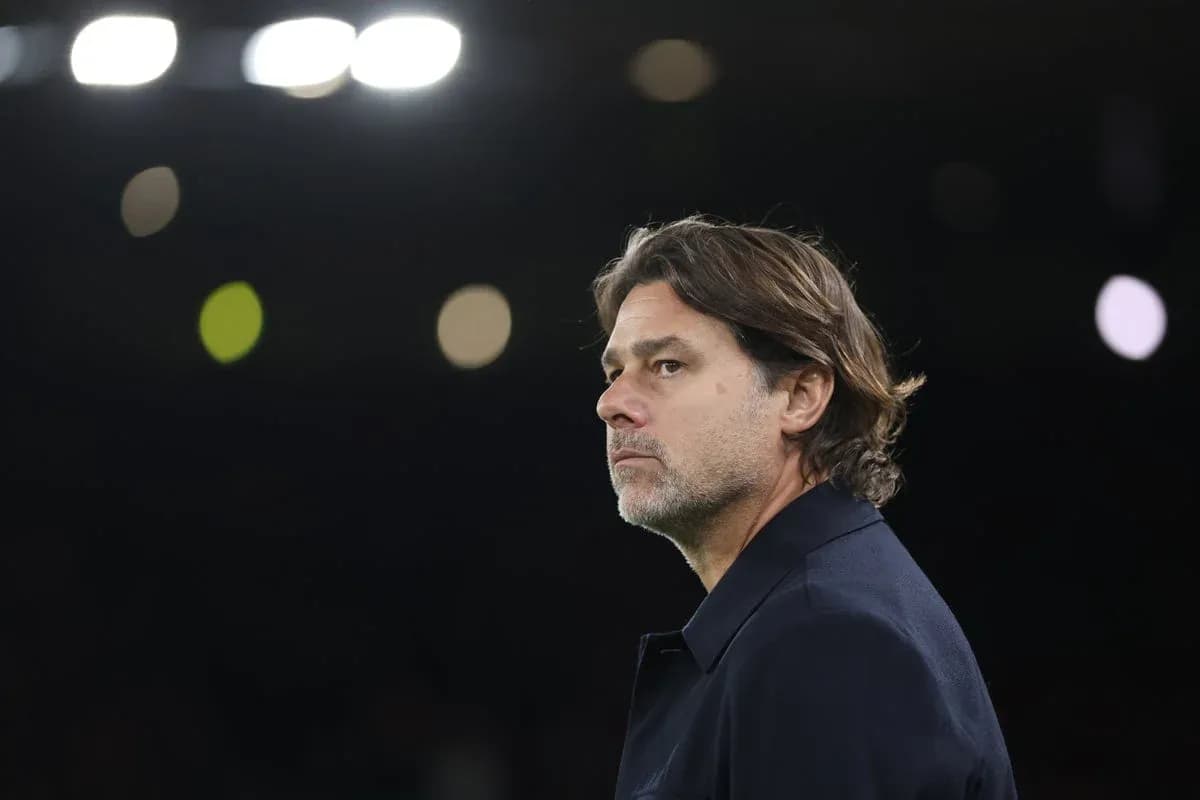
Into this walks Mauricio Pochettino, a coach whose footballing principles are clear: intensity, a high press, a 4-3-3 that suffocates opponents and empowers dynamic attackers.
This squad can’t do it. Not right now.
To play the way Pochettino wants would demand a brutal learning period – high risk, high mistakes, high chance of another Liverpool-style humiliation. United simply don’t have the luxury of a philosophy-first season. They need points. Quickly.
So the questions pile up. What system can they actually execute? What shape gets them through the next month, not the next decade? Can Pochettino do what Antonio Conte did at Chelsea in 2016-17 – look at what he has, bend his ideals, and build a ruthless, pragmatic structure around it?
Inside the club, some point to a strange contradiction. The centre-back department, one of the few areas overloaded with numbers, is also widely criticised for its quality. Yet that very surplus almost forces United towards a back three or back five.
The temptation is obvious: pack the defence, grind out a few ugly wins, and treat it like smashing the glass on a fire alarm. This is emergency football.
And that’s exactly where they are – in an emergency that didn’t arrive overnight, but crept up on them, season by season. Like a slow-motion bankruptcy: gradually, then all at once.
A squad built by committee, broken by time
The current squad is the physical embodiment of a decade of drift. Manager after manager has tugged it in a different direction, each pulling the club further away from any coherent idea of what a Manchester United team should look like.
Chief executive Omar Berrada has publicly claimed they have “made the squad fundamentally better”. Nobody serious in European football seems to agree.
One executive from a recent Champions League club calls it “an incredibly poorly constructed squad”. Another experienced figure in the game labels it “damning” for INEOS and their much-hyped football operation. The sense is that the new leadership underestimated the scale – and the depth – of what they were inheriting.
On paper, some of the signings make sense. United wanted to escape the trap of buying players tailored to one manager’s system, only to see that manager sacked. So they targeted “adaptability” – players like Matheus Cunha and Bryan Mbuemo, capable of fitting different roles.
But adaptability only works if you know what you’re adapting from. If there’s a clear core idea. At United, there isn’t. The recent arrivals look less like part of a surgical rebuild and more like cosmetic work on a structure that needs demolition.
The real problem sits deeper, in the core that has been there for years. Not bad players, but players carrying too much history, too much scar tissue.
Scar tissue and scars on the scoreboard
Five members of the current squad started that infamous 5-0 home defeat to Liverpool in October 2021: Bruno Fernandes, Marcus Rashford, Luke Shaw, Harry Maguire and Diogo Dalot.
At the time, it felt like a historic low. Ole Gunnar Solskjaer didn’t last much longer.
Since then, United have been thrashed three more times by their greatest rivals: 4-0, 7-0 and now 4-0 again. What was once unthinkable has become almost routine.
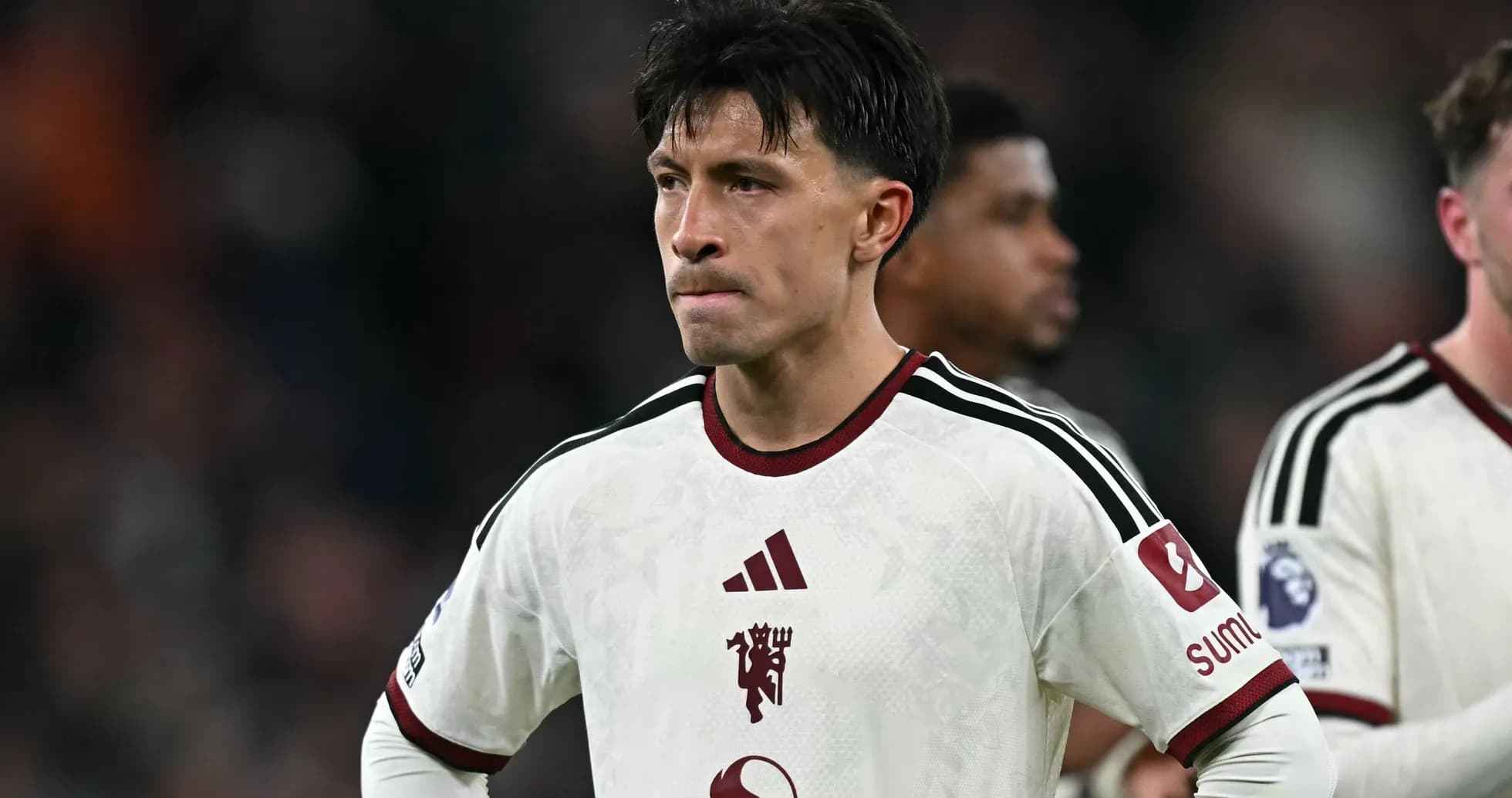
You could see it on Sunday. As the game began to slip away, the expressions told their own story – players who have lived this nightmare too many times, waiting for the next blow. This isn’t just about tactics. It’s about the psychological weight of repeated humiliation.
Inside the club, one voice insists that a standard clear-out won’t cut it. They argue United need to sign 10 players in a single window. That’s how deep they believe the rot goes.
A transfer strategy at odds with the crisis
The club is at least thinking about January. That much is clear. But the early signs aren’t exactly reassuring. Some of the names they’ve asked about have raised eyebrows across the industry, because they don’t obviously address the most urgent needs.
The internal transfer model splits targets into two categories: “value” signings, who can grow and deepen the squad, and “superstars”. On paper, that’s a rational structure. In practice, it jars with the reality of a team staring down the table.
Inside Old Trafford, the starting point for a “superstar” is said to be around £70m. A decade ago, that bought Liverpool Virgil van Dijk. Today, one source points out, that sort of figure gets you closer to a Nick Woltemade or a Viktor Gyokeres level of profile.
So United find themselves trapped in a vicious circle: spend badly, get worse, need to spend again, only this time with even less room to manoeuvre. Each misstep tightens the financial and footballing noose.
This time, there is a new, very real danger. The long-term cycle of decline may not just mean missing out on the Champions League or slipping into mid-table. It could drag them into a relegation fight.
Ideals on hold, survival on the line
That is the backdrop to every tactical decision Pochettino makes from here. His preferred football will have to wait. For now, his job is to stabilise a listing ship, not repaint the deck.
He has to lock the team down. Strip things back. Make United hard to beat before he can make them anything like his own.
Around him, the hierarchy must decide whether to rip up the budget and throw everything at January, or hold their nerve and trust that this squad, however flawed, has just enough left to stay afloat.
There is no easy option. Just a club of Manchester United’s size, history and ego, staring at a table that doesn’t care about any of it, and a season that now poses a blunt, uncomfortable question:
How far can a giant fall before it finally hits the ground?