Max Verstappen Dominates Chaotic Las Vegas Grand Prix
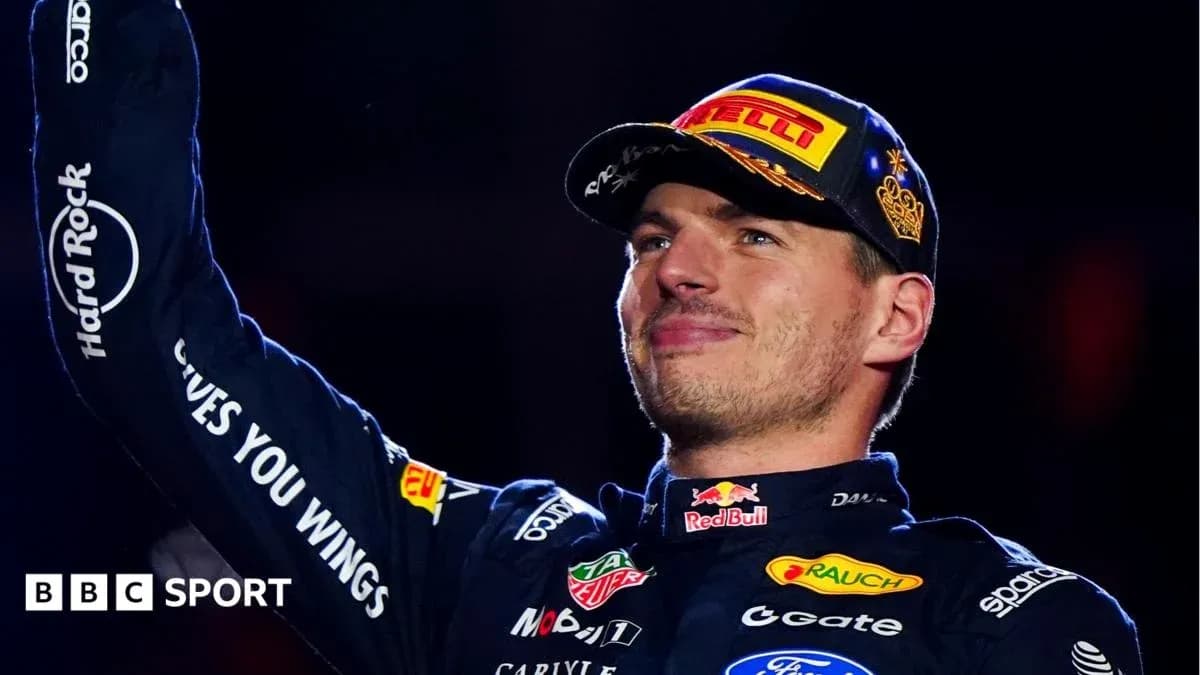
Max Verstappen stood still while Las Vegas went mad around him.
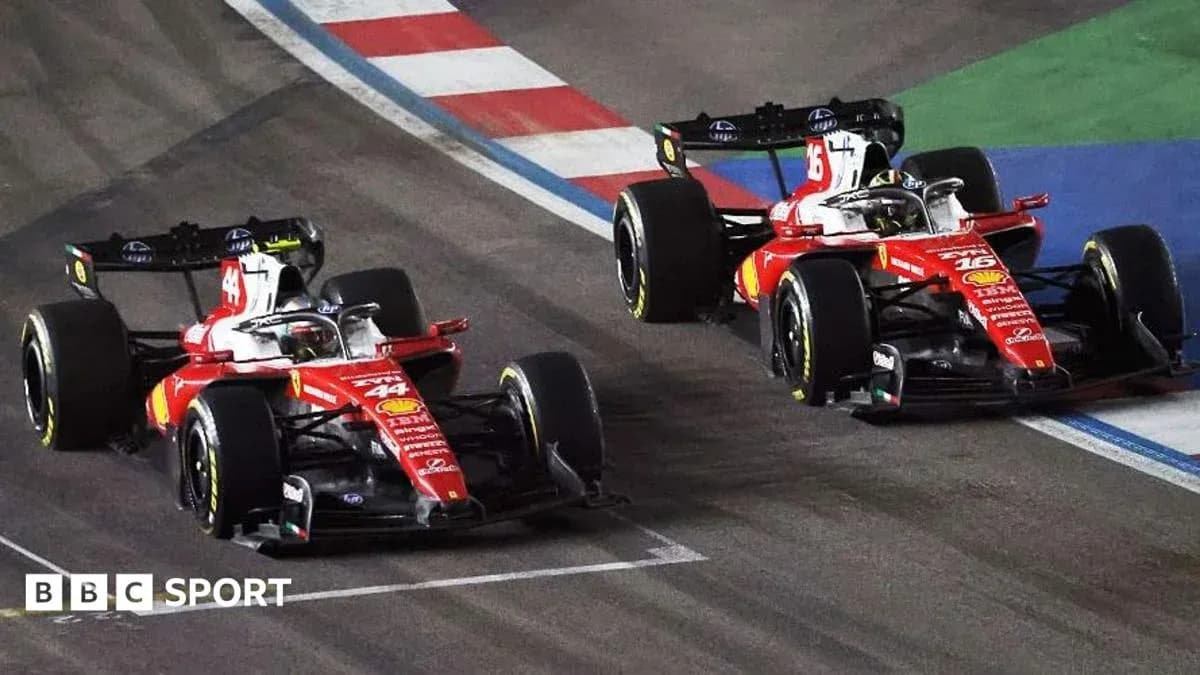
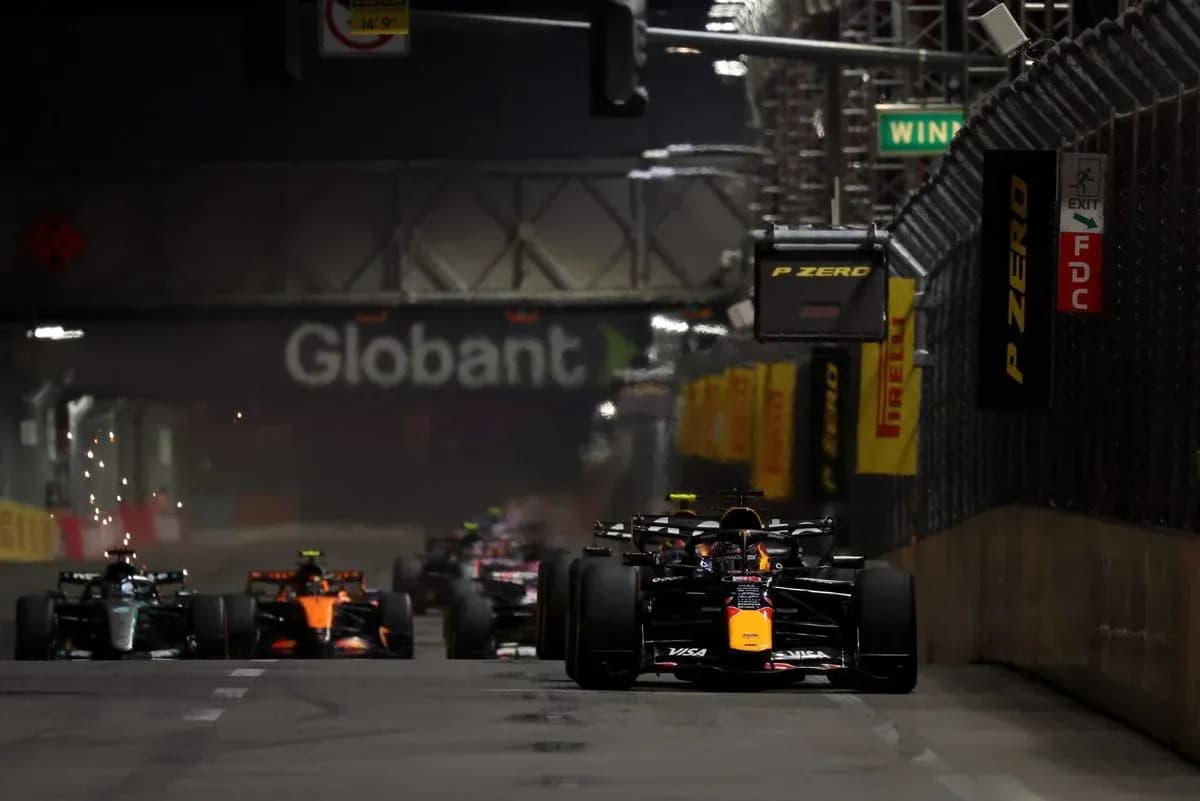
On a night of slipstreams and chaos, with 34 lead changes in 50 laps and 352 overtakes in total, the world champion was the one constant. The largest lead anyone held was 1.5 seconds. Five cars thundered nose to tail for the win on the final lap. It looked like a video game. Verstappen treated it like routine business.
And then George Russell handed him the perfect punchline.
Russell swings, Verstappen lands the blow
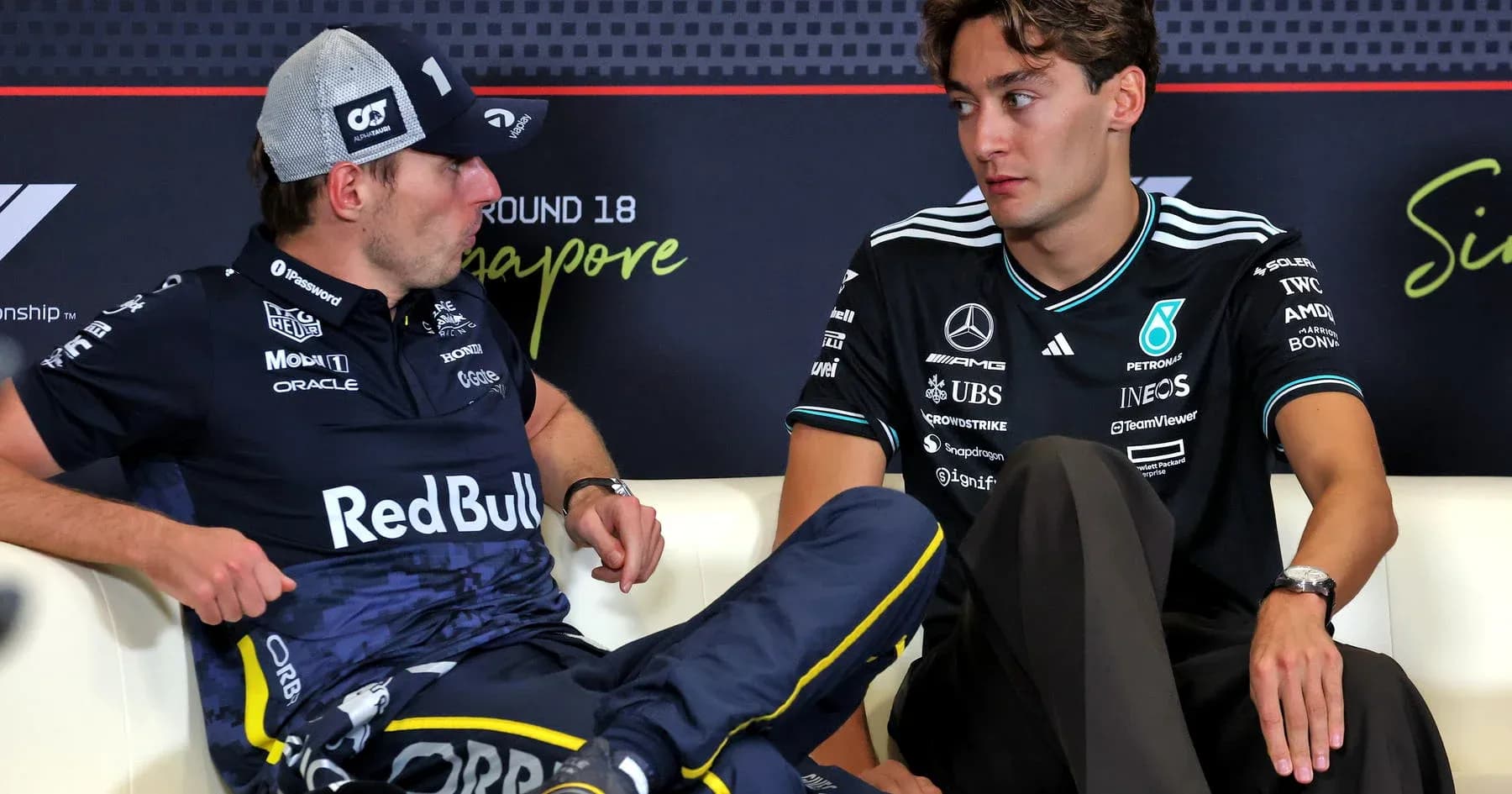
The tension between the two had been simmering since Saturday. A practice clash, a frosty visit to the stewards’ room, then a verbal jab from Russell after Verstappen took pole once Kimi Antonelli’s five-place penalty was applied.
"I am not just going to accept somebody to screw me over like this and walk around like they are bigger and better than everyone else," Russell said. "Somebody has got to stand up to that guy."
Plenty in the paddock quietly wondered if Verstappen was the smartest target.
On Sunday night, the answer arrived in brutal clarity. Russell shadowed Verstappen all race, dicing with him in a duel that was as much about attitude as it was about pace. The Mercedes would blast past on the straight; Verstappen would snatch it back with outrageous moves on the outside of the fast kink onto the pit straight or again around the outside at Turn Three. Corners most drivers treated with respect, he turned into his personal playground.
Hardly anyone else even attempted those lines. Verstappen made them look like the obvious choice.
Then, with two laps to go and a podium assured, Russell overreached. Chasing Antonelli for second, he locked up, slammed into the barrier and turned a sure-fire top-three into ninth. He dragged the Mercedes out and limped home, but the damage – sporting and symbolic – was done.
Verstappen did not miss his moment.
"He speaks a lot next to the track," Verstappen said. "And it doesn't really bother me because he's so far below my level that it doesn't really make any sense for me anyway to try and challenge that, you know?
"And today, karma is a bitch. It was honestly fantastic when I looked in my mirror and I saw what was happening. I was, like, 'Fantastic, my day is only getting better.' And of course, when I then crossed the line in first, my day was complete."
One season summed up in a single mistake for Russell. One season summed up in a single smirk for Verstappen.
A grand prix from another era – and another sport
What unfolded behind them barely resembled conventional Formula 1. Anyone under 70 had never seen a race like it.
The closest historical parallel sat half a century away at pre-chicane Monza, where slipstream trains in the 1960s and early 1970s produced the tightest finish in F1 history at the 1971 Italian Grand Prix, the top five split by 0.6 seconds. Las Vegas felt like that spirit had been dropped into the neon of the Strip and wired into modern hybrid power units.
In contemporary terms, it looked even more like American oval racing. Long chains of cars drafting each other, constant passing, very little of it decisive until the closing laps. It was IndyCar and Nascar energy wrapped in F1 branding.
Mercedes boss Toto Wolff did not fight the comparison. "It was Indy 500 and Nascar and Formula 1 mixed – I enjoyed it," he said.
The race also shone a harsh light on the sport’s current identity crisis. Since the 2026 regulations created power units with roughly a 50-50 split between internal combustion and electrical power, F1 has been wrestling with what that actually means on track. The cars are energy-limited; batteries drain before the end of the straights. On certain circuits that has triggered so-called "yo-yo" racing – cars slingshotting past each other as their battery levels ebb and flow.
Teams have gradually tamed the chaos with better energy management. Las Vegas blew it wide open again. Long straights, huge slipstreams, depleted batteries: the perfect storm.
Nobody quite knew whether to celebrate it or recoil.
Verstappen’s racer heart versus the show
On television, Verstappen chose his words with care.
"Really, really surreal and something that I've never seen before in Formula 1 myself," he said. "It was just a crazy amount of fighting. The slipstream was so big that you – it was just impossible to drive off, and it was just crazy how many people were just following you.
"It was just very exciting, I guess, for everyone to watch. I know, of course, it's a big show around here the whole weekend, and I hope that we delivered on track."
Polite. Measured. Vegas-friendly.
In the press room, the mask slipped.
"When I look at it from my racer heart, not," he admitted when asked if he enjoyed that style of racing. "When you look at it as a show spectacle, yes.
"I enjoyed my repassing and everything, but I prefer to look at it with my racing heart. Even my heart rate, I was not nervous at all because it just felt kind of cruising out there, just trying to press the battery whenever it was correct or defend.
"But for the show, when you look at it from the outside, probably yes, you like it. But yeah, I don't know.
"I probably shouldn't say it. I probably should not. I remember winning one like this when I was playing Mario Kart.
"Yeah, you know, sometimes you drop back and you get drafts, and there's like a catch-up, you know? Always when you're dropping back, you go faster. So that's the last time that I felt something like this."
For a three-time world champion to compare a world championship race to Mario Kart says everything about the fault line running through modern F1.
Drivers split between purity and spectacle
Verstappen was not alone in his mixed feelings.
Lando Norris, who chased him home in second, recognised the spectacle even as he questioned the substance.
"From a racing point of view, from the outside, I'm sure it probably was the best race ever in Formula 1," he said. "You never know what's going to happen. There was overtakes out of nowhere, and some of the overtakes weren't overtakes, you press boost and you go past someone. But the racing was still good. You're still fighting for position, and there are a lot of good things in there."
Russell, exhausted after his rollercoaster evening, echoed the sense of overload.
"It was interesting," he said. "I think it was quite fun for maybe half the race, but then it started to get a bit tiring at one point because it was just absolutely impossible to get away."
That, really, is the core of the argument: purists versus casuals, the old guard versus the new wave. The ones who want drivers to build gaps and control races against the ones who want constant, relentless action.
Wolff offered a glimpse of how the other side watched it. His wife Susie spent the race in the Paddock Club, surrounded by corporate guests.
"I guess you will have many people that will say that's not racing," Wolff said. "Personally, we need to be open minded.
"Susie was in the Paddock Club and she said that for 90 minutes people were screaming with the overtakes.
"The instant feedback I got from the friends watching, our sponsors, was that was awesome. Stefano [Domenicali, the F1 chairman] liked it very much. That's not going to happen everywhere."
The people who pay for the show loved it. The man who dominated it thought it felt like a cartoon.
A sport arguing with its own future
Verstappen’s Mario Kart line tapped into a deeper story. Early in this rules cycle he was so disillusioned with the direction of F1 that he openly floated the idea of walking away. Since then, the regulations have been tweaked to tame the worst excesses of energy starvation, and further changes are locked in for 2027 and 2028 to push the sport back toward more traditional racing.
Then came the weekend’s twist. F1 announced fresh rules for 2030, sticking with turbo hybrids but cutting back the electrical component specifically to avoid the kind of battery-limited, boost-button racing seen in Las Vegas. The idea is to make the cars less energy-starved and the racing more "pure".
The likely consequence? Races like this one may simply not be possible anymore.
Is that a correction, or a mistake?
Wolff believes the sport is on the right track, even as he recognises the inevitable complaints that will follow.
"We're still doing the right thing. It's what we all wanted," he said. "But I have no doubt people will complain there is not great overtaking. We go back to the 'glorious years' in the 2000s. But we're gonna get those regs right. We see what we can do. It just needs a kilometre and a half straight."
McLaren team principal Andrea Stella refused to be bounced into an easy verdict.
"It's very difficult to have a position as simple as saying, 'Oh, that's the race we want,'" he said. "Because as soon as you say that, you will see some other perspectives which are important to consider.
"Like, I still have to talk to Lando and Oscar and understand, like, did you enjoy it or that was kind of too much and at times it felt like this is going to go very wrong from a safety point of view?
"So, I don't want to express a net position. Because in fact, I don't have it.
"This race gave us a lot of information that we cannot ignore. In terms of the attention, the spectacle, in terms of, you know, like, wow, that's incredible racing, is this what we want?
"My main recommendation is that we remain kind of analytical. And we remain caring for the interest of the sport.
"Because we live in a world where everything is polarised, a world in which you need to have an opinion in one second. Otherwise you are a nobody. You need to have an opinion that is polarised.
"Well, I would like to have people that actually still value complexity of analysis. And caring for a common interest. That's my main message.
"When you have examples like today which offer so much information it would be a shame to process it in the space of a hot review. And say, 'Oh, let's abandon the new regulations.' That's not the case.
"But definitely there's some interesting information that we should consider from a technical point of view, from a sport regulation point of view."
Las Vegas, then, may be remembered as more than just another Verstappen win and another Russell mistake. It might stand as the night Formula 1 saw its two futures – pure racing and pure show – go wheel to wheel down a kilometre-and-a-half straight and realised it cannot have both forever.