New Zealand's Fast Bowling Strategy for Australian Test Series
New Zealand are heading across the Tasman armed to the teeth with fast bowlers, naming a seven-strong pace battery for their four-Test tour of Australia starting December 9 in Perth.
Will O'Rourke and Michael Rae are back in the squad, reinforcing an attack clearly built with Australian conditions in mind. Height, hostility, and relentlessness: that’s the brief.
O'Rourke, rested from the recent all-format series against India as part of workload management, returns as a central piece of that plan. The tall right-armer last played Test cricket against England and already has 49 wickets in 14 matches, including two five-wicket hauls. New Zealand know exactly what they’re getting: a bowler who can hit the deck hard and bend the ball into the right-hander at pace.
Captain Tom Latham made no secret of how important that variation could be on hard Australian surfaces. He called O'Rourke’s recall “really exciting” and highlighted the extra dimension his height and movement bring, stressing how neatly that skillset slots in alongside the rest of the seam group.
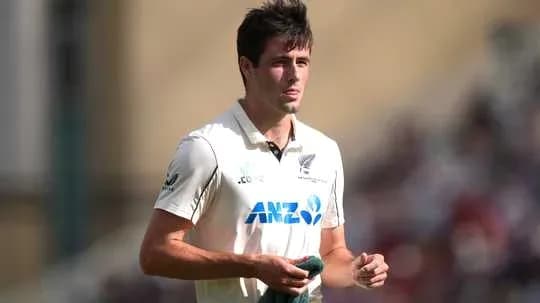
Rae offers a different kind of presence again. The six-foot-six quick, who debuted against the West Indies in Wellington last summer, comes in with 238 first-class wickets behind him. He’s raw at Test level but well-travelled in the longer format, the sort of bowler who can become a real handful if he finds rhythm with the Kookaburra ball.
Alongside them, Matt Fisher continues his quiet rise. The 27-year-old, who made his Test debut against Zimbabwe in August 2025, has been retained after featuring in New Zealand’s squads across all three formats against India. His first-class numbers – 60 wickets at an average of 22 – mark him as one of the more efficient operators in the domestic game. He was drafted in as a replacement for Blair Tickner before the second Test against India but never cracked the final XI. Australia could be his next opening.
The full Test squad reads: Tom Latham (C), Tom Blundell (WK), Devon Conway, Jacob Duffy, Matt Fisher, Dean Foxcroft, Matt Henry, Kyle Jamieson, Daryl Mitchell, Henry Nicholls, Will O'Rourke, Glenn Phillips, Michael Rae, Rachin Ravindra, Nathan Smith, Will Young.
It’s a group built around seam depth and flexibility. Matt Henry and Kyle Jamieson bring proven new-ball pedigree, Daryl Mitchell and Rachin Ravindra add all-round balance, while Glenn Phillips offers a point of difference with his batting aggression and part-time spin. Nathan Smith and Jacob Duffy round out a pace pool designed to sustain pressure across long, hot days.
There is a harder edge to the selection story, too. Dean Foxcroft and Jacob Duffy, both involved in the Test series against India, miss out this time. The squeeze for spots in the fast-bowling ranks has real consequences.
Injuries continue to shape the picture. Mitchell Santner and Blair Tickner, both ruled out of the India Tests with a hand fracture and hamstring injury respectively, will remain in rehabilitation with the aim of joining the squad in Australia once fit. Their potential arrival later in the tour could alter the balance again, especially in Sydney where spin often comes into sharper focus.
Zak Foulkes (hip flexor) and Ben Sears (ankle) stay on the sidelines as they work back from their own setbacks, thinning the pool of available quicks but underlining why New Zealand have leaned so heavily into pace depth for this trip.
The itinerary is brutal and classic in equal measure. Perth opens the series from December 9, a venue that rewards pace and bounce and will immediately test the logic of New Zealand’s selection. Adelaide follows from December 17-21, with its day-night conditions demanding yet another adjustment from batters and bowlers alike.
Then comes the Boxing Day cauldron in Melbourne from December 26-30, a stage that has defined countless careers, before the tour closes in Sydney from January 4-8, where the surface usually slows and the contest often stretches deep into the fifth day.
New Zealand have made their intent clear: they plan to fight Australia on fast-bowling terms. Over four Tests, on four very different decks, we’ll find out whether this pace-heavy gamble can finally crack one of cricket’s toughest away frontiers.