New Zealand's Strong Start Against India at Hagley Oval
Tom Latham and Tom Blundell dragged New Zealand out of the shadows and into control on a hard-fought opening day at Hagley Oval, as the Black Caps’ top order finally landed a blow on India’s vaunted attack.
Sent in on a green, unforgiving surface after losing the toss for the second straight test, New Zealand closed on 246-5 from 85 overs. On this pitch, against this attack, that felt like more than just a platform. It felt like a statement.
Latham stands tall at the top
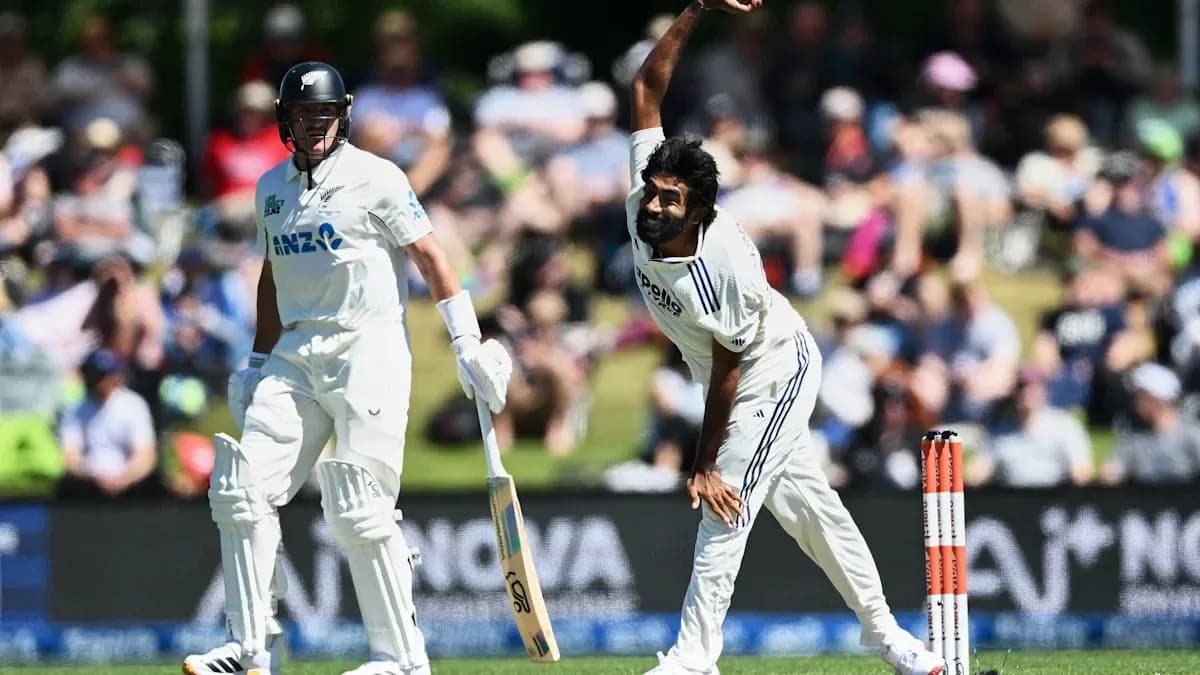
Latham arrived in Christchurch under pressure. Two innings at the Basin Reserve had brought him a combined four balls and no runs. Another early failure on a seaming track, against Jasprit Bumrah with a new ball in his hand, and the scrutiny would only have intensified.
Instead, the captain dug in. He survived a key early moment when Bumrah trapped him in front, only for the review to reveal the ball pitching outside leg stump. That slice of fortune changed the mood. From there, Latham tightened his technique, left well, and slowly turned survival into control.
With Devon Conway alongside him, he steered New Zealand through the most dangerous part of the day. The pair added 77 for the first wicket, blunting Bumrah and forcing India’s seamers to keep coming back for more. In the process, they moved past John Wright and Bruce Edgar to claim the record for the most 50-plus opening stands by a New Zealand pair in tests, with 14.
Conway’s 31 ended with the final ball before lunch, edging Gurnoor Brar to give the debutant his first test wicket and India a much-needed breakthrough. Even so, at 77-1 on that surface, the session belonged firmly to the hosts.
Latham brought up his half-century with a thick edge that flew past the keeper for his fifth boundary. It was not his most fluent innings, but it was exactly the one his side required: 59 from 128 balls, built on discipline and resolve, and crucially, it largely neutralised Bumrah, who finished the day wicketless.
India hit back, briefly
The game tightened after lunch. With Henry Nicholls for company, Latham looked set to grind India down. Instead, the visitors roared back.
First, Latham departed on 59. Within four balls, Nicholls followed for 16. Rachin Ravindra then fell without scoring, and New Zealand’s comfortable 110-1 had suddenly become a precarious 110-4. The seamers had their tails up, the cordon snapped to attention, and India finally had the ball talking.
Akash Deep, leading the attack with 2-52, found enough movement to keep New Zealand honest and gave his captain Shubman Gill some control in the field. For a time, the Black Caps were hanging on.
They needed a partnership. Again.
Blundell’s milestone and Mitchell’s grit
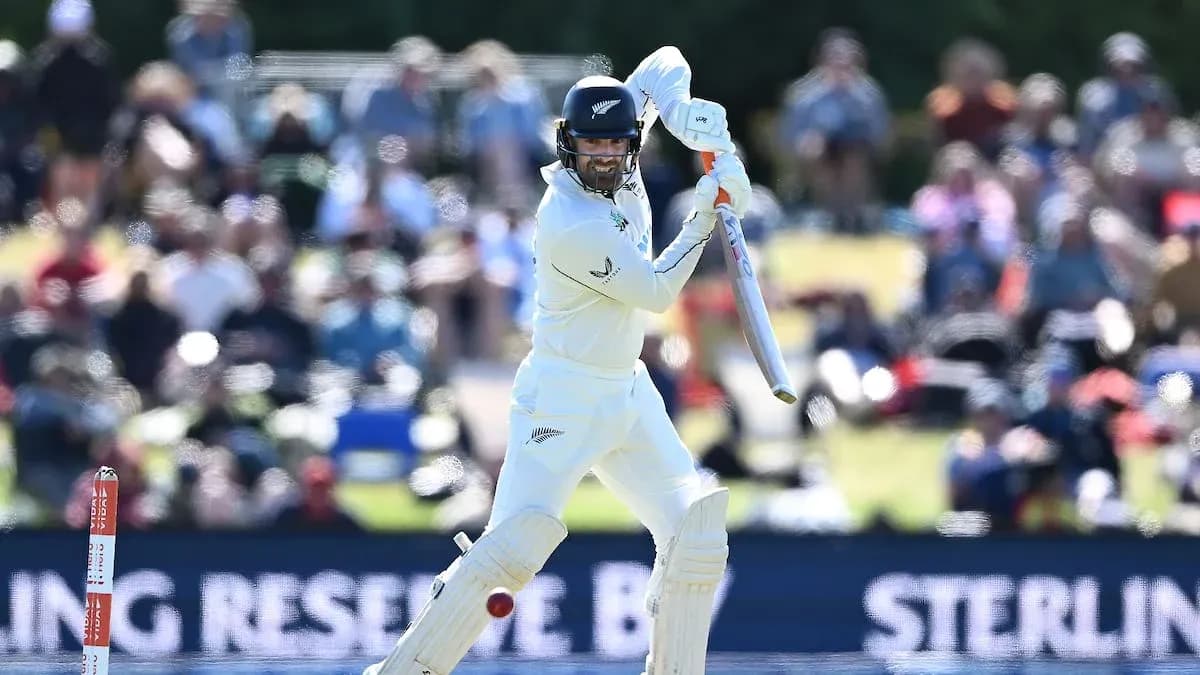
Blundell, playing his 50th test, walked in with the innings at a crossroads. Daryl Mitchell joined him, and together they chose stubbornness.
Both survived early chances. Both wore the odd ball on the body. Slowly, they began to bend the day back New Zealand’s way. Their stand reached fifty in 105 balls, an echo of their defiance at the Basin Reserve, where they had stitched together a 102-ball rearguard under similar pressure.
Mitchell’s luck ran out on 31. A top-edge on nine had already eluded Rishabh Pant’s gloves, but Washington Sundar finally found the breakthrough, drawing a leg-side catch that was sharply taken at leg slip to end the stand at 74 with the score on 184-5.
India had their opening again. They could not force it wider.
Phillips changes the tempo
Glenn Phillips arrived fresh from a career-best in Wellington and was greeted immediately by hostility. Akash Deep banged one in short; the ball thudded into Phillips’ fingers. He shook it off and counterpunched.
Two crisp boundaries off Brar pushed New Zealand past 200 as the final hour approached. Where others had absorbed, Phillips looked to impose. Batting at No 7, he refused to let India’s bowlers settle, using his feet, picking off anything overpitched or short, and turning a tense passage into a more assertive one.
He finished unbeaten on 36, with five boundaries, having scored 32 of the first 50 runs in his stand with Blundell. The pair added an unbroken 62, and with every run, the frustration for India grew.
Blundell, ever the craftsman, moved methodically towards his own milestone. When India took the second new ball late in the day, Bumrah returned searching for the strike that had eluded him. Instead, Blundell threaded him through the slips to reach his 50 from 114 deliveries. It was his 13th test half-century, and on this occasion, one built on quiet authority rather than flourish.
He walked off on 53 not out, Phillips alongside him, the scoreboard reading 246-5 and the mood in the New Zealand camp transformed from the fragility of Wellington.
India’s attack had its moments. Akash Deep’s 2-52 underpinned their best spells, Brar claimed his first test scalp, and Sundar’s control brought a key wicket. Yet the sense lingered that day one had slipped away from them. Winning the toss on a green pitch and sending the opposition in usually brings more reward than this.
Instead, New Zealand’s most pragmatic pair – Latham at the top, Blundell in the middle – set the tone, and Phillips hammered it home late.
When day two begins, the equation is simple. If Blundell and Phillips can stretch this total towards something substantial, the Black Caps will not just have bragging rights. They will have India under genuine pressure on a surface that still has plenty to say.