Newcastle United's Stadium Future: St James' Park vs New Era
Newcastle United have edged closer than ever to a decision that could reshape the club for generations – and, for the first time, the direction of travel feels starkly clear.
At the recent We Are United fan event, Chief Executive Officer David Hopkinson and Chief Operating Officer Brad Miller offered the most pointed hint yet that a completely new stadium is emerging as the preferred long-term solution. No grand unveiling, no glossy renders. But the language has shifted. This is no longer blue-sky chat. It is planning.
For a fanbase welded to St James’ Park, that matters.
The weight of St James’ Park
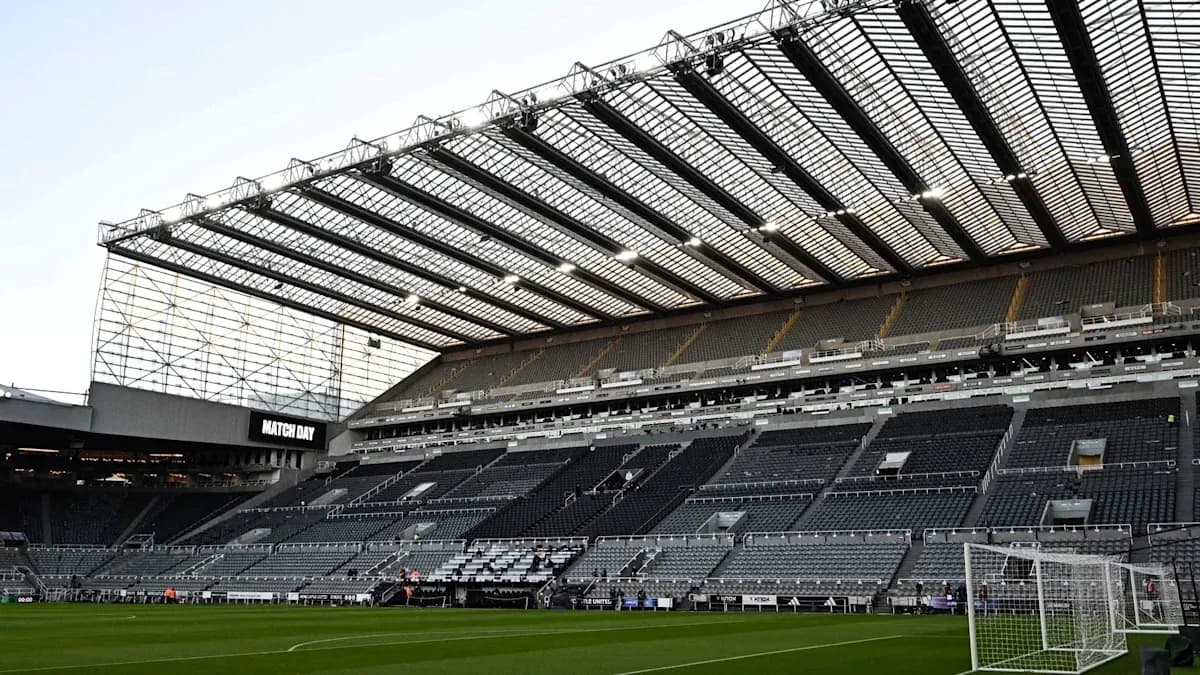
St James’ Park is not just a ground. It is a skyline. Since 1892, it has sat on the hill, looming over the city, a constant in a club that has changed owners, managers and ambitions. It is one of English football’s great cathedrals, and the emotional pull of the place is obvious.
Yet that hill is now part of the problem.
The stadium’s central location, the surrounding buildings, the proximity to Leazes Park and existing transport routes all box Newcastle in. Any major expansion of the current site would be an engineering and logistical puzzle. You cannot simply drop another tier on top of the Gallowgate and call it progress. Construction would disrupt matchdays, strain the area, and test patience across the city.
The club has long known this. Expansion has remained on the table, but always with an asterisk: complicated, messy, limited.
A new build gathers pace
Against that backdrop, the alternative has started to gather real momentum. Hopkinson and Miller are understood to have signalled that a new, purpose-built stadium is now increasingly likely to be the club’s preferred route, even if no final decision has been signed off.
The outline is becoming familiar. A new ground, potentially in the Leazes Park area. A capacity in the region of 65,000 to 72,000, with the lower end of that range currently seen as the more realistic target. Modern hospitality, improved accessibility, the kind of commercial footprint that matches the owners’ stated ambitions.
This is not about a marginal gain of a few thousand seats. It is about building a home that can house a significantly larger supporter base and operate as a 21st-century venue seven days a week.
Hopkinson has been particularly blunt on one point: Newcastle need a bigger stadium for the revenue it unlocks. That line cuts to the heart of the project.
Chasing the elite
Newcastle’s owners want the club to live in the same financial postcode as Europe’s elite. That is not possible on broadcast money alone. Matchday and commercial income have to climb, and quickly.
A larger stadium changes the maths. More tickets sold. More corporate hospitality. More naming rights value. More scope for concerts and non-football events that keep the tills running when the team is not on the pitch.
To get there, the club has already opened talks with bankers, principally based in New York, as it weighs up how to fund such an ambitious build. External financing, long-term repayment structures, the full suite of modern stadium economics – all of it is being examined.
Hopkinson has framed the choice in stark terms: this is a decision that will define the next era of Newcastle United. Not the next five years. The next generation.
No easy goodbye
None of that means the bulldozers are idling outside St James’ Park. Miller stressed that the club is deliberately taking its time, fully aware of the scale and sensitivity of the call. Planning permission, investment models, impact on the wider region – each strand adds another layer of complexity.
Crucially, the option of redeveloping St James’ Park has not been ruled out. It remains a live, serious alternative, not a token nod to tradition.
That matters to a support that sees the ground as part of its identity. St James’ Park is more than concrete and steel; it is memory. European nights. Title tilts. Relegation battles. The noise rolling down from the stands and out into the streets.
The challenge for the current ownership is to respect that history while refusing to be constrained by it. They want Newcastle to sit among Europe’s leading football institutions. To do that, sentiment cannot be the only factor.
Beyond nostalgia
The club insists that a new stadium, if it comes, would not be a rejection of its past. The idea is to create another iconic home, one that still feels like Newcastle United, even if the view up the hill changes.
What has shifted in recent weeks is not the emotion, but the stage of the project. Hopkinson has made it clear the club has moved beyond airy concepts and wishful thinking. Newcastle are now working with clearly defined options and drilling into how, practically and financially, they could deliver them.
That is the key distinction. This is no longer a conversation about what a future stadium might look like. It is a conversation about how to build it – and how to pay for it.
There is still no official confirmation that a new stadium will be constructed. The redevelopment of St James’ Park remains on the desk. Yet with senior figures openly talking about capacity requirements, revenue gaps and external financing, the direction of travel is increasingly hard to ignore.
For years, Newcastle United have spoken about the infrastructure needed to compete at the very top. Now the club stands on the edge of a choice that will either reinforce the old hill or shift the centre of gravity altogether.
The question is no longer whether the stadium must change. It is where the next roar of 65,000 Geordies will actually rise into the Tyneside sky.